Easy 2-Ingredient Cottage Cheese Flatbread (High Protein, No Yeast)
Easy 2 ingredient cottage cheese flatbread is one of those recipes that sounds almost too simple until you actually make it and realize how useful it is. With just cottage cheese and eggs as the core base, you get a soft, high-protein flatbread that works surprisingly well for wraps, sandwich-style lunches, snack plates, and quick meal prep.
The real appeal is not that it behaves exactly like bakery flatbread. It does not. The real win is that it gives you a flexible, savory, no-yeast bread alternative with almost no effort, no kneading, and no long ingredient list. When you want something faster than homemade dough and more substantial than an omelet, this recipe lands in a very practical sweet spot.
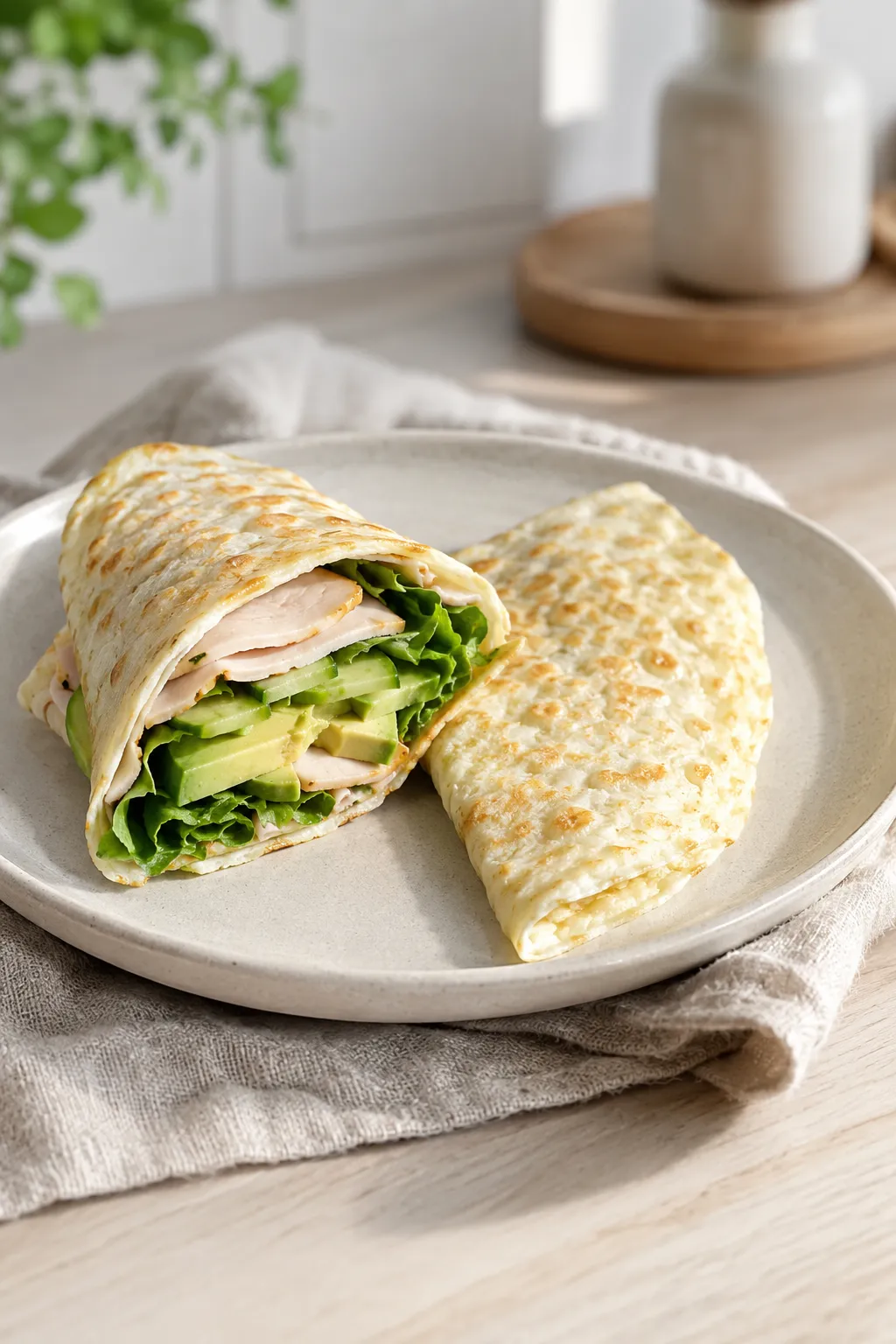
This 2 ingredient cottage cheese flatbread is an easy option for wraps, sandwiches, and quick high-protein lunches.
What is easy 2 ingredient cottage cheese flatbread?
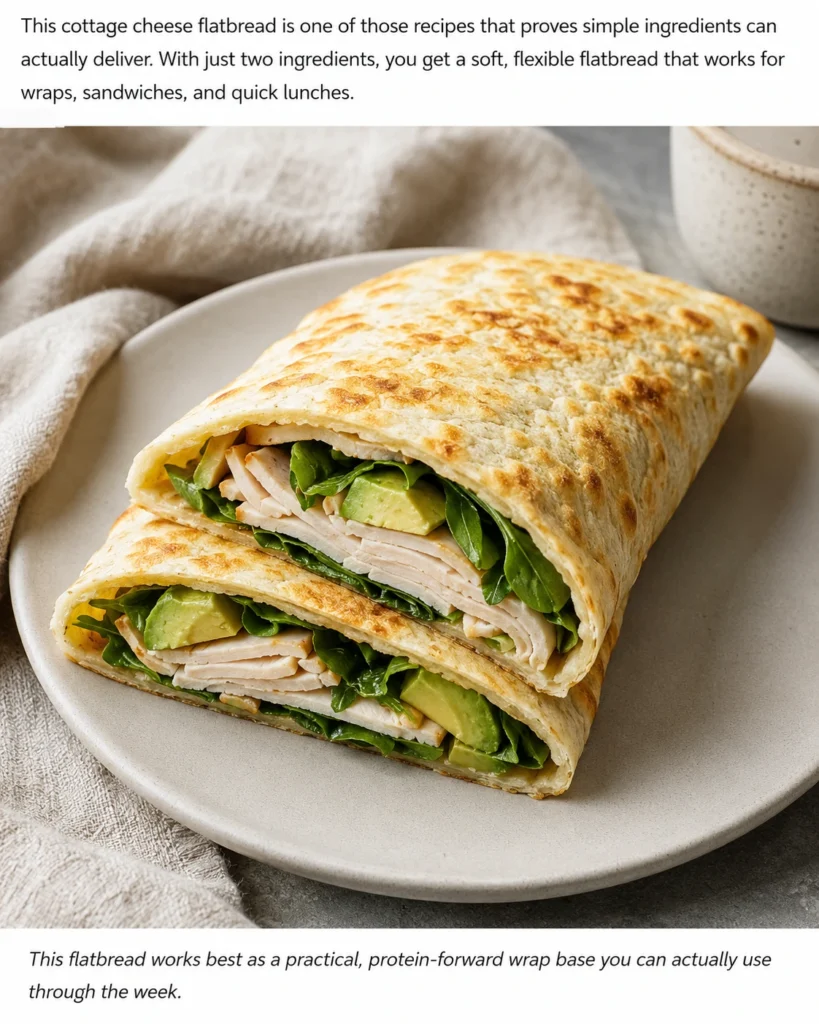
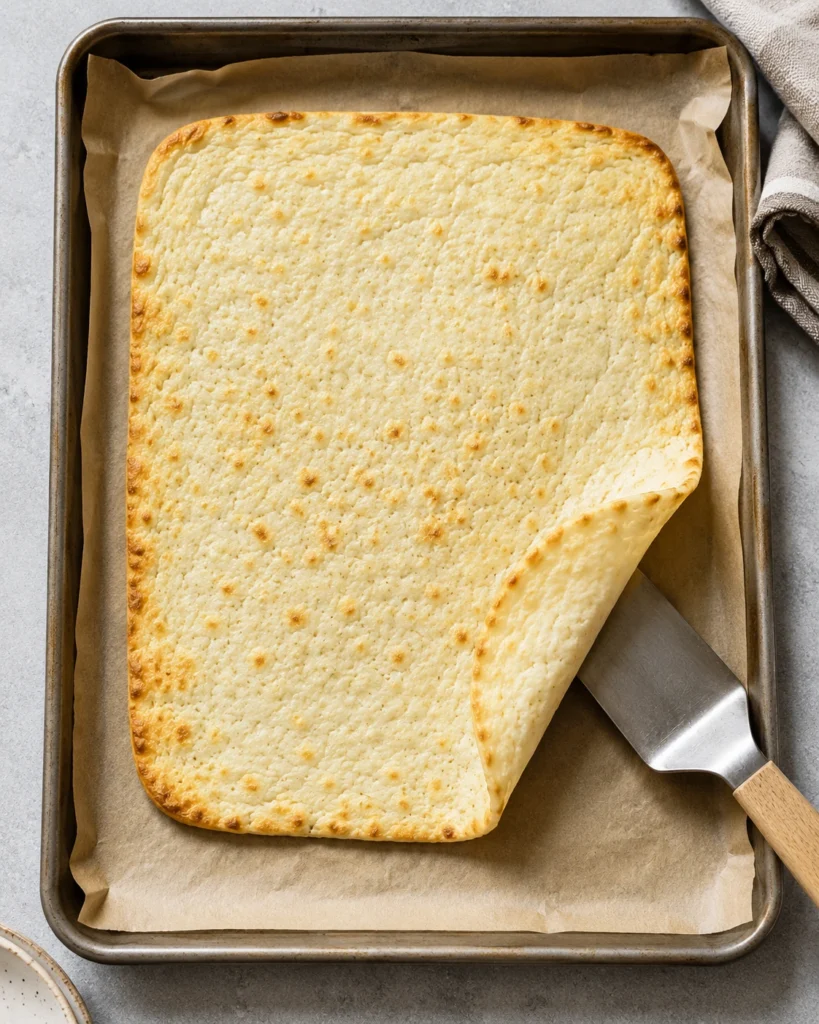
Easy 2 ingredient cottage cheese flatbread is a baked flatbread-style wrap made by blending cottage cheese and eggs into a smooth batter, then baking it until set, lightly golden, and flexible enough to fold. It is best used as a high-protein bread alternative for wraps, sandwiches, and meal-prep lunches rather than as a thick chewy flatbread.
That makes it especially relevant if you are also searching for cottage cheese recipes, high-protein lunch ideas, no-yeast bread alternatives, protein wraps, or easy meal prep recipes that do not rely on a long list of pantry ingredients. It is simple, fast to blend, and useful in a very everyday way.
Why You’ll Love It
The best part of this 2 ingredient cottage cheese flatbread is its short ingredient list and flexible texture.
- It uses just two core ingredients, which keeps the recipe genuinely low-effort.
- There is no yeast, no kneading, and no waiting for dough to rise.
- The flatbread is high protein and much more filling than many quick bread swaps.
- It works well for wraps, sandwich-style lunches, and snack plates.
- The batter comes together quickly in a blender.
- It is easy to season without changing the base method.
- It stores well enough for meal prep and reheats nicely.
Why Easy 2-Ingredient Cottage Cheese Flatbread Works
This recipe works because cottage cheese and eggs do more than people expect once they are blended. Cottage cheese brings protein, moisture, and a mild dairy richness. Eggs provide the structure that helps the batter bake into something sliceable and foldable instead of just scrambling in the oven.
The biggest reason it succeeds, though, is that it is not trying to be traditional dough. That matters. If you expect a chewy naan or pita-style result, this recipe will feel off. If you expect a soft baked wrap that is useful, light, and sturdy enough to hold fillings, it makes a lot more sense.
Why This Works: blending the batter until smooth creates a more even texture, and spreading it thinly on parchment helps it bake into a flexible sheet instead of a thick, custardy round. A fully baked but not overbaked finish is the sweet spot.
It is also one of those recipes that rewards practical thinking. Use it for turkey and greens, grilled chicken and hummus, breakfast fillings, or even simple veggie wraps. Once you treat it like a protein-forward wrap base, its usefulness becomes obvious.
What Makes It High Protein
The protein story here is straightforward. Cottage cheese brings the bulk of the protein, while eggs add more protein and help the flatbread hold together. That combination makes the finished recipe more substantial than many flour-based wraps, especially if you pair it with a protein-rich filling.
It is also the kind of recipe that gets even more useful once you build around it. Fill it with sliced turkey, chicken, tuna, eggs, or hummus and grilled vegetables, and the flatbread becomes a practical base for a high-protein lunch instead of just a novelty bake.
Protein Upgrade: use it for savory fillings that add even more structure and substance. This flatbread really shines when it is part of a full meal, not just eaten plain.
Ingredients You’ll Need
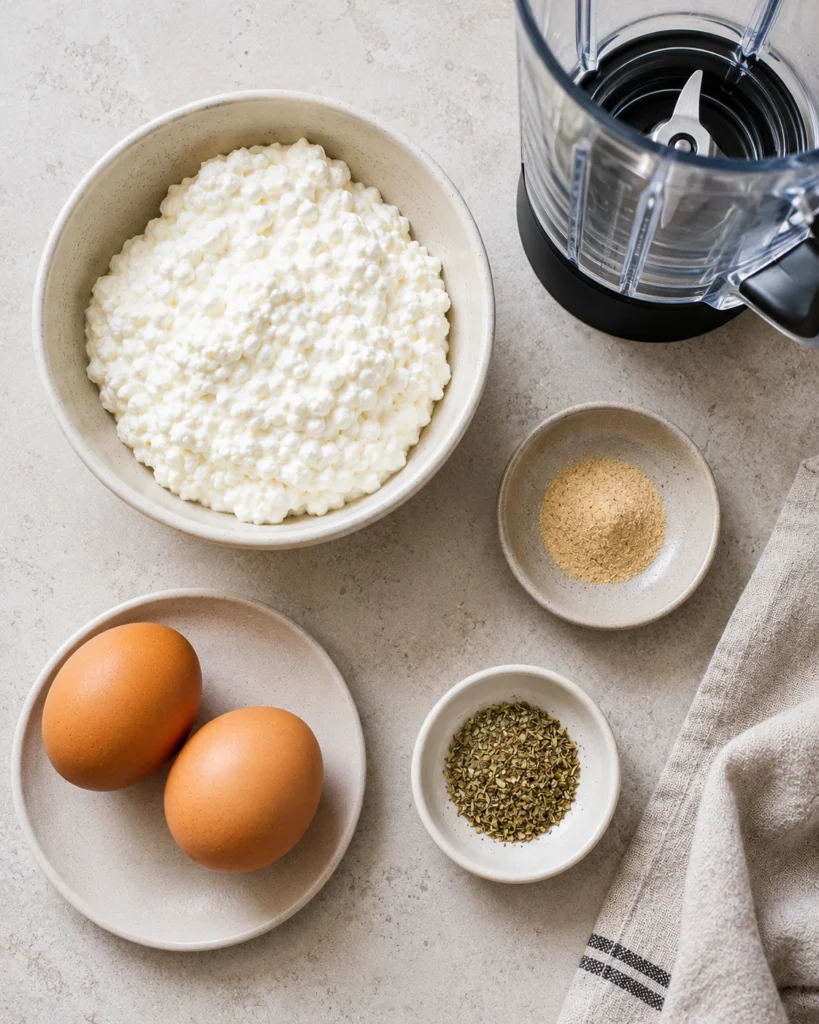
For the smoothest 2 ingredient cottage cheese flatbread, blend the cottage cheese and eggs until completely combined.
Main Ingredients
- 1 cup full-fat or 2% cottage cheese
- 2 large eggs
Optional Seasonings
- 1/2 teaspoon garlic powder
- 1/2 teaspoon Italian seasoning
- 1/4 teaspoon black pepper
- pinch of salt, only if needed depending on your cottage cheese
The seasonings are optional because the core recipe truly does work with just cottage cheese and eggs. Still, a little garlic powder or Italian seasoning makes the finished flatbread taste more lunch-ready and less neutral.
Ingredient Notes and Realistic Expectations
Use cottage cheese that you like the taste of on its own. Since the ingredient list is so short, the flavor of the cottage cheese matters more than it would in a heavily seasoned recipe. Full-fat and 2% both work well. Very watery cottage cheese can still work, but the batter may spread a little thinner and bake slightly faster.
Egg size matters too. Large eggs are the safest default here. Very small eggs can make the flatbread a little denser; extra-large eggs can make the center softer and more delicate.
For another protein-rich way to use cottage cheese, try my blueberry cottage cheese breakfast bake for an easy make-ahead breakfast.
The most important expectation to set is texture. This is not a stretchy flatbread with a chewy crumb. It is more like a baked protein wrap or flexible egg-and-cottage-cheese sheet. That is not a flaw. It is the recipe’s actual strength.
Beginner-Friendly Tip: line the tray well and let the flatbread cool briefly before lifting it. It gets easier to handle once the steam settles.
How to Make Easy 2-Ingredient Cottage Cheese Flatbread
For food safety, bake the flatbread until the egg mixture is fully set and reaches the safe minimum temperature for egg dishes.
- Prep the oven and pan.
Heat the oven to 375°F (190°C). Line a small sheet pan or quarter sheet pan with parchment paper. Do not skip the parchment. - Blend the batter.
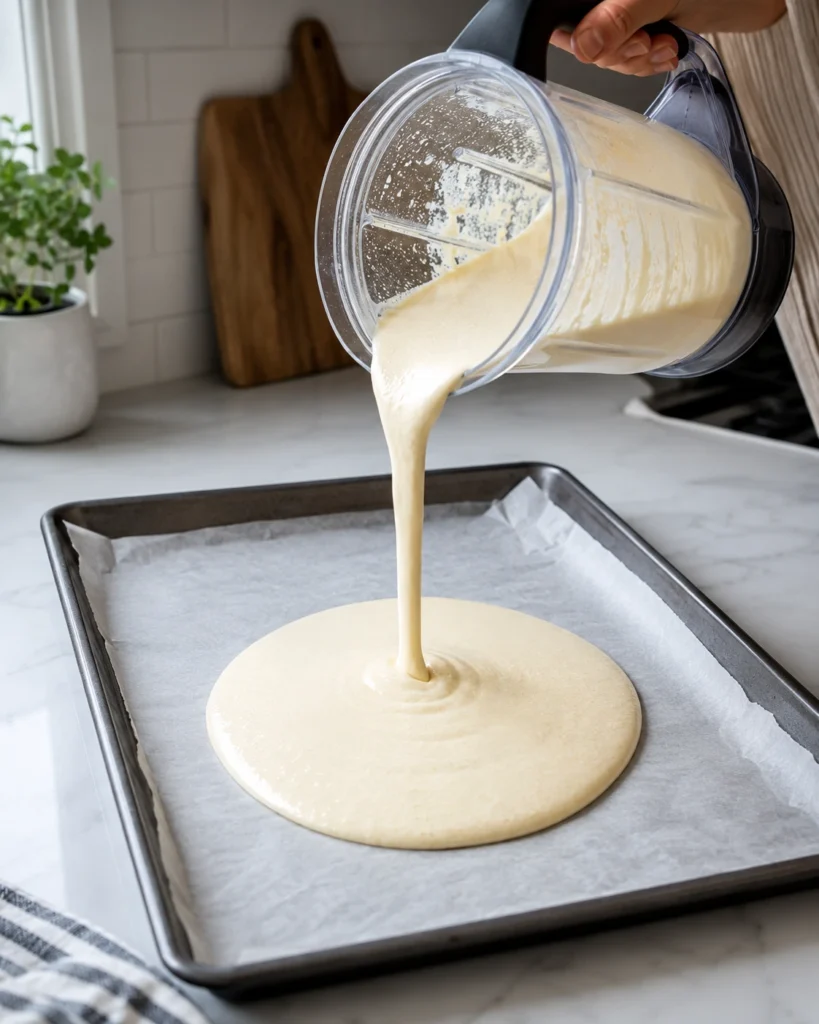
Add the cottage cheese and eggs to a blender. Blend until smooth. If you are using garlic powder, Italian seasoning, pepper, or a tiny pinch of salt, add them now.
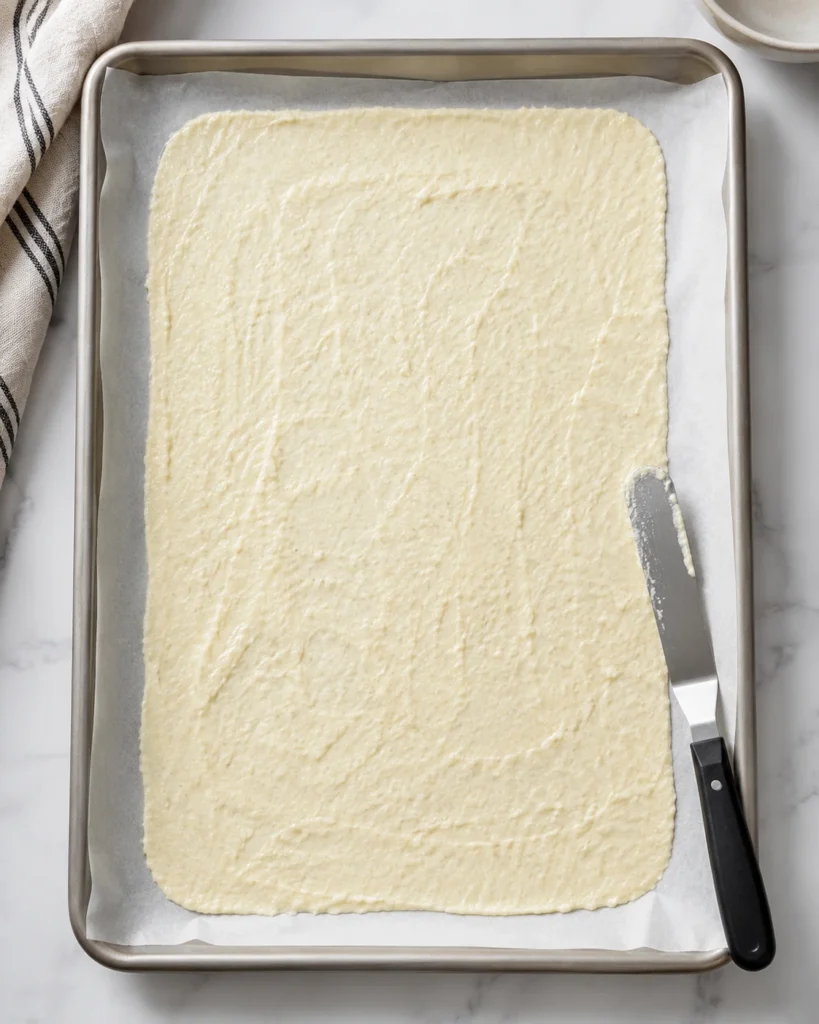
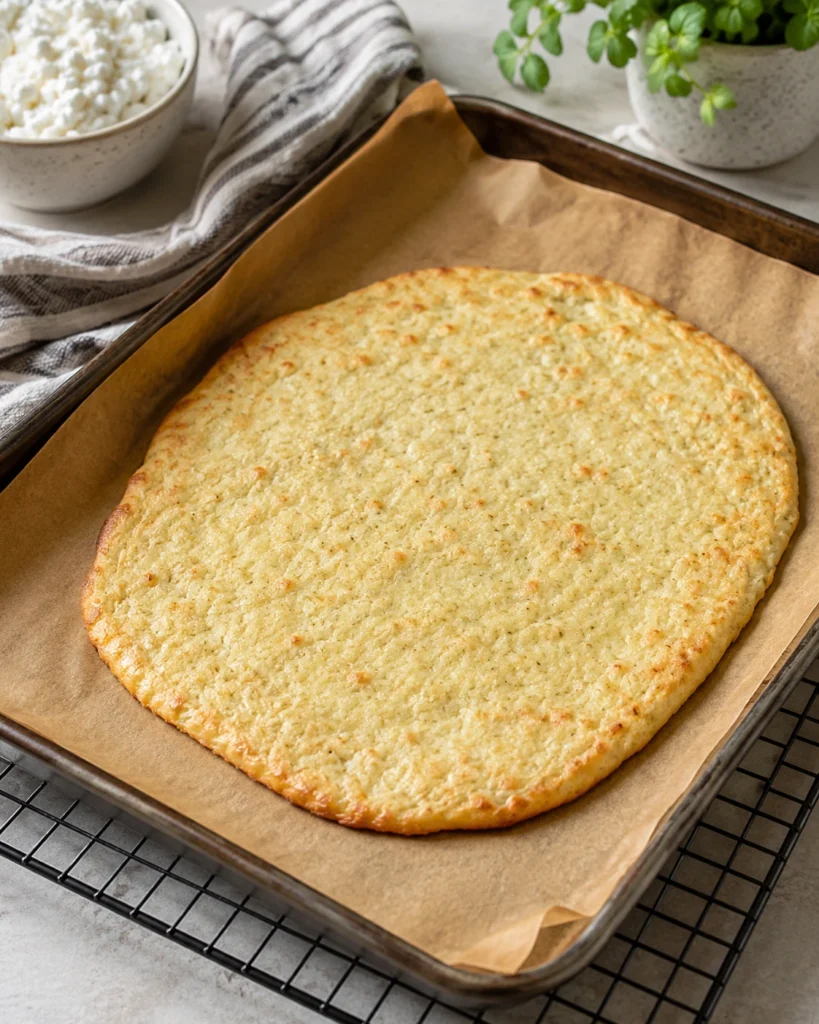
Texture Tip: if you want the flatbread more flexible, do not overbake it. Pull it once the center is fully set and the top no longer looks wet, but before the edges get too dark.
Texture and Flavor Notes
This flatbread is soft, tender, and slightly eggy in the most neutral way, especially if you keep the seasoning simple. The cottage cheese flavor is mild once baked, and the overall result is more savory and adaptable than rich or cheesy.
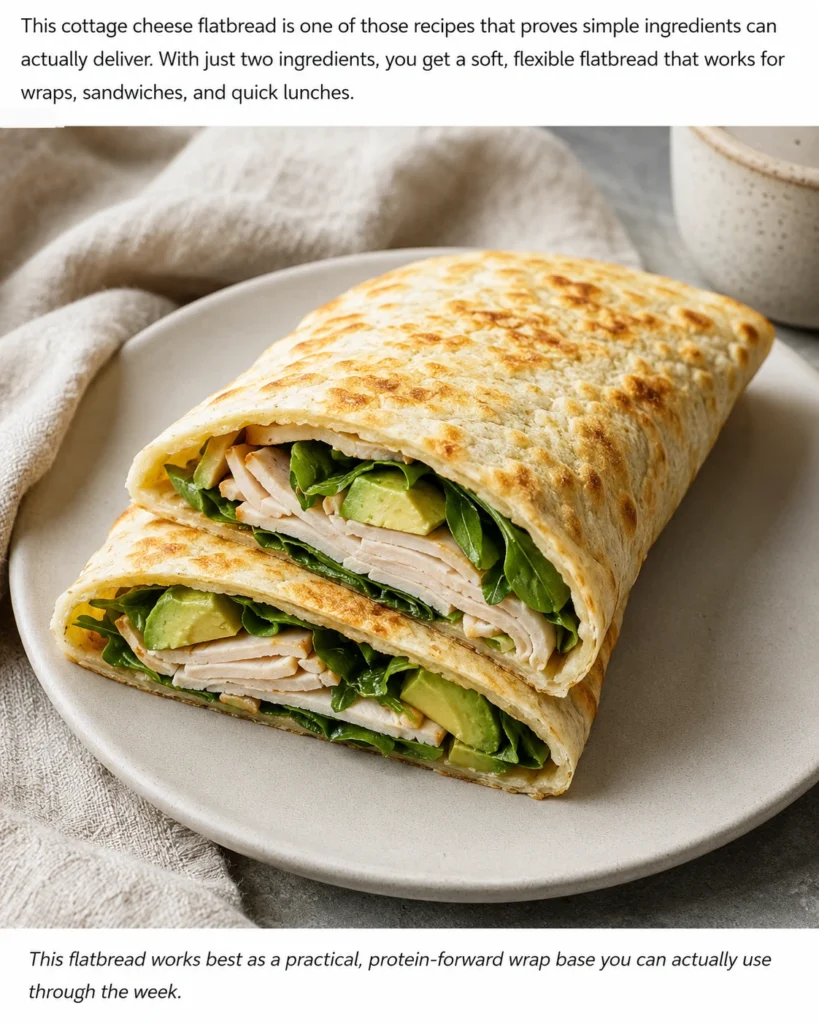
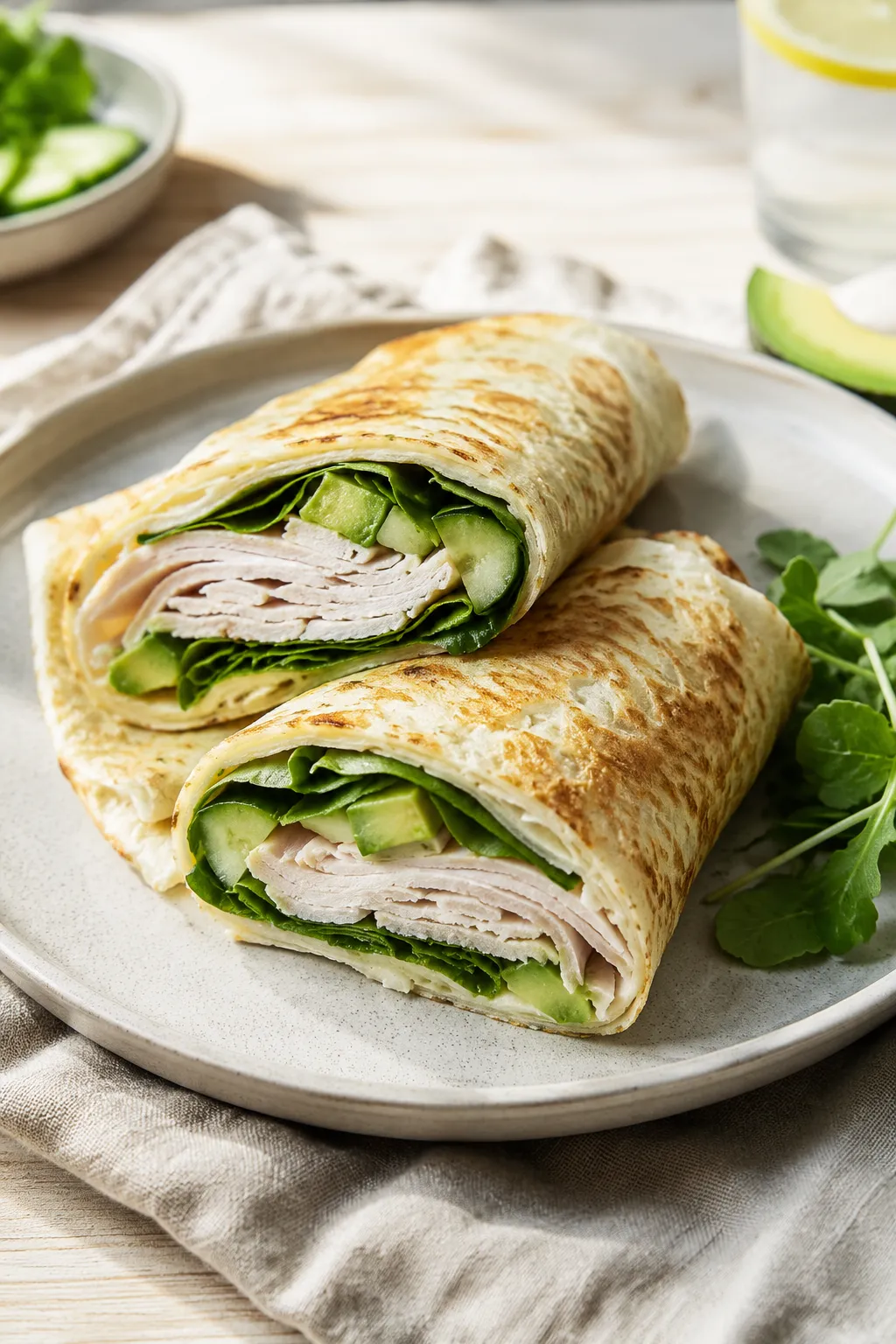
Texture-wise, think flexible wrap, not rustic bread. It folds better once it has cooled slightly, and it is strongest when paired with fillings that are not overly wet. Dry greens, sliced turkey, grilled chicken, avocado, hummus, roasted vegetables, and scrambled eggs all work well.
If you want it to feel more like part of a real lunch rather than a test recipe, the answer is simple: season it lightly and fill it well. That is when it starts earning repeat status.
Best Ways to Use It
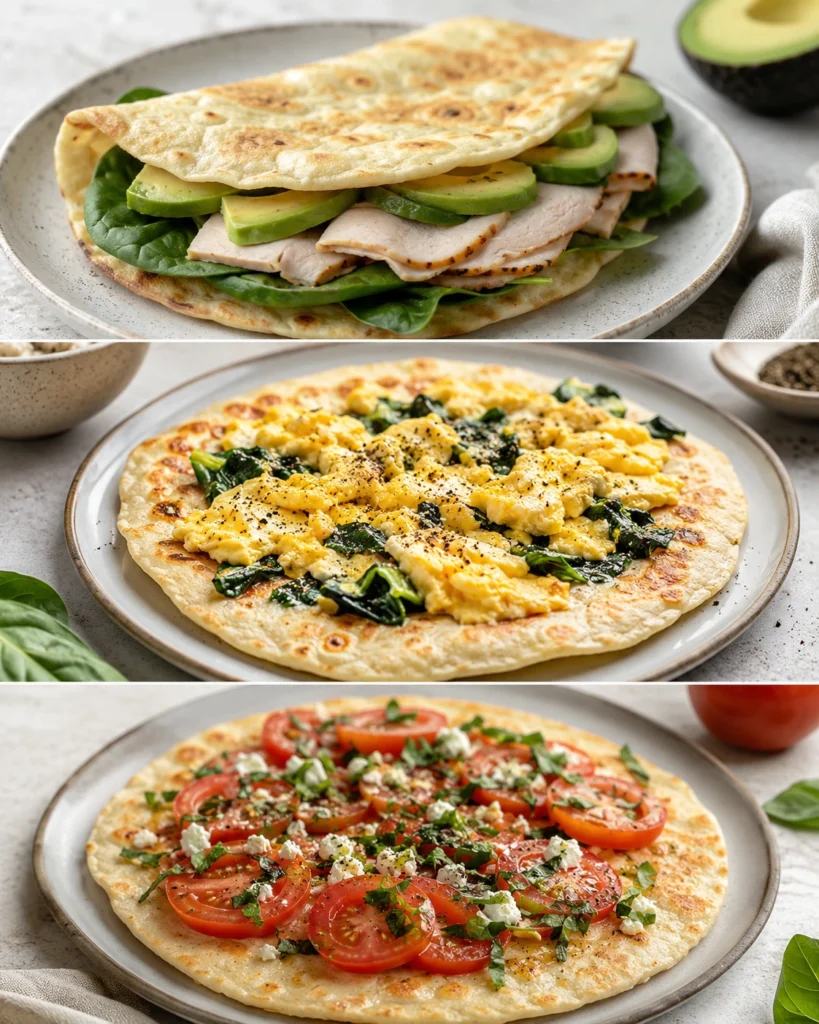
Use this 2 ingredient cottage cheese flatbread for turkey wraps, breakfast sandwiches, or simple snack plates. This recipe is at its best when used with purpose. It works especially well for:
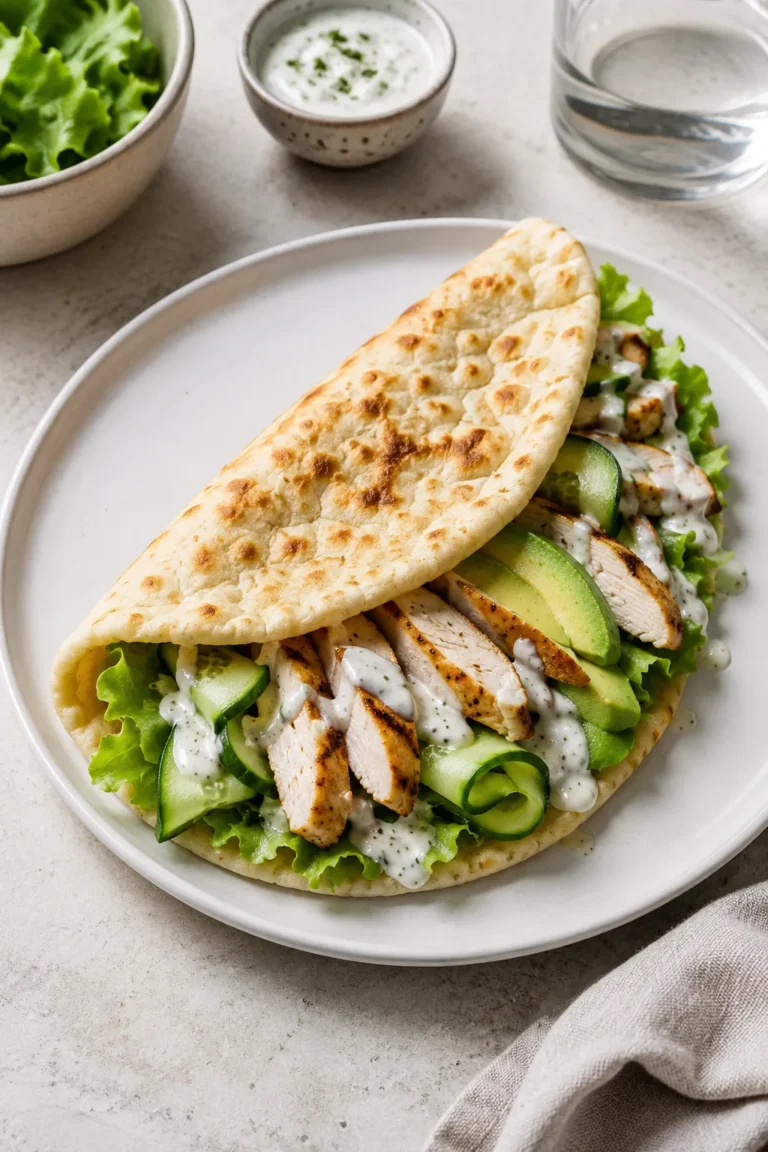
- Turkey and avocado wraps
- Chicken and hummus lunch wraps
- Breakfast flatbread with scrambled eggs and spinach
- Tuna salad roll-ups
- Mini sandwich squares for snack plates
- Open-faced flatbread topped with cottage cheese, tomatoes, and herbs
It can also replace tortillas in a pinch, especially for cold lunches or lightly reheated wraps. Just avoid piling it with very wet fillings like heavily dressed salads or saucy hot leftovers, because that can soften it too much.
For another fresh wrap-style meal, try my Thai basil beef rolls when you want a flavourful high-protein lunch with crisp vegetables.
Meal-Prep Note: assemble just before eating if your fillings are moist. The flatbread stores well, but it holds its texture best when the filling goes in later.
Meal Prep, Storage, and Reheating
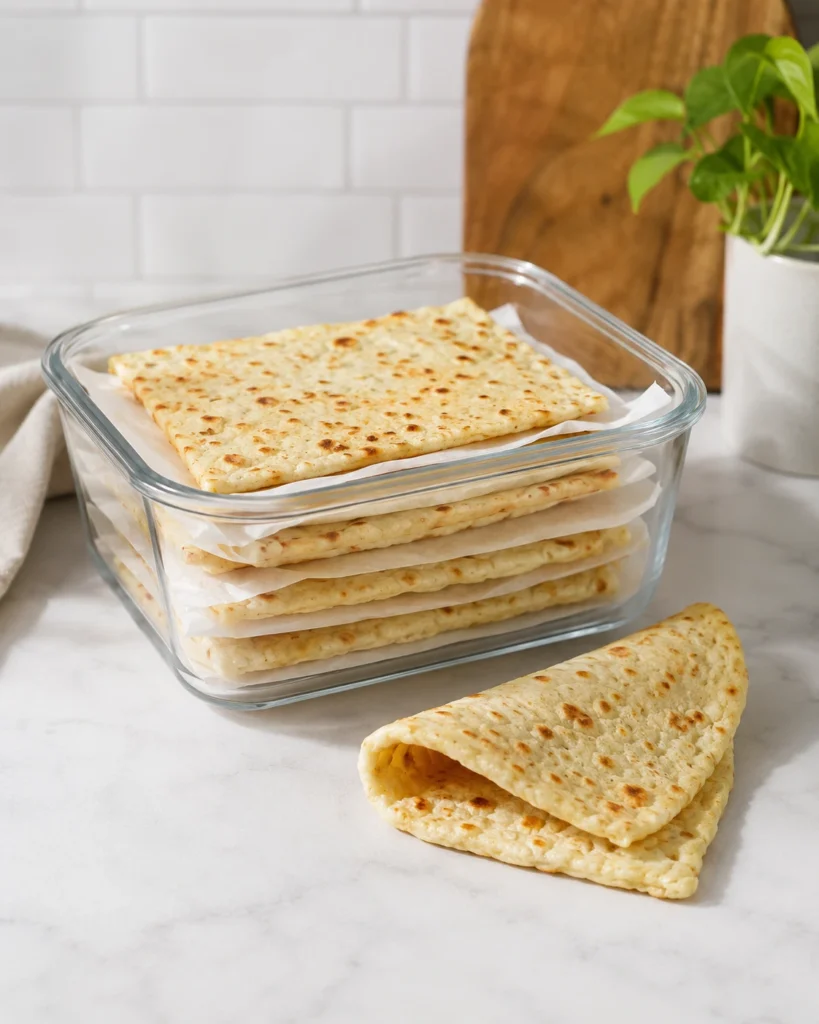
Store the flatbread in the refrigerator with parchment between layers so it does not stick to itself. It keeps well for about 3 days. For best texture, let it cool fully before storing.
To reheat, warm it briefly in a skillet over low heat or give it a short microwave refresh just until softened. Do not overheat it, or it can become a little firmer around the edges.
You can also eat it cold, especially when using it for wraps. That is one of the reasons it works so well for lunch prep. Store the 2 ingredient cottage cheese flatbread between parchment sheets so the pieces do not stick together.
Freezer Note: you can freeze it, but the texture is usually best fresh or refrigerated. If frozen, thaw it gently and use it for filled wraps rather than expecting the exact same texture as day one.
Easy Variations
Garlic Herb Version
Add garlic powder, Italian seasoning, and black pepper. This is the easiest way to make the flatbread feel more savory and less neutral.
Everything Bagel Version
Sprinkle everything bagel seasoning on top before baking. It adds texture and makes the flatbread especially good for breakfast fillings.
Spicier Lunch Wrap Version
Blend in a pinch of smoked paprika or red pepper flakes, then use it for chicken or turkey wraps.
Parmesan Finish
A small amount of finely grated Parmesan on top before baking adds more savory depth, though it technically takes the recipe beyond the two core ingredients.
Thinner Snack Squares
Spread the batter slightly thinner and cut the baked sheet into smaller squares for snack plates or mini sandwich bases.
Common Mistakes to Avoid
Expecting traditional bread texture
This is the biggest one. It is better to think of it as a protein wrap base (if you want an airy, sliceable loaf instead, try my zero carb yogurt bread).
Skipping the parchment
The flatbread releases much more cleanly with parchment. This is not the recipe to gamble on a bare pan.
Underblending the batter
A smooth batter gives the most even texture. Lumps from unblended cottage cheese make the bake less consistent.
Overbaking
If it gets too dark around the edges, it loses some flexibility and becomes more brittle.
Using very wet fillings too early
If you fill it too far ahead with juicy ingredients, the flatbread softens too much.
Common Mistake: judging the recipe before cooling it for a few minutes. It handles much better once it is set and slightly cooled.
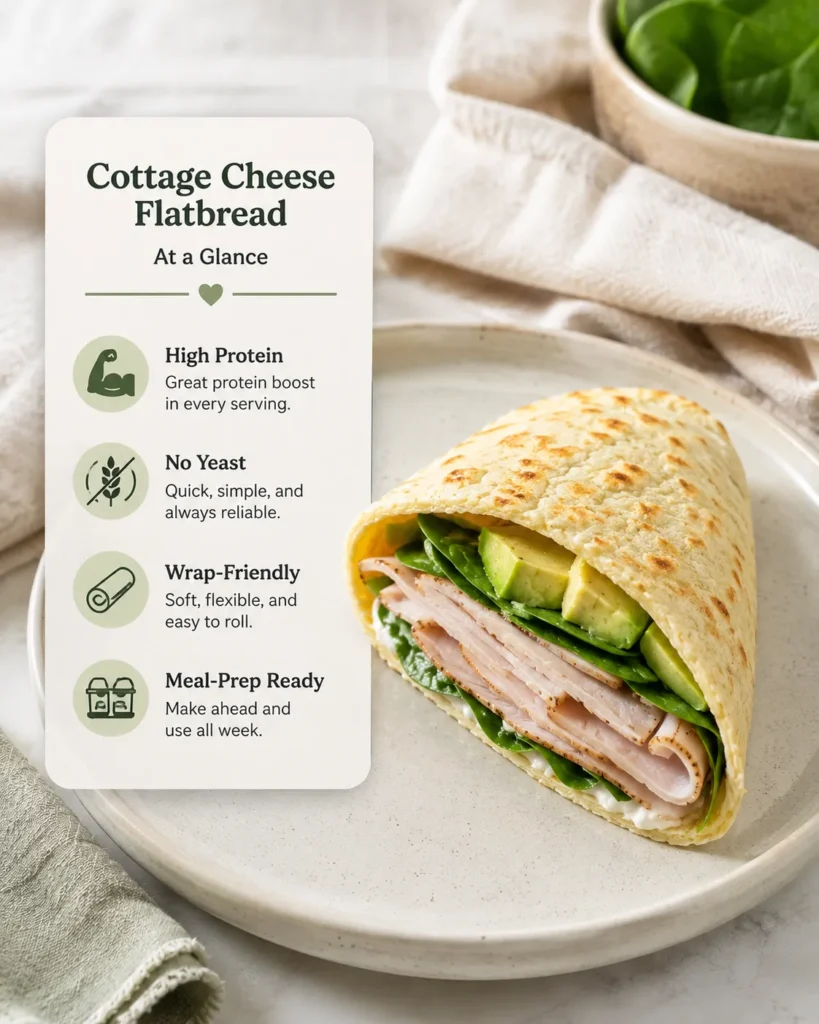
Flatbread at a Glance
Best for: wraps, lunch prep, sandwich swaps, breakfast fillings
Texture: soft, tender, flexible, more wrap-like than bread-like
Protein driver: cottage cheese and eggs
Flavor profile: mild, savory, lightly eggy, easy to season
Best fillings: turkey, hummus, chicken, eggs, avocado, greens
Storage: about 3 days refrigerated
Most useful tip: bake until just set and lightly golden for the best flexibility
Easy 2-Ingredient Cottage Cheese Flatbread
Ingredients
Equipment
Method
- Preheat the oven to 350°F and line a baking sheet with parchment paper.
- Add the cottage cheese and eggs to a blender or food processor.
- Blend until completely smooth and no cottage cheese curds remain.
- Add salt, garlic powder, herbs, or black pepper if using, then blend briefly again.
- Pour the mixture onto the prepared baking sheet.
- Spread it into a thin, even rectangle using a spatula.
- Bake for 30 to 35 minutes, or until the flatbread is set, lightly golden, and dry around the edges.
- Remove it from the oven and let it cool on the baking sheet for about 10 minutes.
- Carefully peel the flatbread away from the parchment paper.
- Fill, fold, slice, or use it as a high-protein wrap.
Notes
Store the cooled cottage cheese flatbread in an airtight container in the refrigerator for up to 3 days. Place parchment paper between pieces if stacking. Reheating:
Warm briefly in a dry skillet or microwave for a few seconds. Avoid overheating because it can make the flatbread rubbery. Freezing:
Freeze the fully cooled flatbread with parchment paper between layers for up to 1 month. Thaw in the refrigerator before using. Recipe Notes:
Blend the cottage cheese and eggs until completely smooth for the most even texture. Spread the batter in an even layer so the edges do not burn before the center sets. Texture Tip:
Let the flatbread cool before peeling it from the parchment. It becomes firmer and more flexible as it cools. Protein Note:
Protein will vary depending on the cottage cheese brand, egg size, and serving size.
More High-Protein Cottage Cheese Recipes
For a quick no-bake snack, my cottage cheese brownie batter protein bites are an easy chocolate option to keep in the fridge. Let the 2 ingredient cottage cheese flatbread cool briefly before lifting it from the parchment paper.
For a baked chocolate treat, try my fudgy cottage cheese brownies when you want a rich high-protein dessert.
u003cstrongu003eDoes cottage cheese flatbread really work with just two ingredients?u003c/strongu003e
Yes. Cottage cheese and eggs are enough to create a baked flatbread-style wrap. The key is blending the mixture smooth, spreading it thinly, and baking it until fully set.
u003cstrongu003eDoes it taste like cottage cheese?u003c/strongu003e
Not strongly. Once baked, the cottage cheese flavor becomes much milder. The result tastes more neutral and savory than most people expect, especially if you add simple seasonings.
u003cstrongu003eIs this flatbread flexible enough for wraps?u003c/strongu003e
Yes, usually. It is most flexible when it is baked just until set, cooled briefly, and used with fillings that are not too wet. Overbaking can make it less bendable.
u003cstrongu003eCan I make it ahead for meal prep?u003c/strongu003e
Yes. It stores well in the fridge for about 3 days, especially with parchment between layers. It is best for meal prep when you keep the flatbread and fillings separate until serving.
u003cstrongu003eCan I use large-curd or small-curd cottage cheese?u003c/strongu003e
Either can work because the batter gets blended smooth. What matters more is the overall moisture level of the cottage cheese.
u003cstrongu003eWhy did my flatbread tear?u003c/strongu003e
That usually happens because it was overbaked, undercooled, or filled with ingredients that were too wet. A smooth batter and proper cooling time help a lot.
Recipe Notes
Because this is an egg-based baked recipe, it should be stored chilled once cooled and handled like other cooked protein-based leftovers. If you are packing it for lunch, keep fillings cold and assemble close to serving time when possible.
It is also worth repeating that the name “flatbread” can be slightly misleading if you expect classic dough. The better mindset is protein wrap, lunch base, or no-yeast bread alternative. Framed that way, the recipe becomes far more useful and much easier to like.
Easy 2 ingredient cottage cheese flatbread earns its place because it is simple, quick, and genuinely helpful for high-protein lunches. It is not trying to replace every bread recipe. It is solving a different problem, and for wraps, meal prep, and everyday protein-forward meals, it does that very well.