Fluffy Cottage Cheese Bread (High Protein, Soft and Easy)
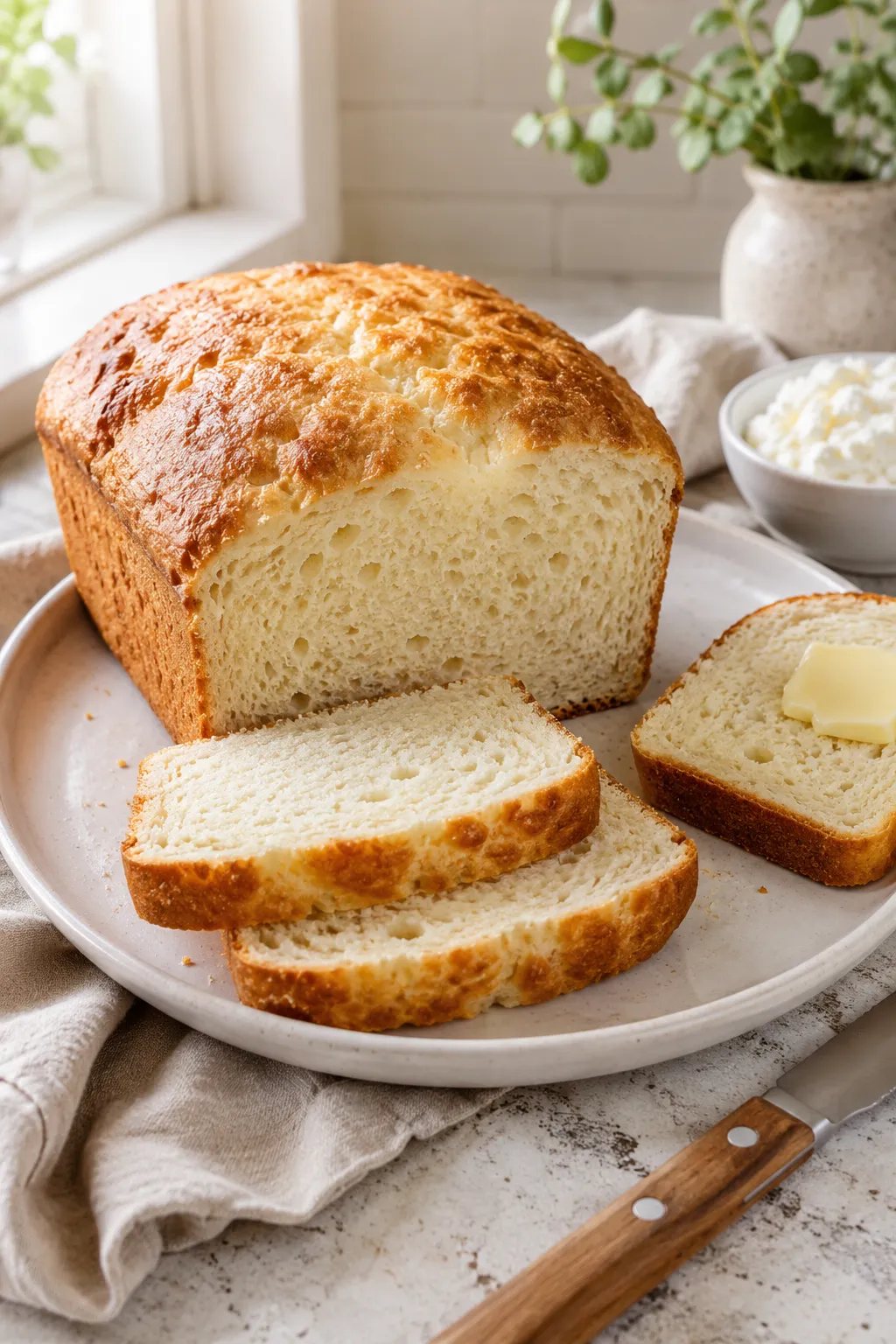
Fluffy cottage cheese bread is a soft, high-protein loaf made with cottage cheese and eggs for an easy breakfast, snack, or sandwich option.
It blends up fast, bakes on one pan, and works beautifully as a wrap, light sandwich base, or savory snack. The small upgrade here is simple: a little oat flour and parmesan help the texture feel more like actual flatbread instead of a delicate baked omelet. The result is flexible, savory, and much easier to love on repeat.

What is cottage cheese flatbread?
Cottage cheese flatbread is a high-protein baked bread alternative made by blending cottage cheese with eggs and a few supporting ingredients, then baking it into a soft, flexible sheet that can be sliced, folded, or used like a wrap. The best versions taste savory, stay tender, and hold up well enough for real meals.
If you like practical meal prep, easy high-protein lunches, wrap alternatives, and simple cottage cheese recipes that do more than just chase a trend, this recipe fits right in. It also bridges nicely into protein snacks, quick dinners, and better-for-you comfort food because it can be filled, layered, rolled, or cut into strips for dipping.
Why You Will Love This Cottage Cheese Flatbread
- It is genuinely easy: blend, spread, bake, and cool.
- The oat flour makes it softer and less fragile than ultra-thin viral versions.
- It feels high-protein without pretending to be magic health food.
- For a thinner wrap-style option, try my easy 2-ingredient cottage cheese flatbread when you want a simple high-protein lunch base.
- The flavor is savory and mild, so it works with many fillings.
- It is useful for meal prep lunches, snack plates, or light dinners.
- It folds better after cooling, which makes it more practical for wraps.
- Beginners can make it successfully without special equipment beyond a blender and sheet pan.
Why Cottage Cheese Flatbread Works
The biggest problem with many cottage cheese flatbread recipes is texture. They often look good fresh out of the oven, then tear when you try to roll them. This version fixes that in a very home-cook-friendly way.
Blending the cottage cheese smooths out the curds, so the batter bakes more evenly. Eggs help it set and give structure. A modest amount of oat flour absorbs extra moisture and makes the finished flatbread softer, sturdier, and more bread-like. Parmesan adds savory depth and helps the edges brown a little better.
Why This Works:
You are not trying to force a two-ingredient batter to behave like bakery flatbread. You are giving it just enough support to become flexible, useful, and repeatable.
What Makes It High Protein
Cottage cheese is doing most of the heavy lifting here. It adds a solid protein base without making the recipe feel dense or overly dry. The eggs contribute more protein and also create structure. Parmesan adds a small extra boost while building savory flavor.
This is not a gimmicky “protein hack” that depends on a scoop of powder to make sense. It is simply a naturally protein-forward recipe built from everyday ingredients. If you want even more protein at mealtime, pair the flatbread with sliced chicken, tuna salad, turkey, smoked salmon, tofu, or a thick Greek yogurt spread.
Protein Upgrade:
Use a higher-protein cottage cheese brand and pair each serving with a protein-rich filling instead of relying on the flatbread alone to carry the full meal.
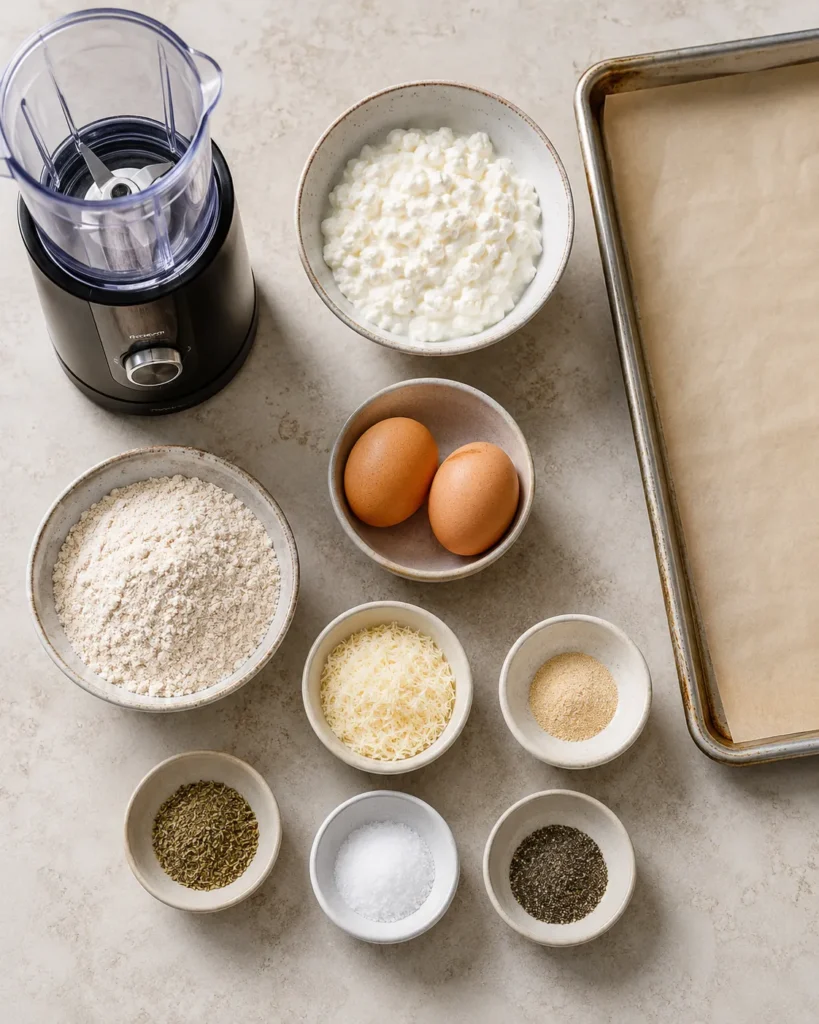
Ingredients for Cottage Cheese Flatbread
Main Ingredients
- 1 cup full-fat or 2% cottage cheese
- 2 large eggs
- 1/2 cup oat flour
- 2 tablespoons finely grated parmesan
- 1/2 teaspoon baking powder
- 1/2 teaspoon garlic powder
- 1/2 teaspoon Italian seasoning
- 1/4 teaspoon fine salt
- 1/4 teaspoon black pepper
Optional Add-Ins
- 1 tablespoon chopped fresh chives
- 1 tablespoon chopped parsley
- pinch of chili flakes
- 1 teaspoon lemon zest for a fresher finish
Optional Protein Boosters for Serving
- grilled chicken
- sliced turkey
- tuna mixed with Greek yogurt
- smoked salmon
- baked tofu strips
- scrambled eggs
This ingredient list is intentionally compact. The goal is not to bury the cottage cheese flavor under too many extras. It is to create a savory, neutral base that plays well with both fresh and richer fillings.
Ingredient Notes and Easy Swaps
If your cottage cheese is especially watery, drain off a little visible liquid before blending. You do not need to strain it dry, but too much extra moisture can make the flatbread slower to set.
Oat flour gives the softest result here. If you do not have it, blend rolled oats into a fine flour. All-purpose flour can work, but the texture becomes slightly more bread-like and a little less tender. Almond flour alone is not the best swap for this specific version because it changes both moisture balance and structure.
For another protein-rich cottage cheese recipe, try my blueberry cottage cheese breakfast bake for an easy make-ahead breakfast. The ingredients for this fluffy cottage cheese bread are simple, protein-rich, and easy to keep on hand.
Parmesan is optional but strongly recommended. It does not make the flatbread cheesy in a heavy way. It simply deepens the savory flavor and helps the edges bake up better.
Budget-Friendly Swap:
Skip the parmesan if needed and add a small extra pinch of salt plus garlic powder. You will still get a workable result, just with slightly less depth.
How to Make Cottage Cheese Flatbread
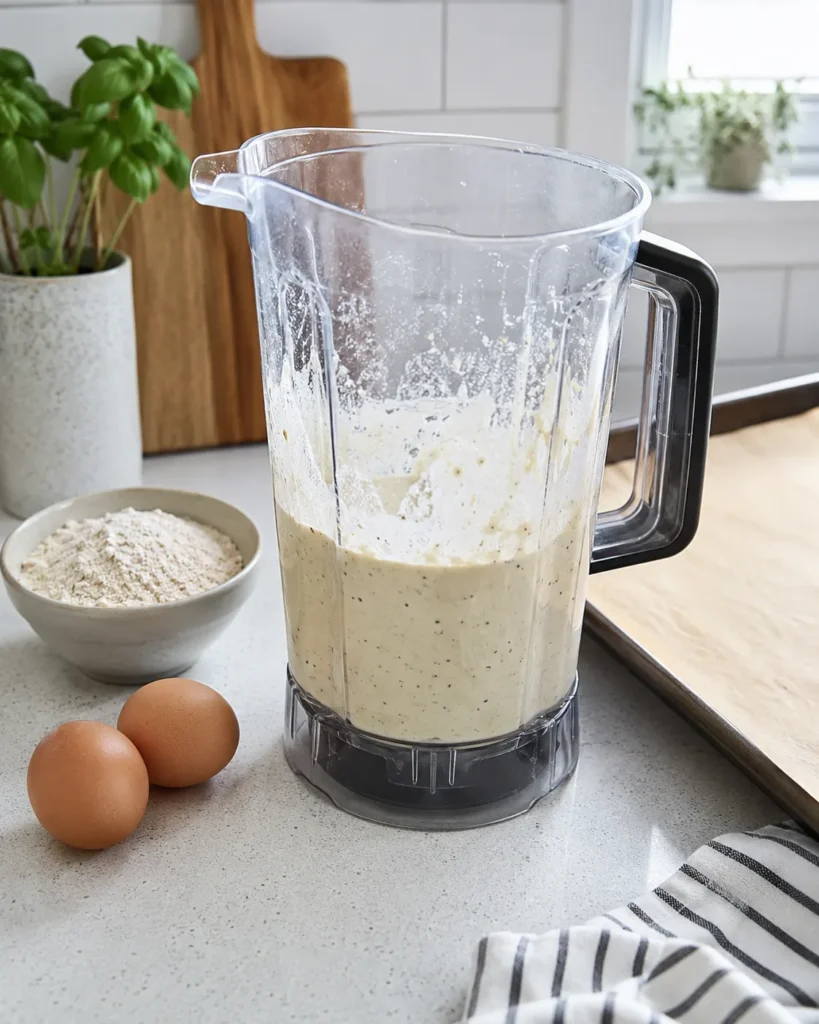
This fluffy cottage cheese bread comes together quickly once the cottage cheese mixture is blended until smooth.
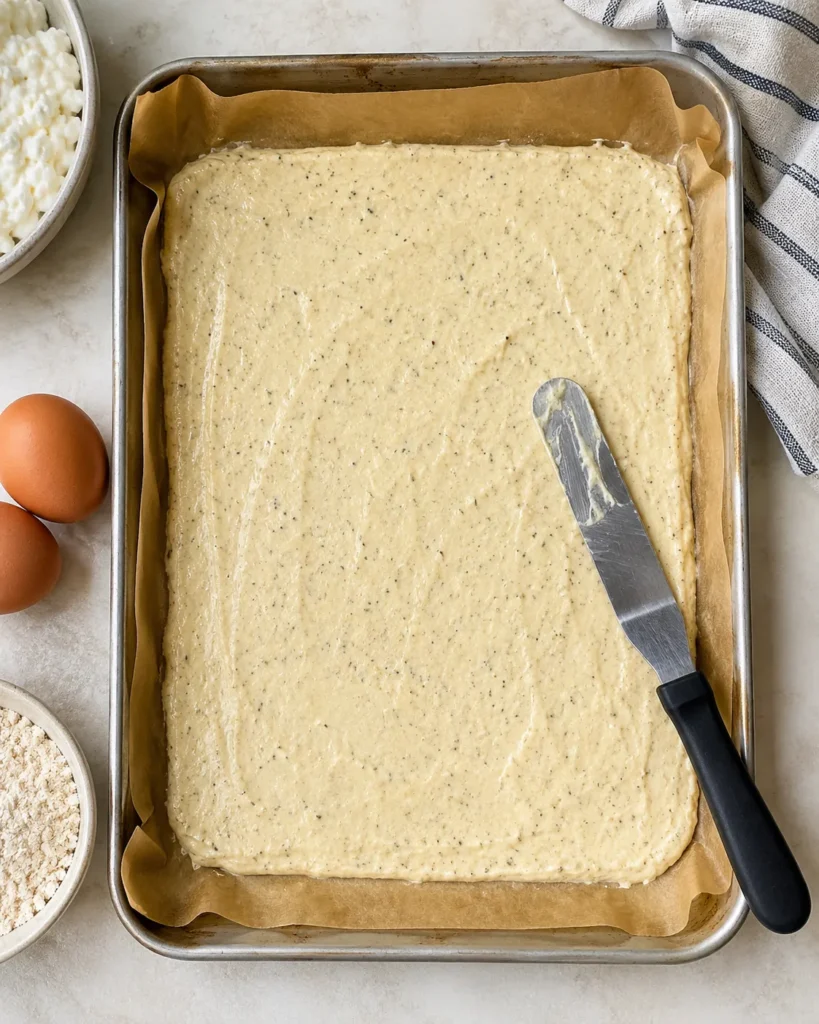
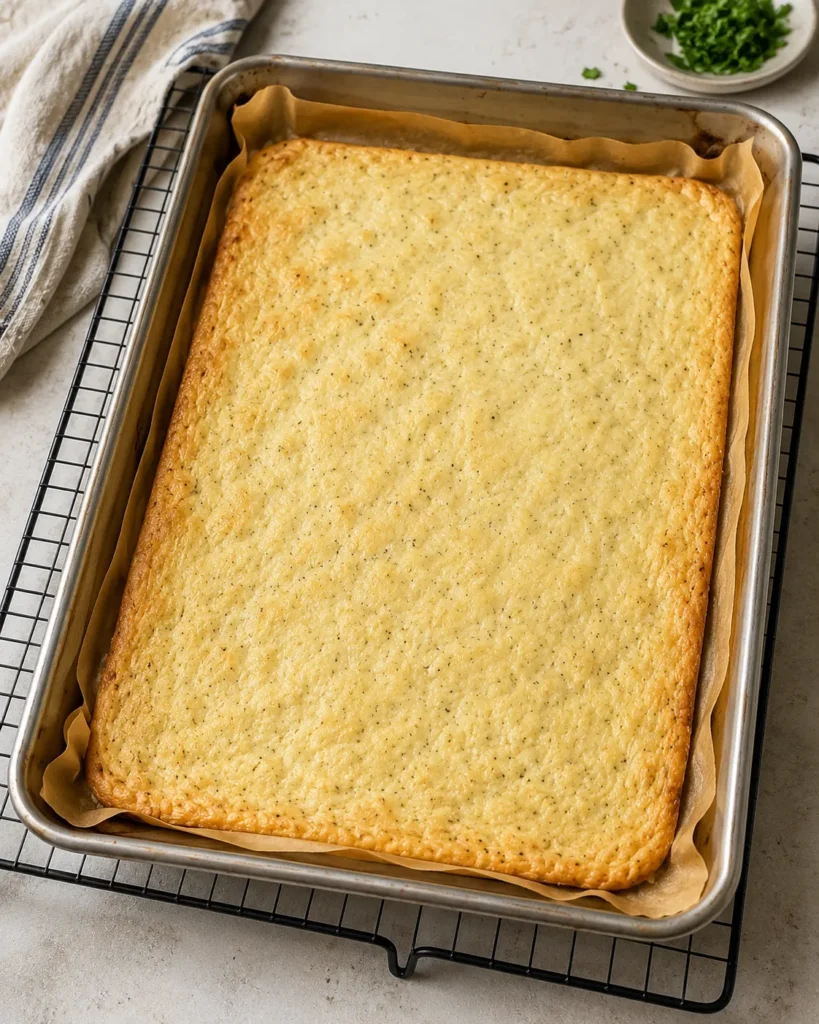
Texture Tip:
If you pull it too early, it will feel soft but fragile. If you bake it far past the set point, it becomes drier and less flexible. Aim for just-set with lightly golden edges.
Beginner-Friendly Tip:
Use a smaller pan for a thicker, more forgiving flatbread. Over-spreading is one of the main reasons these recipes disappoint.

Serving Ideas
This flatbread shines when you treat it like a flexible base instead of expecting it to mimic heavy naan or thick pita. It is excellent for quick lunches because it feels satisfying without being overly dense.
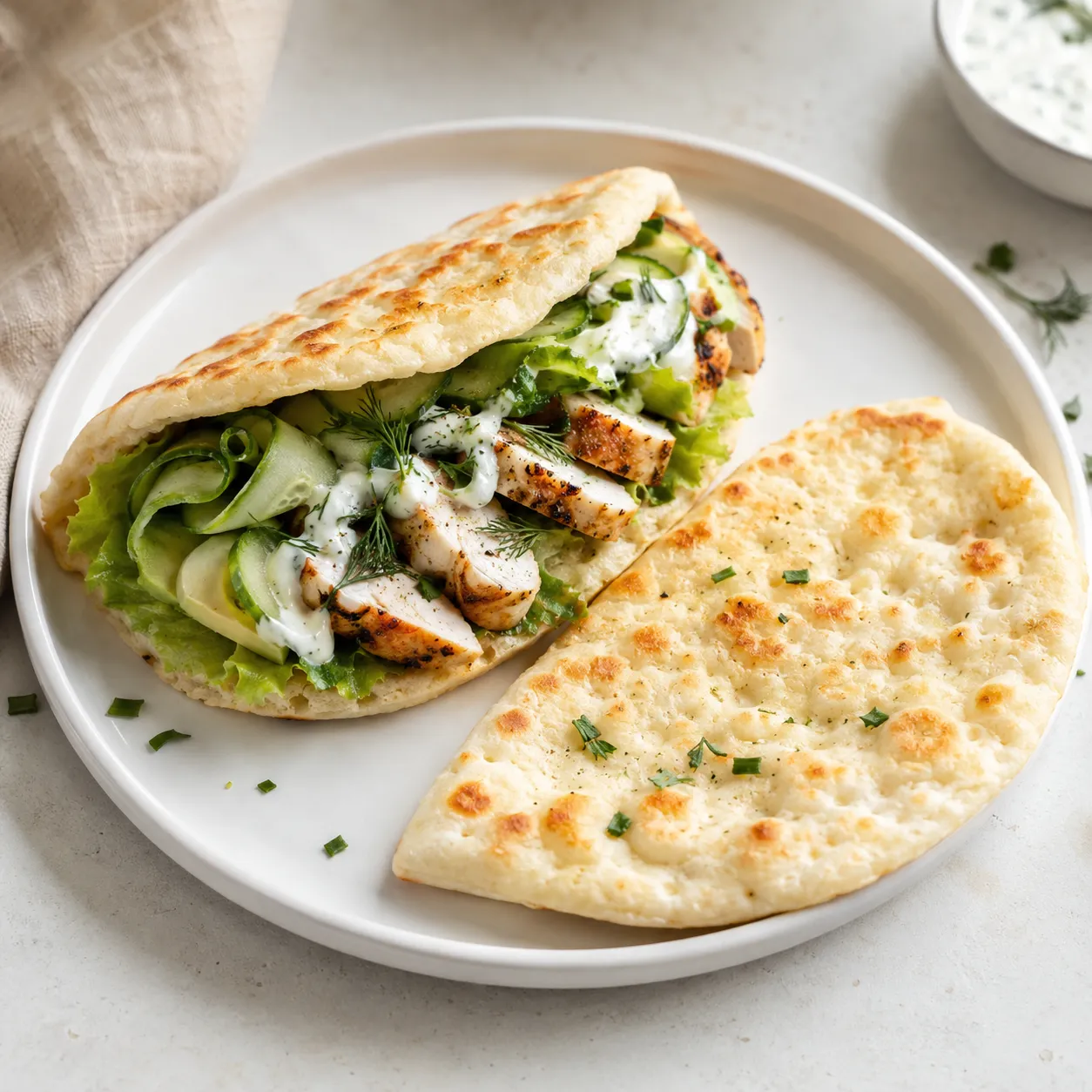
For another savory high-protein bake, my breakfast protein biscuits are an easy option for busy mornings. Serve this fluffy cottage cheese bread toasted with eggs, avocado, chicken, or your favorite sandwich fillings.
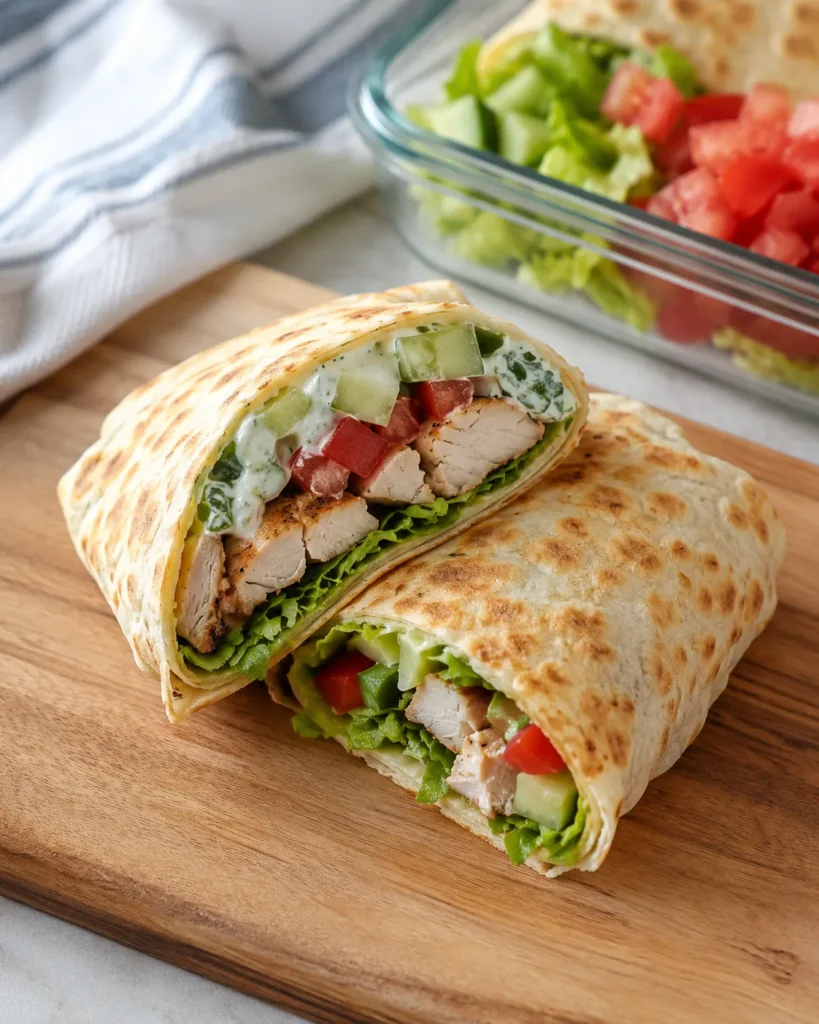
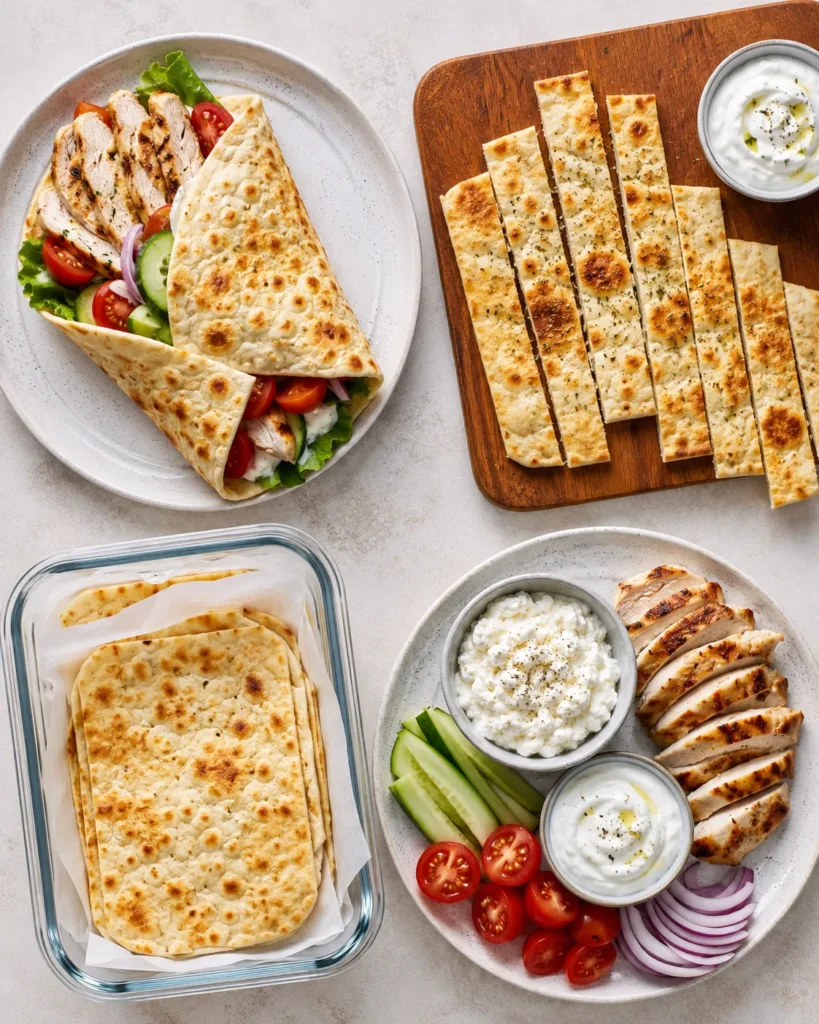
Try it with sliced chicken, crunchy romaine, cucumbers, and a lemony yogurt sauce for a clean, fresh wrap. For something richer, use turkey, roasted peppers, and a little mozzarella. It also works as a breakfast option with scrambled eggs, spinach, and hot sauce, or as a snack cut into strips with hummus or whipped cottage cheese dip.
You can even use it as a light pizza-style base. Add marinara, chicken, vegetables, and a little cheese, then bake briefly until hot. It is not a deep crust situation, but it is a smart way to turn leftovers into something new.
Meal Prep Storage and Reheating
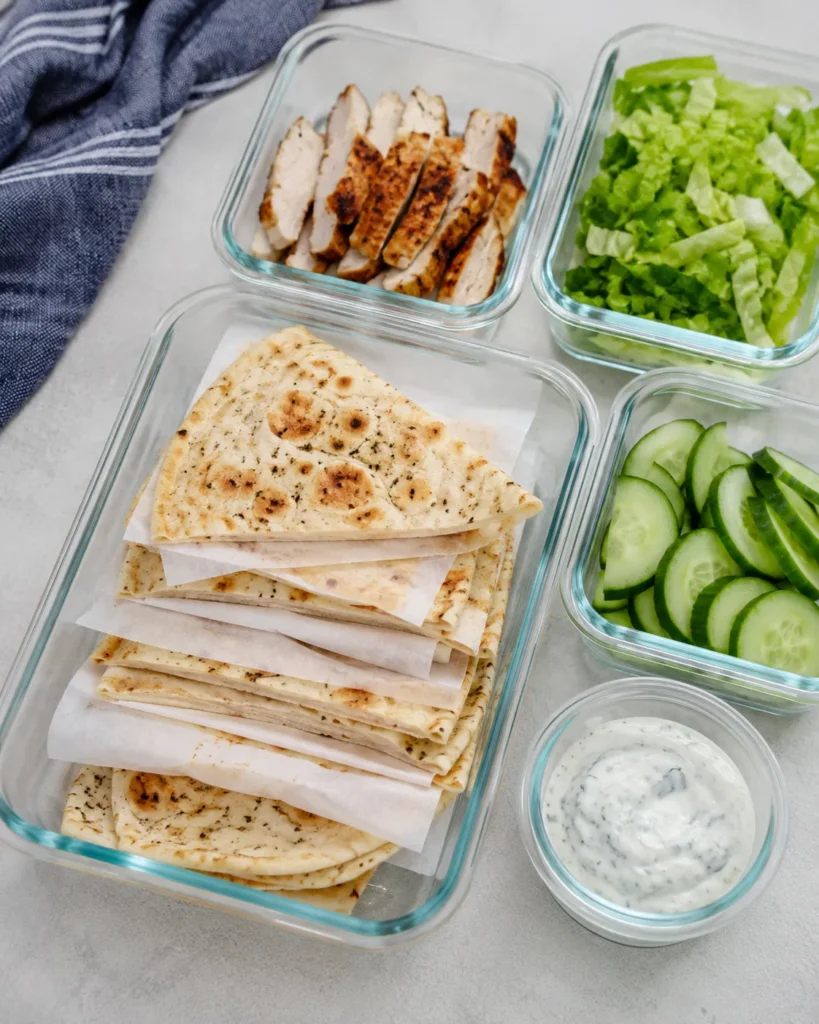
This recipe is quietly great for meal prep because it stores better than you might expect. Once cooled completely, place parchment between pieces and refrigerate them in a sealed container. They are best within 3 days for the softest texture.
For quick lunches, store the flatbread separately from wet fillings. That keeps it from becoming too soft or soggy. If you want to reheat it, a dry skillet over low heat for 20 to 30 seconds per side works well. A microwave is fine for convenience, but it softens the structure more than a skillet does.
Store the fluffy cottage cheese bread in an airtight container in the refrigerator and reheat individual slices as needed.
Freezing is possible, though the texture becomes a bit softer after thawing. Wrap individual pieces well, freeze flat, and thaw overnight in the fridge before using. Serve a warm slice alongside my high-protein chili for a hearty and filling protein-packed meal.
Meal-Prep Note:
This is one of those recipes that gets more practical once you stop treating it like a novelty and start using it like a lunch tool.
Variations and Protein Upgrades
A good base recipe should be easy to nudge in different directions. This one is.
For a Mediterranean version, add oregano, parsley, and a pinch of lemon zest to the batter, then fill it with chicken, cucumber, tomatoes, and feta. For a spicy version, add chili flakes or smoked paprika and serve with buffalo chicken or roasted tofu. For a breakfast angle, keep the seasonings simple and fill it with eggs, turkey sausage, and sautéed spinach.
If you want a higher-protein meal overall, the simplest move is to increase the protein in the filling rather than overloading the batter. The flatbread stays soft and balanced that way, and the final meal still feels satisfying.

Common Mistakes to Avoid
Spreading it too thin
That is the fastest way to end up with brittle edges and a weak center. A slightly thicker layer is more forgiving.
Skipping the cooling time
The flatbread needs those extra minutes to set. Trying to peel and fold it while very hot usually leads to tearing.
Using very wet cottage cheese without adjusting
A little extra liquid is fine. Too much can make the center slower to bake and the final texture looser.
Overbaking
Once it is set and lightly golden, pull it. Overbaking trades flexibility for dryness.
Adding wet fillings too early
Build wraps right before eating when possible, especially if you are using sauces, tomatoes, or juicy vegetables.
Recipe at a Glance
| Element | Best Approach |
| Texture goal | Soft, flexible, lightly savory |
| Best flour choice | Oat flour for tenderness |
| Best use | Wraps, quick lunches, snack plates |
| Cooling time | 10 to 15 minutes before lifting |
| Fridge storage | Up to 3 days |
| Best reheat method | Low skillet heat for brief warming |
| Best protein pairing | Chicken, turkey, tuna, smoked salmon, tofu |
| Easiest flavor upgrade | Parmesan + herbs + garlic powder |
Cottage Cheese Flatbread
Ingredients
Equipment
Method
- Preheat the oven to 375°F and line a baking sheet with parchment paper.
- Add the cottage cheese and eggs to a blender or food processor.
- Blend until completely smooth and no large cottage cheese curds remain.
- In a mixing bowl, combine the oat flour, Parmesan, baking powder, salt, garlic powder, and black pepper.
- Pour the blended cottage cheese mixture into the dry ingredients.
- Stir gently until a smooth, pourable batter forms.
- Spread the batter onto the prepared baking sheet in a thin, even rectangle.
- Bake for 25 to 30 minutes, or until the flatbread is set, lightly golden, and dry around the edges.
- Remove it from the oven and let it cool for about 10 minutes.
- Carefully peel the flatbread from the parchment paper, then slice, fold, or fill as desired.
Notes
Store the completely cooled cottage cheese flatbread in an airtight container in the refrigerator for up to 4 days. Place parchment paper between pieces if stacking. Reheating:
Warm briefly in a dry skillet, toaster oven, or microwave. Avoid overheating because it may become rubbery. Freezing:
Freeze the cooled flatbread with parchment paper between layers for up to 1 month. Thaw it in the refrigerator before reheating. Recipe Notes:
Blend the cottage cheese and eggs until completely smooth. Spread the batter into an even layer so the center and edges bake evenly. Texture Tip:
Let the flatbread cool before removing it from the parchment paper. It becomes firmer and easier to fold as it cools. Serving Tip:
Use it as a wrap with grilled chicken, turkey, vegetables, avocado, or Greek yogurt sauce.
Can you make cottage cheese flatbread without oat flour?
Yes, but the texture changes. The very minimal versions bake up thinner and can be more fragile. Oat flour makes this version softer, easier to handle, and more practical for wraps.
Why did my cottage cheese flatbread tear?
It was likely too thin, too hot when handled, or a bit underbaked. Letting it cool, using a slightly thicker spread, and baking until the center is set all help.
Does cottage cheese flatbread taste like eggs?
It can if the recipe leans too heavily on eggs without enough seasoning or support. Parmesan, garlic powder, herbs, and proper baking balance the flavor and make it taste more savory than eggy.
Can I use cottage cheese flatbread for meal prep?
Yes. It works well for meal prep when stored separately from wet fillings. Refrigerate the baked flatbread in layers with parchment and assemble wraps when you are ready to eat.
Is cottage cheese flatbread actually high protein?
It is reasonably high in protein for a bread-style base because the recipe relies on cottage cheese and eggs. It becomes an even more complete high-protein meal when paired with protein-rich fillings.
Can I freeze cottage cheese flatbread?
Yes, though the texture is a little softer after thawing. Wrap pieces well, freeze flat, thaw in the fridge, and reheat gently in a skillet if you want a better texture.
Recipe Notes
Use a cottage cheese you already enjoy eating. Since it is the main ingredient, brand differences matter. Some are saltier, tangier, or looser than others. Start with a full-fat or 2% version for the softest result.
A lined pan is important here. Parchment makes release easier and keeps the bottom from sticking. For food safety and best texture, cool leftovers, refrigerate promptly, and avoid packing the flatbread with very wet fillings long before serving.
This recipe is especially helpful when you want a lighter lunch option that still feels put together. It is not trying to replace every bread product. It is simply a smart, high-protein tool that happens to be fast and genuinely useful.
Why This Fluffy Cottage Cheese Bread Is Worth Making
Cottage cheese flatbread is one of those recipes that becomes far more valuable once you make a version that actually behaves well in a real kitchen. Soft, savory, and easy to adapt, it gives you a high-protein base that works for wraps, meal prep, and quick lunches without feeling fussy or overly trendy.