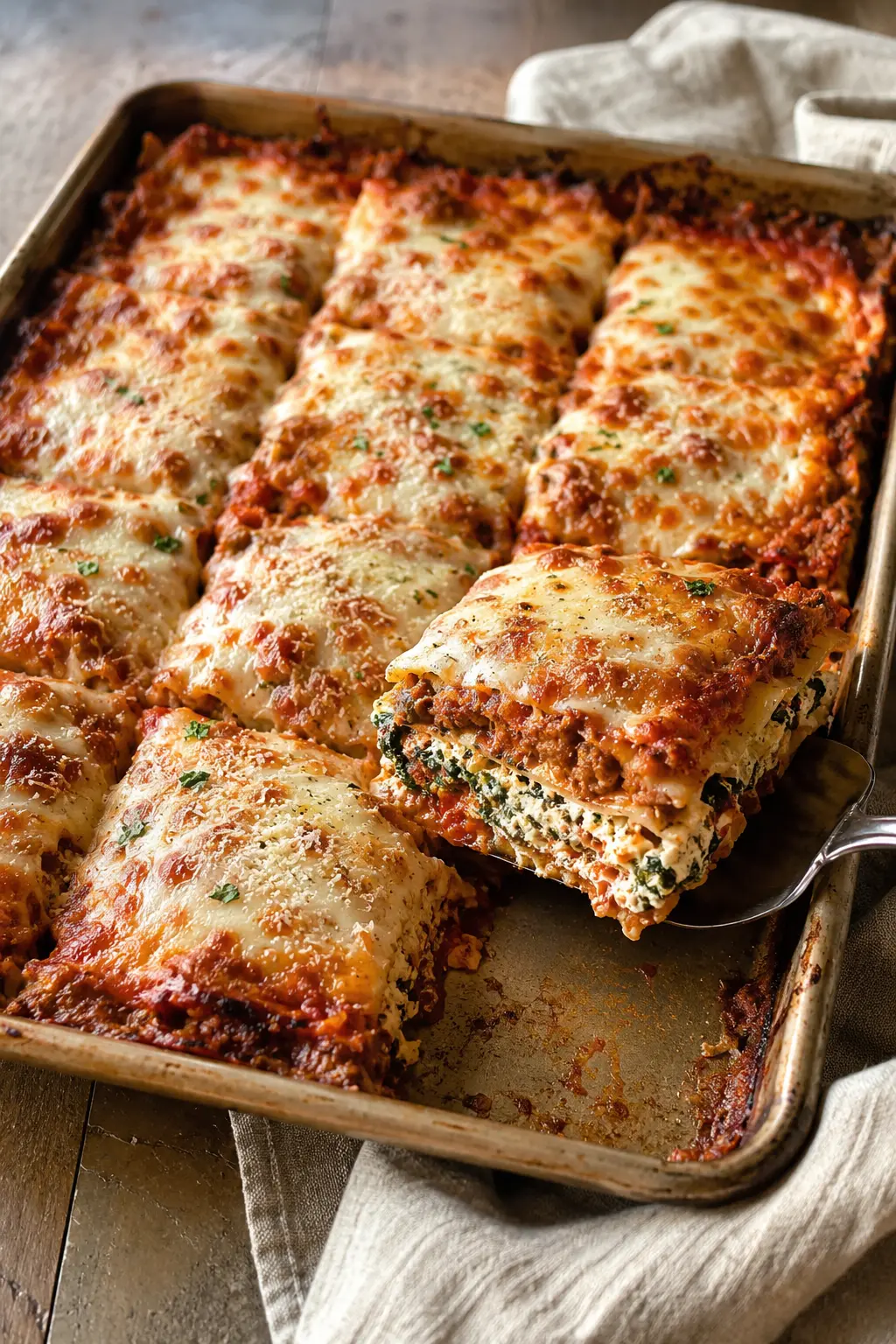
Easy Sheet Pan Lasagna (Mess-Free Weeknight Dinner)
If classic lasagna feels too ambitious for a random Tuesday, this sheet pan lasagna solves the right problem. You still get saucy pasta, browned cheese, crispy edge pieces, and that comforting baked-dinner payoff, but the whole thing is flatter, faster, and easier to manage than a deep layered casserole. It is built for real weeknights, not holiday-level patience.
This version also leans protein-forward in a way that makes sense. Lean ground turkey, cottage cheese, mozzarella, and parmesan give it more staying power than a lighter pasta bake without pushing it into “health food” territory. It still tastes like lasagna. It is just easier to assemble, easier to portion, and easier to clean up afterward.
If you want a more classic layered version, try this easy cottage cheese lasagna next.
What is sheet pan lasagna?
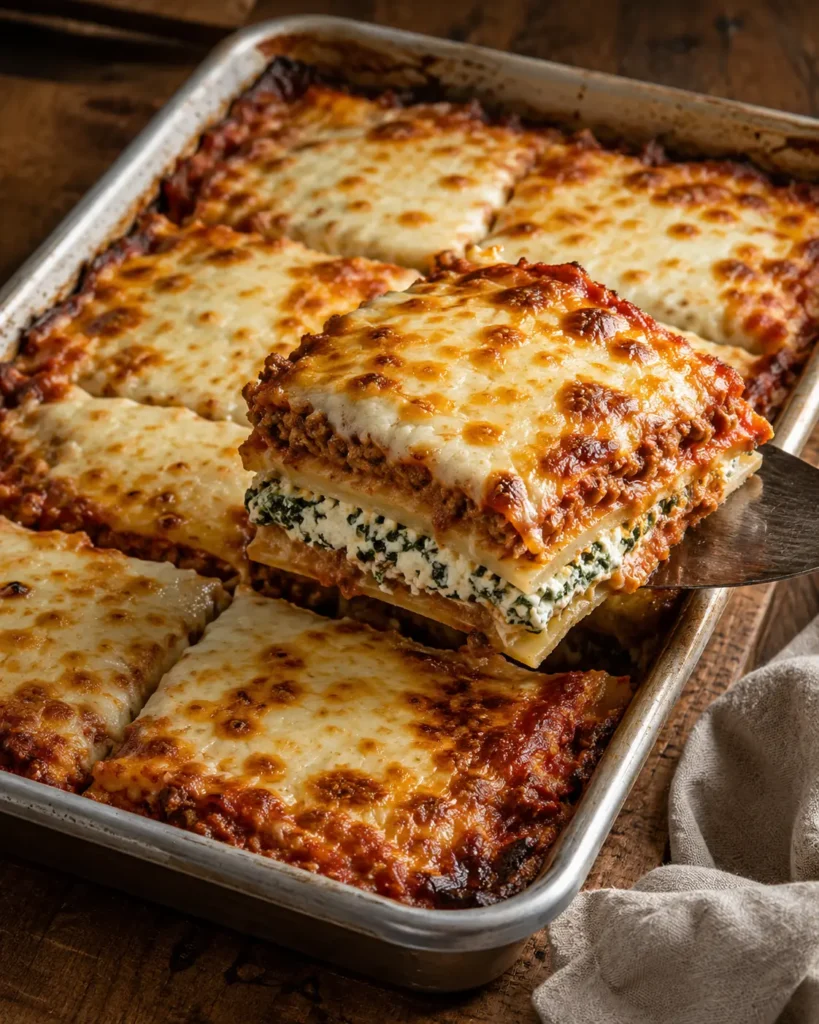
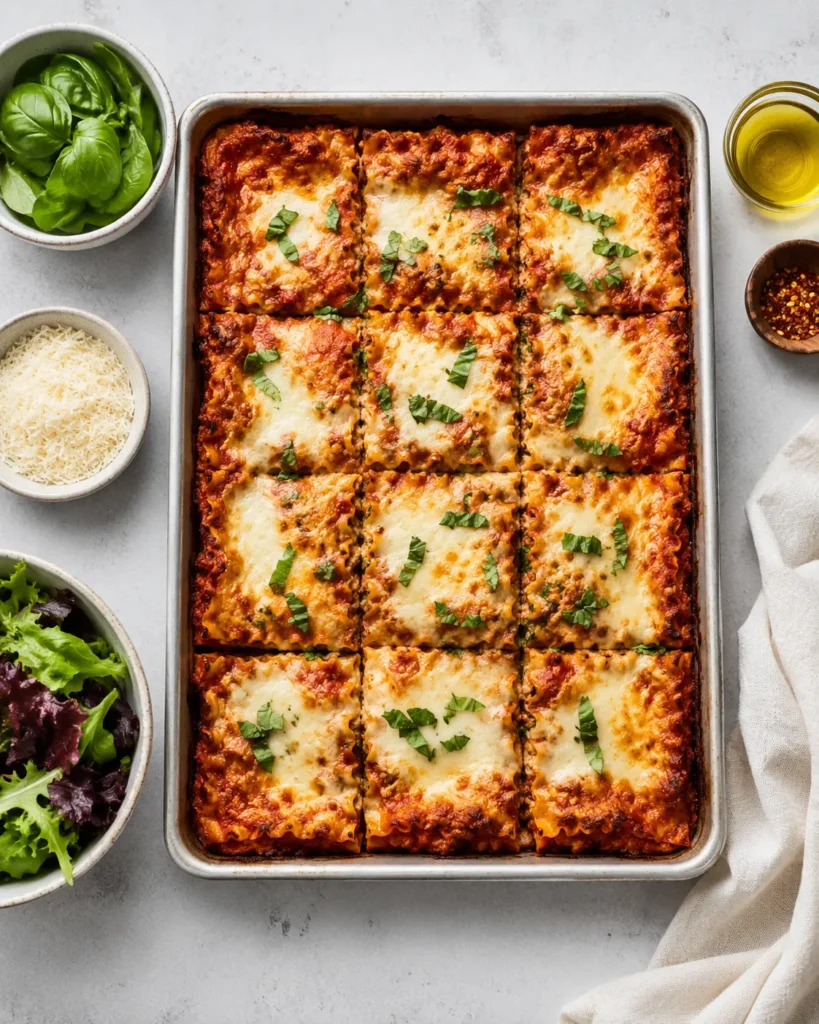
Sheet pan lasagna is a flatter, easier version of lasagna baked on a rimmed sheet pan instead of in a deep casserole dish. It usually involves simplified layering, faster baking, and more crispy edge surface area, which makes it especially appealing for weeknight dinners and easier portioning.
If you also search for easy lasagna, weeknight pasta bakes, high-protein comfort food, or family-friendly baked dinners, this recipe fits right into that space. It gives you lasagna flavor without the same level of time, mess, or layering fuss.
This recipe sits naturally between easy high-protein dinner, comfort-food pasta bake, family-friendly weeknight meal, and meal-prep lasagna. If you like protein-forward casseroles, cottage cheese dinner recipes, or simpler versions of classic baked pasta, this is exactly the kind of recipe that earns repeat status.
Quick Wins / Why You’ll Love It
- It is easier to build than traditional layered lasagna.
- The sheet pan gives you more crispy edges, which is usually the best part.
- The filling is protein-forward without making the dinner feel like a compromise.
- It slices neatly, which makes leftovers and meal prep more useful.
- Cottage cheese keeps the filling creamy while adding extra staying power.
- The flatter shape means faster, more even baking.
- Cleanup is simpler than a deep casserole dish version.
Why This Sheet Pan Lasagna Works
Current sheet-pan lasagna recipes are consistently winning because they skip the deep layered build, simplify assembly, and lean into the crispy-edge advantage of a sheet pan. That faster, flatter approach is exactly what makes this style so weeknight-friendly.
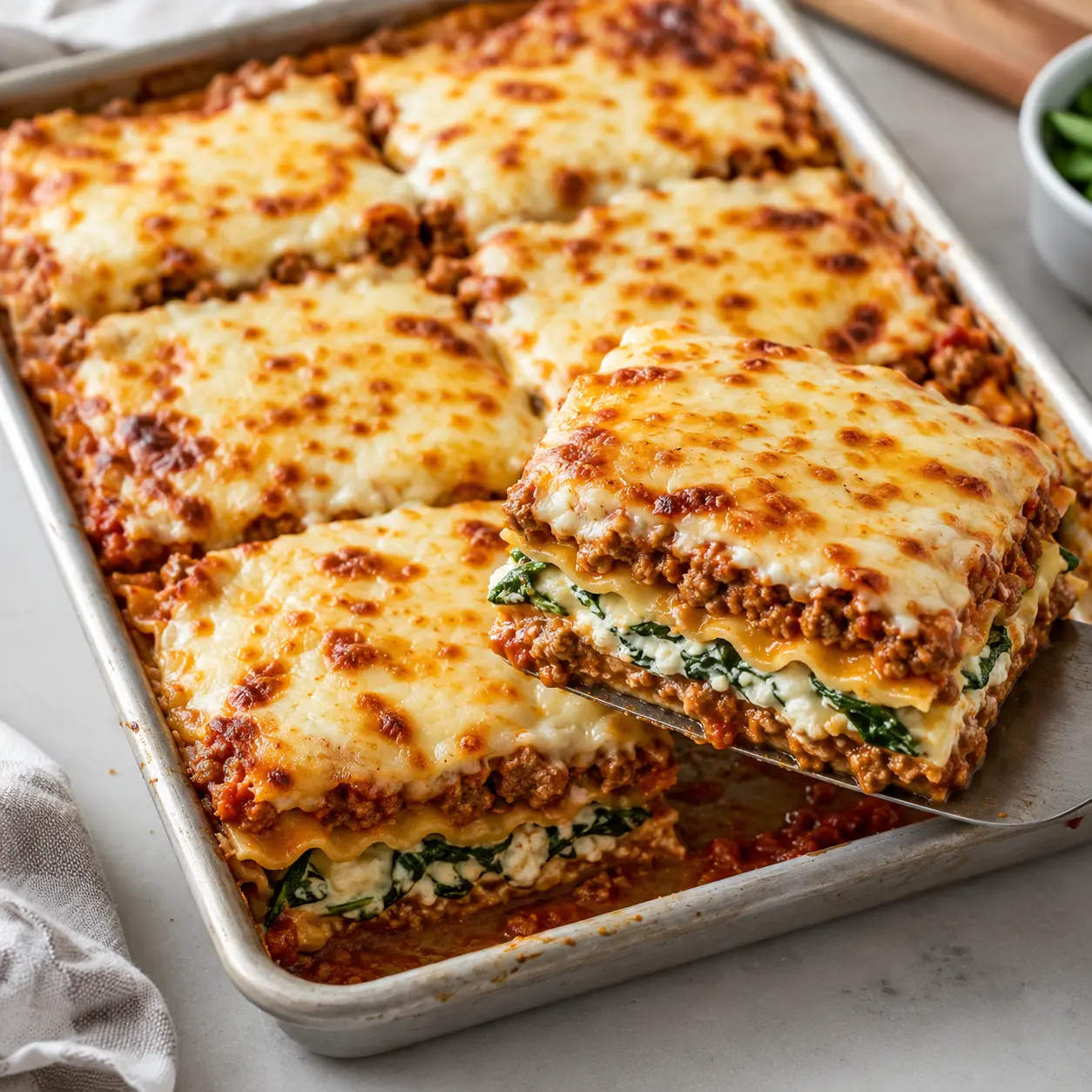
This version works especially well because it does not try to mimic a towering restaurant lasagna. It embraces the sheet pan for what it does best: thinner layers, better browning, easier slicing, and more texture contrast between the saucy center and the golden outer edges. The filling also stays practical and protein-forward, using lean turkey and cottage cheese instead of relying only on ricotta and mozzarella.
Why This Works:
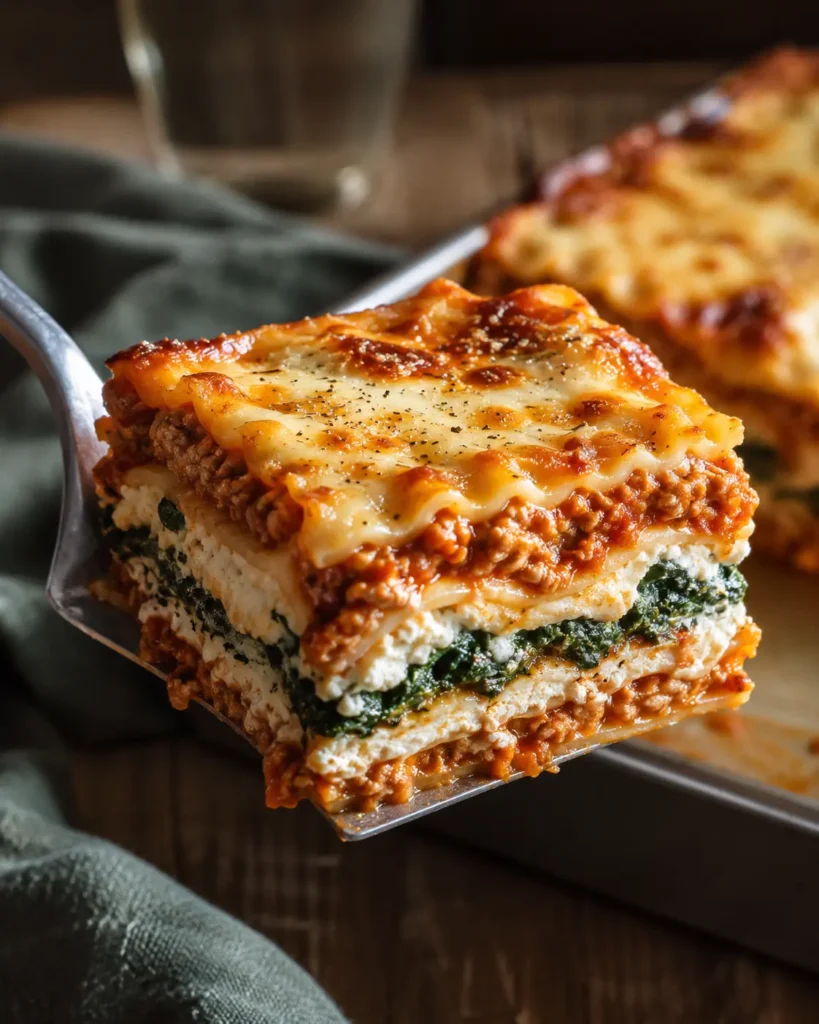
flatter bake means the noodles cook more evenly, the cheese browns more effectively, and the final dish feels easier to portion into weeknight-ready squares.
What Makes It High Protein
The protein logic here is straightforward and believable. Lean ground turkey gives the meat sauce a strong protein base, while cottage cheese, mozzarella, and parmesan add more support without turning the dish into a heavy cheese block.
That combination matters because sheet pan lasagna still needs to feel like comfort food. The goal is not “light lasagna.” The goal is a satisfying dinner that happens to be more protein-forward than the classic version.
Protein Upgrade:
If you want to push the protein a little further, use a higher-protein pasta sheet option when available or add a little more turkey to the sauce while keeping the sheet pan shallow enough to bake evenly.
Ingredients
For the Meat Sauce
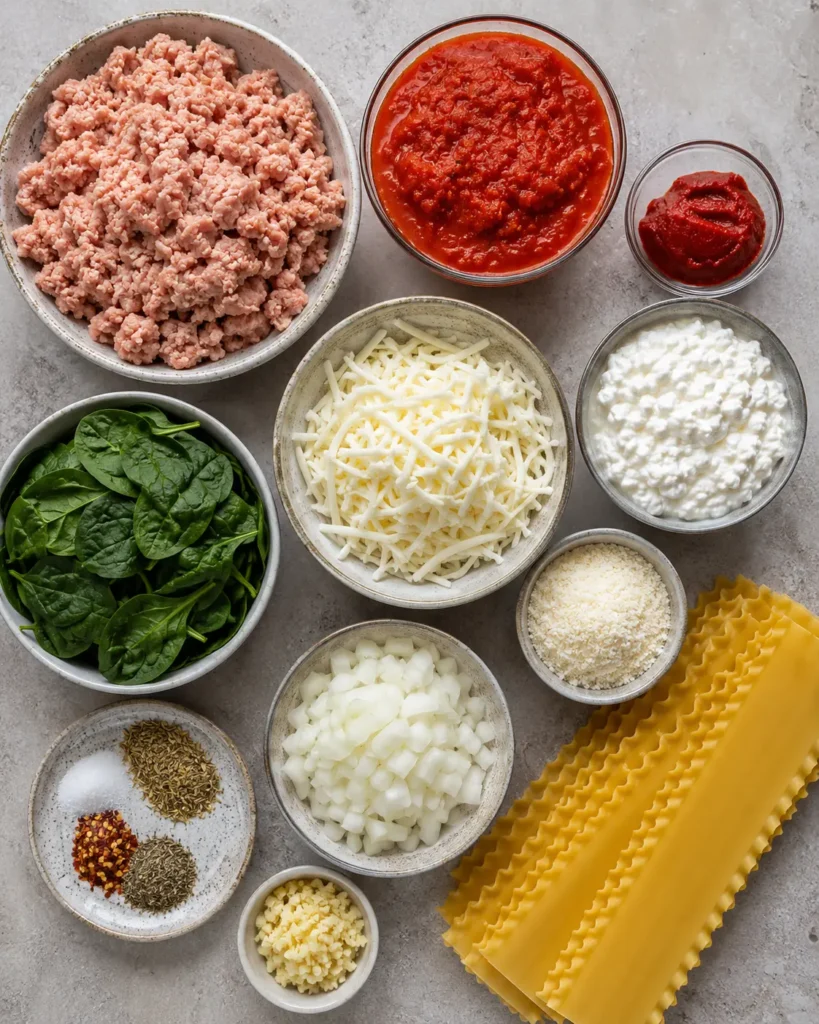
- 1 1/2 pounds lean ground turkey
- 1 tablespoon olive oil
- 1 small yellow onion, finely diced
- 4 garlic cloves, minced
- 1 teaspoon Italian seasoning
- 1/2 teaspoon crushed red pepper flakes, optional
- 1 jar (24 ounces) marinara sauce
- 2 tablespoons tomato paste
- 1/2 teaspoon kosher salt, plus more to taste
- 1/4 teaspoon black pepper
For the Cheese Filling
- 1 1/2 cups cottage cheese
- 1 egg
- 1 cup shredded mozzarella
- 1/3 cup grated parmesan
- 2 cups chopped spinach
- 1/4 teaspoon garlic powder
- pinch of salt and pepper
For Assembly
- 8 to 10 lasagna noodles, cooked until just flexible
- 1 to 1 1/2 cups shredded mozzarella for the top
- extra parmesan for finishing
- chopped basil or parsley, optional
Ingredient Notes and Smart Swaps
Ground turkey
Lean ground turkey works especially well because it keeps the lasagna protein-forward without making the sheet pan greasy. Ground beef also works, but you may want to drain more fat.
Cottage cheese
This is a practical stand-in for part or all of the ricotta layer. It keeps the filling creamy, adds protein, and blends especially well once mixed with egg, mozzarella, and parmesan.
Spinach
A small amount gives the filling more balance and color without turning the lasagna into a vegetable-first dinner. It is subtle enough for family dinners.
Noodles
Cook them only until flexible, not fully soft. They will continue baking in the sauce.
Marinara
A thicker marinara works better here than a watery one. Because the sheet pan is shallow, excess liquid can throw off the texture faster than in a deep casserole.
Budget-Friendly Swap:
Use half cottage cheese and half ricotta if that is what you have. The recipe will still work and stay creamy.
Beginner-Friendly Tip:
Lay the noodles on a lightly oiled baking sheet or parchment after boiling so they do not stick while you assemble.
How to Make Sheet Pan Lasagna
For food safety, cook the ground turkey until it reaches the safe minimum internal temperature for poultry before layering the lasagna.
Step 1: Prep the oven and pan
Preheat the oven to 425°F (220°C). Lightly oil a rimmed sheet pan or line it with parchment for easier cleanup if your pan allows it.
Step 2: Cook the noodles
Boil the lasagna noodles until just pliable. Drain and set aside carefully so they do not tear or stick together.
Step 3: Make the meat sauce
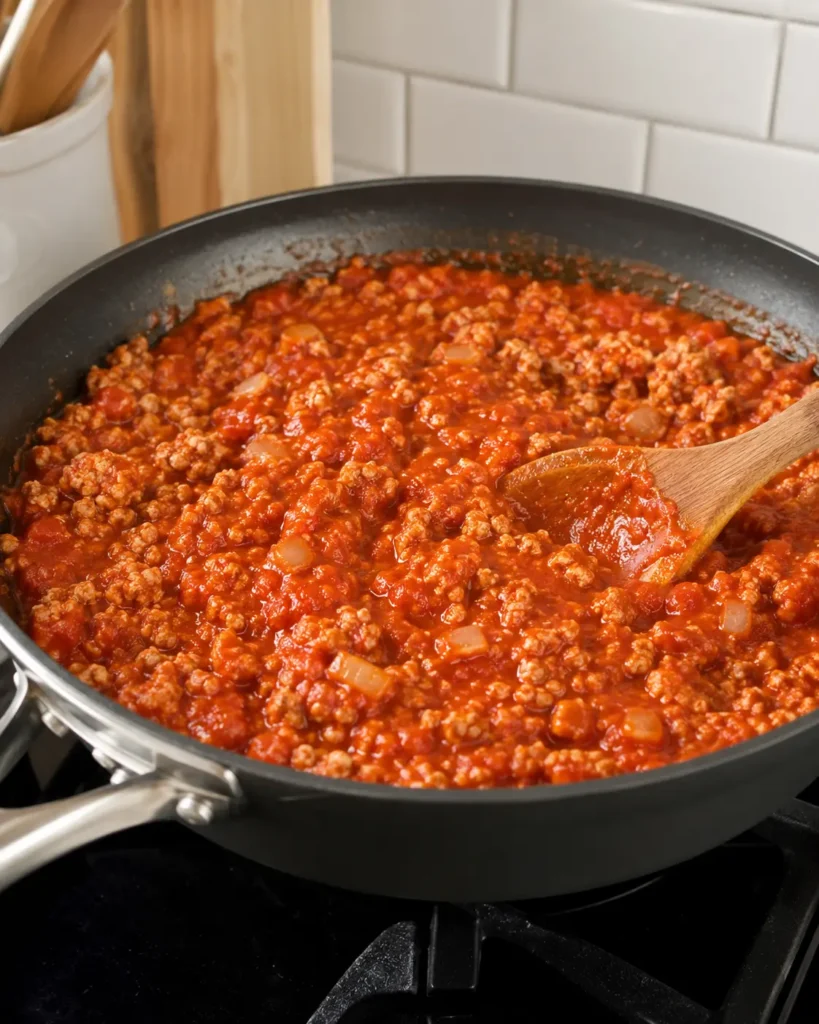
Heat olive oil in a skillet over medium-high heat. Add the onion and cook until softened, then add the garlic and ground turkey. Cook until browned, breaking it up as it cooks. Stir in the Italian seasoning, red pepper flakes, tomato paste, marinara, salt, and pepper. Simmer for a few minutes until slightly thickened.
Step 4: Make the cheese filling
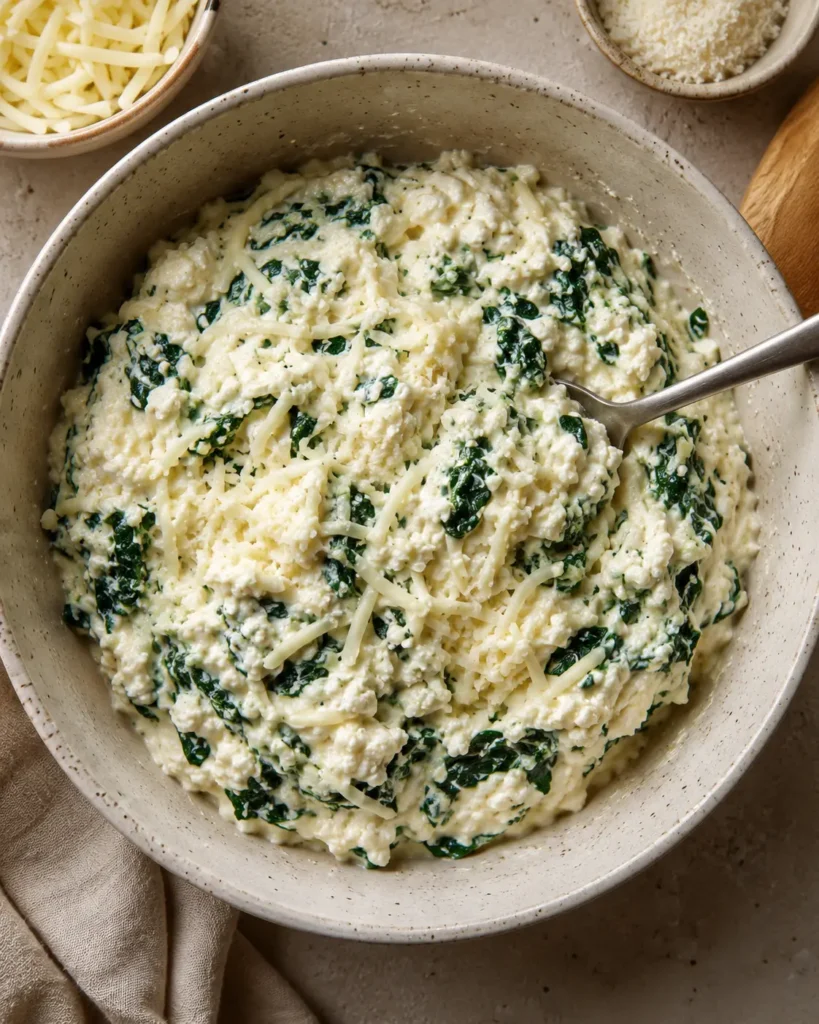
In a bowl, mix the cottage cheese, egg, mozzarella, parmesan, spinach, garlic powder, salt, and pepper until combined.
Step 5: Build the first layer
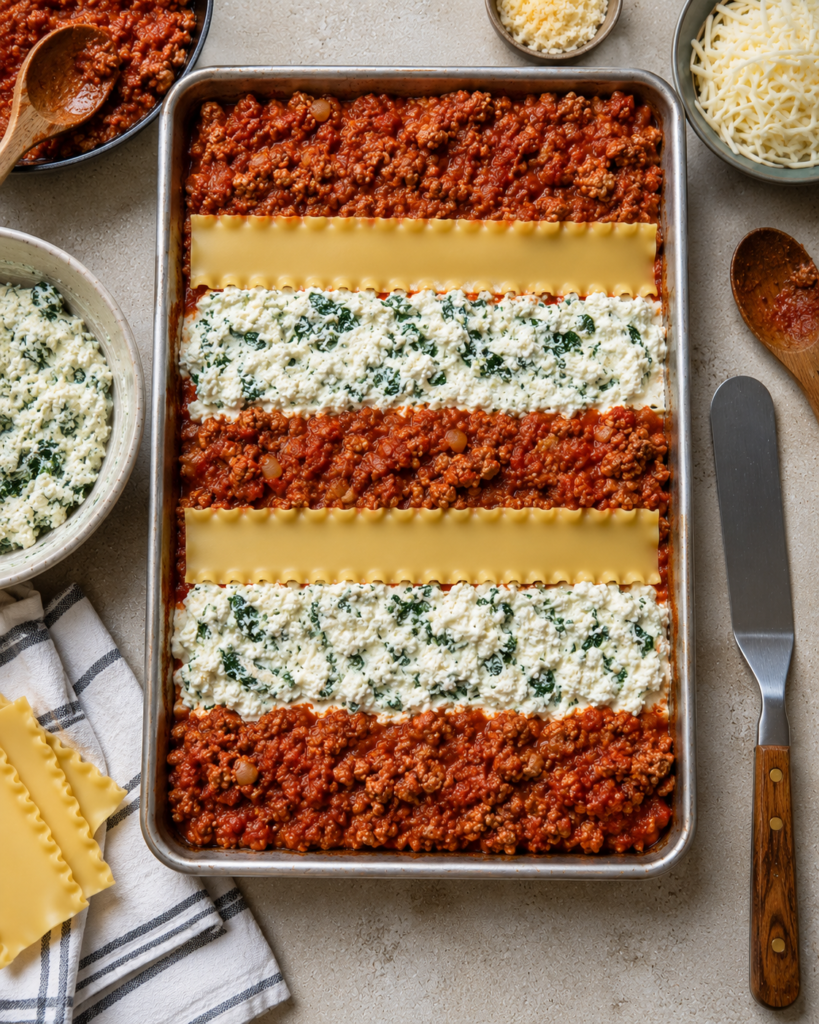
Spread a thin layer of meat sauce over the sheet pan. Arrange a layer of noodles over the sauce, slightly overlapping if needed.
Step 6: Add filling and repeat
Spread more meat sauce over the noodles, then dollop and spread part of the cheese mixture. Repeat with another noodle layer, then more sauce and cheese filling until everything is used in a thin, even build.
Step 7: Top and bake
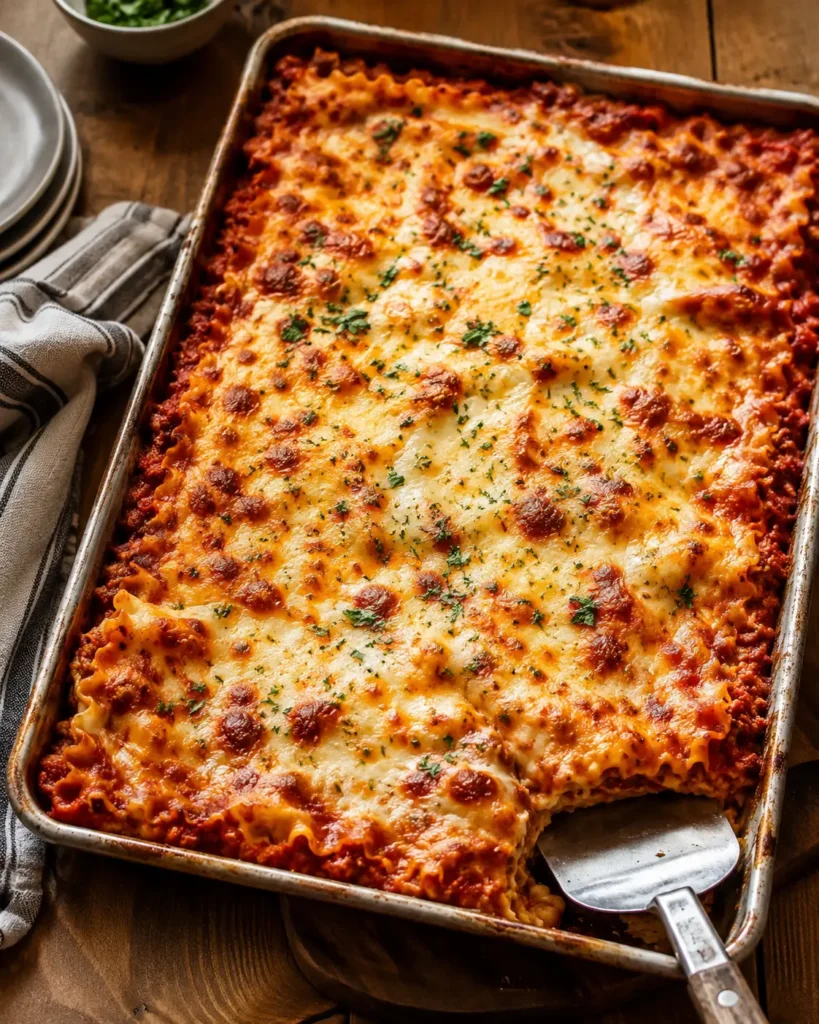
Finish with the remaining mozzarella and a little extra parmesan. Bake for 20 to 25 minutes, until bubbly and browned around the edges.
Step 8: Rest before slicing
Let the lasagna rest for 10 to 15 minutes before cutting. That short rest helps the layers hold together and makes the texture much easier to serve.
Texture Tip:
Keep the layers relatively thin and even. The sheet-pan style works best when the lasagna bakes flatter rather than trying to imitate a deep casserole.
Common Mistake:
Using too much sauce. In a shallow format, excess liquid makes the noodles slippery and the squares harder to lift cleanly.
Texture and Flavor Notes
The best sheet pan lasagna should feel like a smart hybrid between classic lasagna and a baked pasta square. The center should stay saucy and cheesy, while the edges get a little crisp and caramelized. That contrast is one of the biggest reasons people are drawn to this format in the first place.
Flavor-wise, this version should taste savory, tomato-rich, cheesy, and just a little sharper than a classic all-ricotta lasagna because the cottage cheese and parmesan bring a slightly brighter finish. If it tastes flat, it usually needs more salt or a spoonful more parmesan. If it tastes watery, the sauce or noodles likely carried too much moisture into the pan.
Serving Suggestions
This lasagna works beautifully as-is, but it also handles sides well.
Try it with:
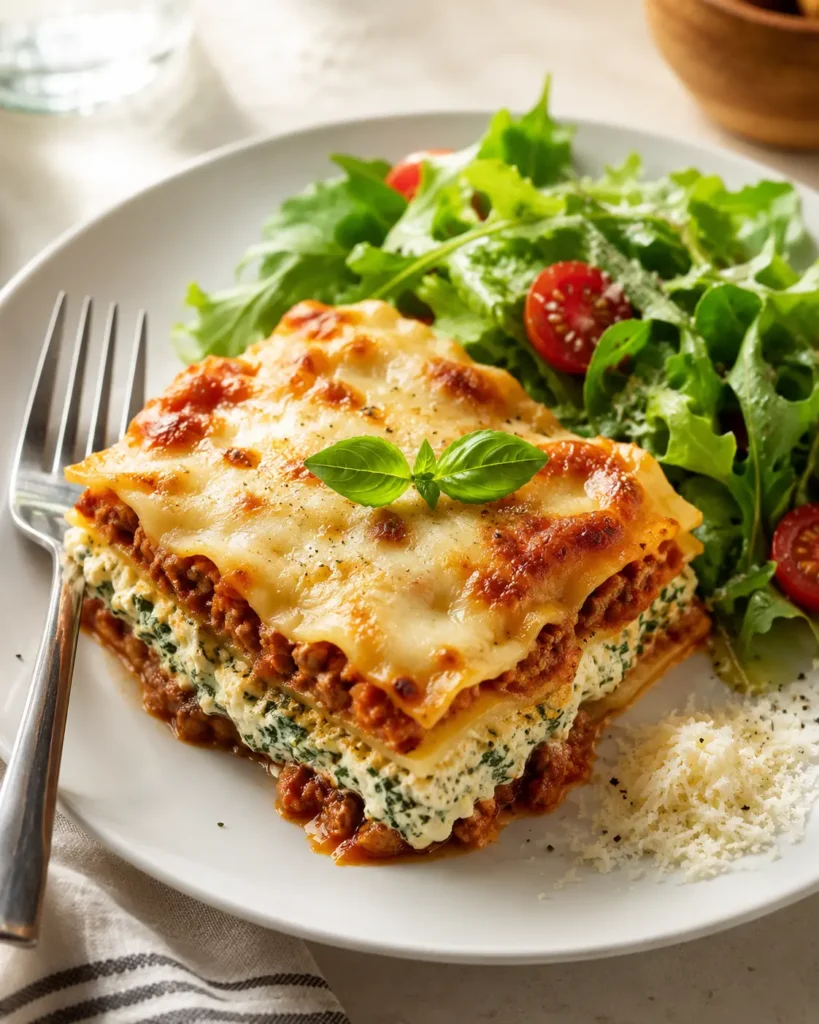
- a simple green salad
- roasted broccoli or broccolini
- extra basil and parmesan on top
- a side of roasted zucchini
- garlic green beans if you want a more complete dinner plate
For a more weeknight-practical setup, keep the side simple and let the sheet pan do most of the work. For a more dinner-party look, garnish with basil and serve it in clean squares with a big salad.
Meal Prep, Storage, and Reheating
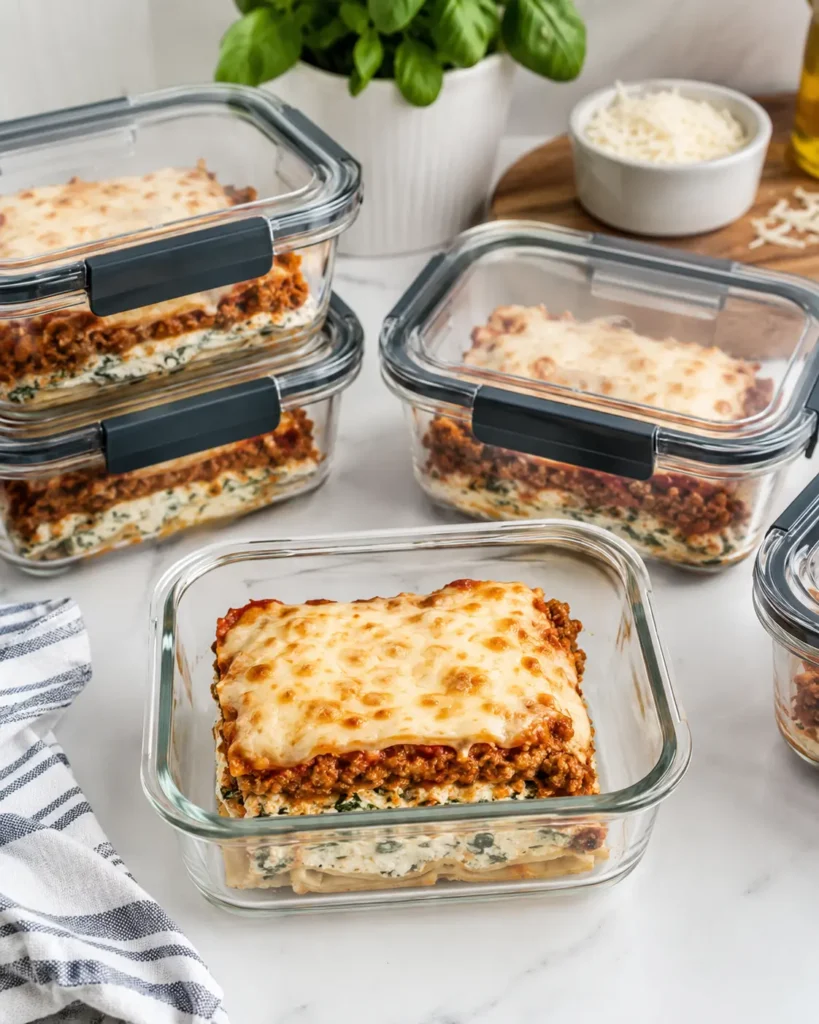
This recipe is genuinely useful for leftovers because the sheet-pan format makes portioning much easier. Once cooled and cut, the squares store more neatly than scooped casserole-style lasagne.
You can also make easy lasagna soup when you want the same cozy flavor in a one-pot dinner.
Storage
Refrigerate leftovers in airtight containers for up to 3 to 4 days. FoodSafety.gov’s cold storage chart uses that same general 3 to 4 day refrigerator window for many cooked leftovers, which is the right practical benchmark here.
Reheating
Reheat individual squares until steaming hot. If you are reheating from the fridge, covering loosely helps keep the top from drying out.
Freezing
Freeze fully cooled squares in airtight containers for up to 2 months for best quality. FoodSafety.gov notes that foods kept frozen continuously at 0°F (-18°C) remain safe indefinitely, though quality changes over time.
Meal-Prep Note
FSIS advises refrigerating perishable leftovers within 2 hours after cooking, so let the pan cool enough to handle, then portion and chill it rather than leaving it out too long.
Variations
For a lower-carb baked option, this keto zucchini lasagna is a good alternative.
Beef version
Swap the turkey for lean ground beef if you want a richer, more classic lasagna feel.
Extra-vegetable version
Add sautéed mushrooms or zucchini to the sauce for more volume.
Spicier version
Use hot Italian seasoning blends, extra red pepper flakes, or a spicier marinara.
Higher-protein version
Use a protein-forward pasta sheet option and a slightly more generous turkey filling while keeping the layers thin enough to bake cleanly.
More classic cheese version
Use part ricotta and part cottage cheese if you want a more traditional lasagna filling with the same general structure.
Common Mistakes to Avoid
1. Overcooking the noodles before assembly
They should be flexible, not fully soft.
2. Using a watery sauce
The sheet pan has less depth to hide excess liquid.
3. Making the layers too thick
This format works because it stays flatter and bakes evenly.
4. Cutting too early
Resting is what helps the squares hold together.
5. Skipping pan prep
A lightly oiled or parchment-lined pan makes cleanup much easier.
Recipe at a Glance
Save-Worthy Summary Block
Best protein sources:
Lean ground turkey, cottage cheese, mozzarella, parmesan
Main flavor profile:
Savory, tomato-rich, cheesy, baked comfort-food style
Best texture goal:
Saucy centre with browned top and crispy edges
Most important format win:
Faster assembly and easier slicing than classic lasagne
Best weeknight advantage:
More manageable clean-up and cleaner leftovers
Best meal-prep benefit:
Squares portion neatly and reheat well
Best finishing touch:
Fresh basil and extra parmesan after baking
Easy Sheet Pan Lasagna
Ingredients
Equipment
Method
- Preheat the oven to 400°F. Lightly grease a rimmed sheet pan or line it with parchment paper.
- Boil the lasagna noodles until just al dente. Drain them and set aside.
- Heat olive oil in a large skillet. Add ground turkey and cook until browned and fully cooked.
- Add onion, garlic, Italian seasoning, salt, and black pepper. Stir in marinara sauce and water or broth. Simmer for 5 to 7 minutes.
- In a bowl, mix cottage cheese, egg, parmesan, chopped spinach, and Italian seasoning until combined.
- Spread a thin layer of meat sauce on the sheet pan. Add noodle pieces, spoon over cheese filling, then add more sauce.
- Repeat with remaining noodles, sauce, and filling until the sheet pan is evenly covered.
- Sprinkle mozzarella and parmesan evenly over the top.
- Bake for 22 to 28 minutes, or until the cheese is melted, bubbly, and lightly browned.
- Let the sheet pan lasagna rest for 10 minutes before cutting into squares and serving.
Notes
u003cstrongu003eIs sheet pan lasagne really easier than regular lasagne?u003c/strongu003e
Yes, that is one of the biggest reasons recent versions are getting attention. The format reduces deep layering, speeds up assembly, and creates more crispy edge surface area.
u003cstrongu003eCan I make sheet pan lasagna ahead of time?u003c/strongu003e
Yes. You can assemble it ahead, refrigerate it, and bake later, or bake it fully and reheat portions as needed. It is especially good for leftovers because the squares store neatly.
u003cstrongu003eWhy use cottage cheese in lasagna?u003c/strongu003e
Cottage cheese adds creaminess and protein while keeping the filling practical and less heavy than an all-ricotta build. It also works especially well in weeknight high-protein versions.
u003cstrongu003eDo sheet pan lasagna noodles need to be boiled first?u003c/strongu003e
For this version, yes, it works best to cook them until pliable first. That keeps the assembly cleaner and helps the layers bake evenly.
u003cstrongu003eCan I freeze sheet pan lasagna?u003c/strongu003e
Yes. Freeze it in cooled individual squares so you can thaw and reheat only what you need.
u003cstrongu003eWhat pan is best for sheet pan lasagna?u003c/strongu003e
A rimmed sheet pan is best so the sauce and cheese stay contained and the edges can still brown properly.
Recipe Notes
The smartest way to think about this recipe is not as “lasagna, but in a weird pan.” It is really a faster baked-pasta format that still captures what people want from lasagna: noodles, sauce, creamy filling, browned cheese, and good leftovers. Recent recipe patterns reinforce exactly that appeal, especially the emphasis on easier assembly and crispy edges.
For storage, FoodSafety.gov’s cold storage chart is the practical reference, and the general rule is to chill cooked leftovers within a couple of hours and use refrigerated portions within the usual several-day window.
Easy to build, easier to slice, and satisfying enough to count as real comfort food, sheet pan lasagna earns its place because it solves the exact part of lasagna that most weeknights make annoying.