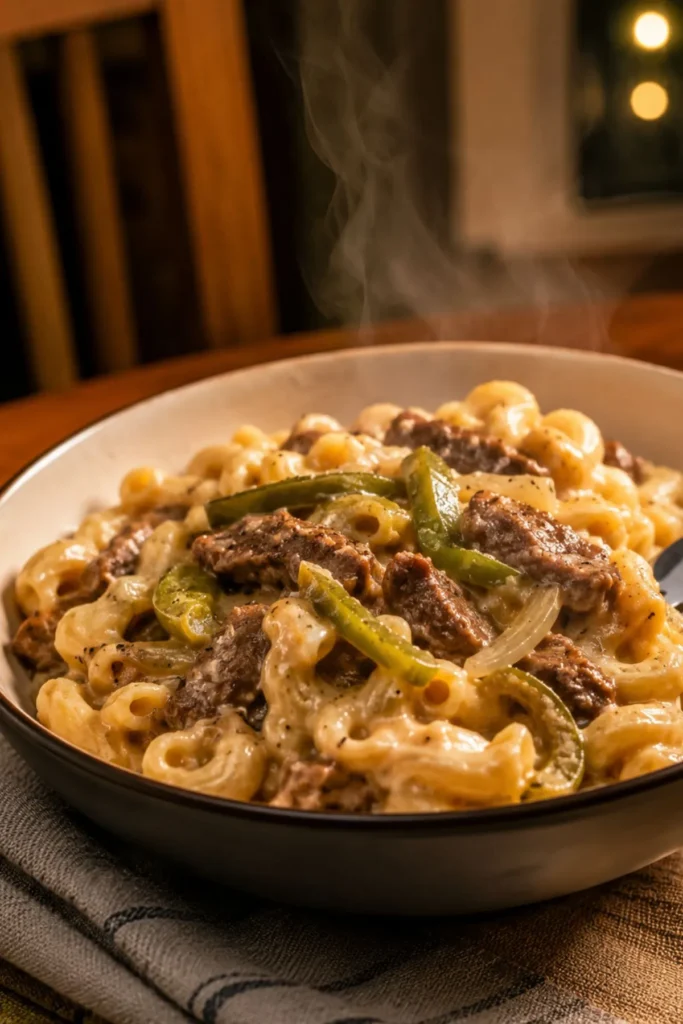
High-Protein Creamy Philly Cheesesteak Mac & Cheese (Easy Weeknight)
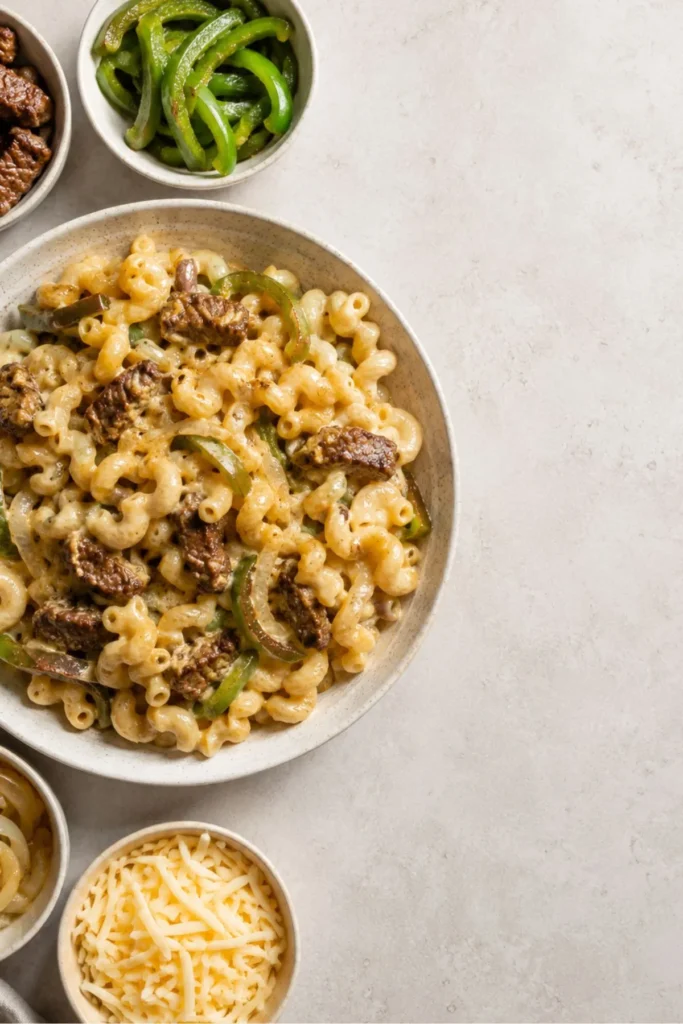
When dinner needs to feel comforting, filling, and actually worth looking forward to, this high protein creamy philly cheesesteak mac cheese lands in exactly the right place. It takes the savory steak, onions, peppers, and melty cheese flavor people love in a Philly cheesesteak, then folds those same ideas into a creamy mac and cheese that feels weeknight-friendly instead of overcomplicated.
What makes it especially useful is that the protein boost does not come from one gimmicky trick. It comes from a smarter combination of lean beef, protein pasta, and a creamy sauce built with cottage cheese for extra body. The result is rich, cheesy, and deeply satisfying, but still much more practical for everyday eating than a standard steak-and-cheese pasta.
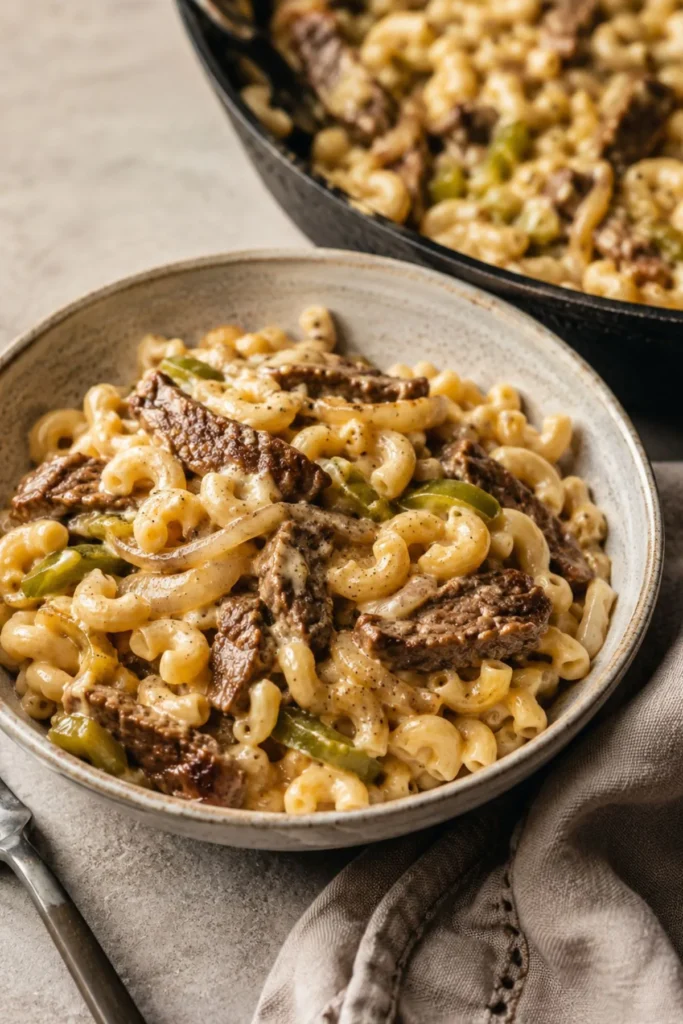
What is high protein creamy philly cheesesteak mac cheese?
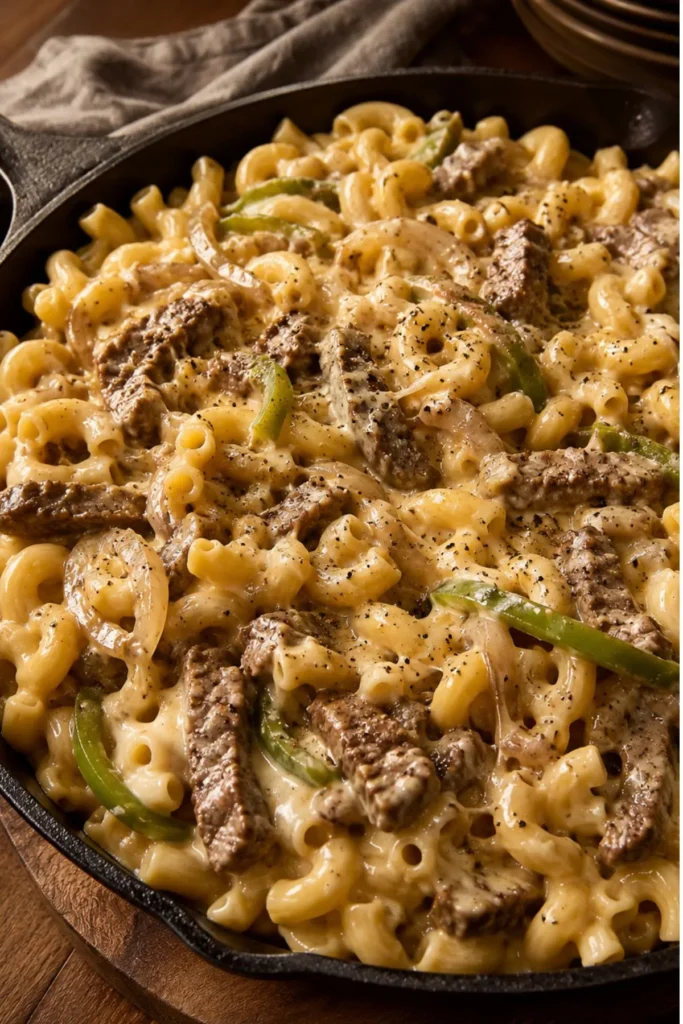
High protein creamy philly cheesesteak mac cheese is a protein-forward pasta dinner that combines lean steak, sautéed onions and peppers, and a creamy cheese sauce with higher-protein ingredients like protein pasta and blended cottage cheese to create a richer, more balanced version of classic mac and cheese comfort food.
It fits naturally into searches around easy high-protein dinner ideas, protein pasta, macro-friendly comfort food, better-than-takeout meals, and meal-prep-friendly weeknight recipes. If you like creamy pasta, steak-and-pepper skillets, or cheesy dinners that actually keep you full, this recipe hits that sweet spot.
Why You’ll Love It
- It tastes like real comfort food first, not a stripped-down “healthy version.”
- The protein comes from multiple smart sources, not just a bigger meat portion.
- The onion, pepper, beef, and provolone-style flavor keeps the Philly cheesesteak feel clear.
- The method is weeknight-friendly and does not require baking.
- It reheats better than many creamy pasta dishes when stored the right way.
- It is flexible enough for meal prep, family dinner, or a satisfying leftover lunch.
- The sauce stays creamy and rich without feeling unnecessarily heavy.
Why This Recipe Works
A recipe like this lives or dies on texture. If the sauce is too thin, it tastes like pasta tossed in cheese-flavored milk. If it is too heavy, the whole dish feels dense and flat. Here, the balance comes from blending cottage cheese with milk and seasonings first, then building in provolone and cheddar gradually so the sauce stays glossy and spoon-coating.
The second thing that makes it work is how the cheesesteak flavor is layered. Thin-sliced beef gives you that savory, beefy bite, while onions and green peppers bring the classic sandwich profile into the skillet. Those ingredients do more than “add vegetables.” They create the flavor identity that stops this from tasting like just another beef mac and cheese.
Why This Works: A good high-protein comfort meal does not just add protein. It protects the texture, keeps the flavor identity clear, and makes every upgrade feel natural rather than forced.
What Makes It High Protein
This recipe earns the high-protein label in a believable way. The beef brings the most obvious protein, but it is not doing all the heavy lifting by itself. Protein pasta increases the overall total without changing the comfort-food feel too much, and the blended cottage cheese helps the sauce feel creamy while quietly adding more substance.
That combination matters. A lot of recipes call something high protein just because it uses meat. Here, the protein strategy is more balanced. You get steak for richness, pasta with a better protein profile than standard noodles, and a sauce that feels silky without relying entirely on heavy cream or extra-cheese overload.
Protein Upgrade: If you want to push the protein a little higher, choose a protein pasta with a stronger protein-per-serving profile and use a very lean quick-cooking steak like trimmed sirloin.
Ingredients
Main Ingredients
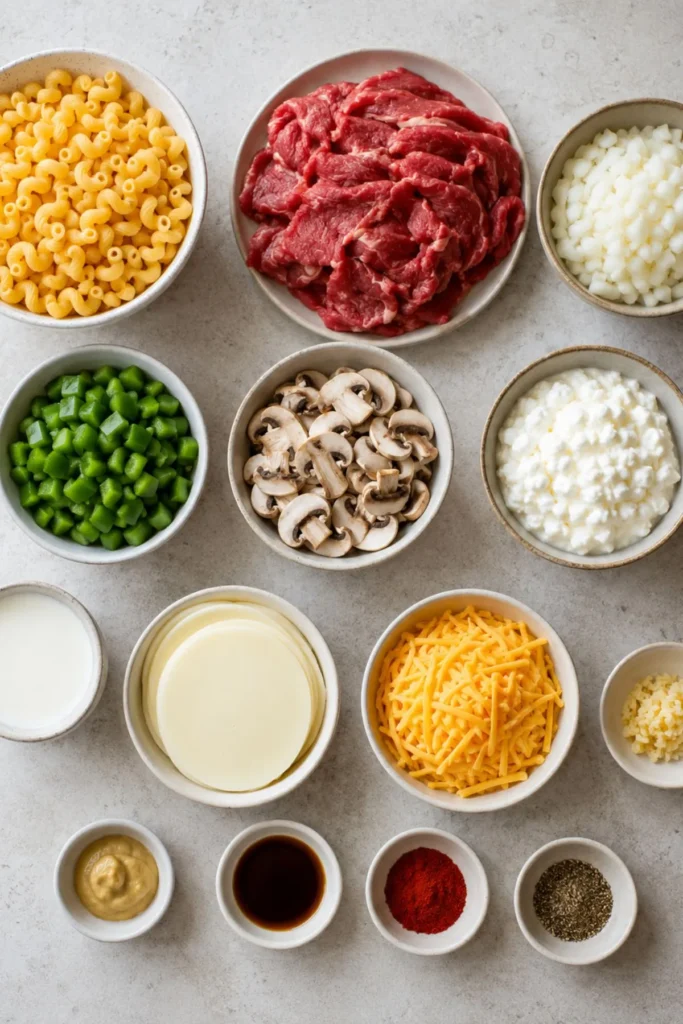
- 12 ounces protein elbow pasta
- 1 pound lean sirloin, shaved steak, or very thinly sliced beef
- 1 tablespoon olive oil or avocado oil
- 1 medium yellow onion, thinly sliced
- 1 green bell pepper, thinly sliced
- 4 ounces mushrooms, sliced, optional
- 2 cloves garlic, minced
- 1 teaspoon Worcestershire sauce
- 1/2 teaspoon black pepper
- 1/2 teaspoon smoked paprika
- Salt, to taste
Sauce Ingredients
- 1 cup low-fat cottage cheese
- 1 cup milk
- 2 teaspoons Dijon mustard
- 1 tablespoon cornstarch
- 1 1/2 cups shredded provolone or provolone-mozzarell a blend
- 1/2 cup shredded sharp cheddar
- 2 ounces light cream cheese, optional but helpful for extra silkiness
Optional Add-Ins
- Red pepper flakes
- Extra mushrooms
- Handful of spinach stirred in at the end
- Extra provolone on top before serving
Optional Protein Boosters
- 2 to 4 extra ounces steak
- Higher-protein pasta brand
- A little extra cottage cheese blended into the base if your blender can smooth it fully
Ingredient Notes
Thin-sliced steak is the best fit here because it cooks fast and stays tender when you add it back at the end. Thick steak strips can still work, but they change the feel of the dish and make it less cheesesteak-like. Shaved steak or paper-thin sirloin feels much more on-theme.
Provolone is what gives the sauce its cheesesteak personality. Cheddar helps with depth and familiar mac-and-cheese body, but provolone is the piece that keeps the flavor aligned with the title. Cottage cheese is mostly here for texture and protein support; once blended and melted into the cheese base, it stops reading like “cottage cheese” and starts reading like creamy sauce.
Texture Tip: Cook the pasta just shy of al dente. Protein pasta can tighten up if you cook it too long upfront, especially if you plan to reheat leftovers later.
Substitutions and Protein Upgrades
You have room to adapt this recipe without losing the point of it. If steak is too expensive or not on hand, lean ground beef works, but it will taste more like cheeseburger mac than Philly cheesesteak mac. Ground turkey lightens the dish, though it also pulls the flavor farther from classic cheesesteak territory.
If you do not want to use cottage cheese, you can swap in part Greek yogurt, but it needs gentler heat and a little more care. For the cheese, mozzarella melts nicely but tastes flatter. A provolone-forward blend is what keeps the sandwich inspiration intact. If you want more depth, mushrooms are an especially smart add-in because they amplify the savory side without overpowering the beef.
Budget-Friendly Swap: One bell pepper, one onion, and a slightly smaller amount of steak can still produce a very satisfying skillet if you keep the sauce balanced and the seasoning confident.
How to Make High Protein Creamy Philly Cheesesteak Mac Cheese
- Cook the pasta. Bring a large pot of salted water to a boil. Cook the protein pasta until just shy of al dente. Reserve 1 cup of pasta water, then drain and set aside.
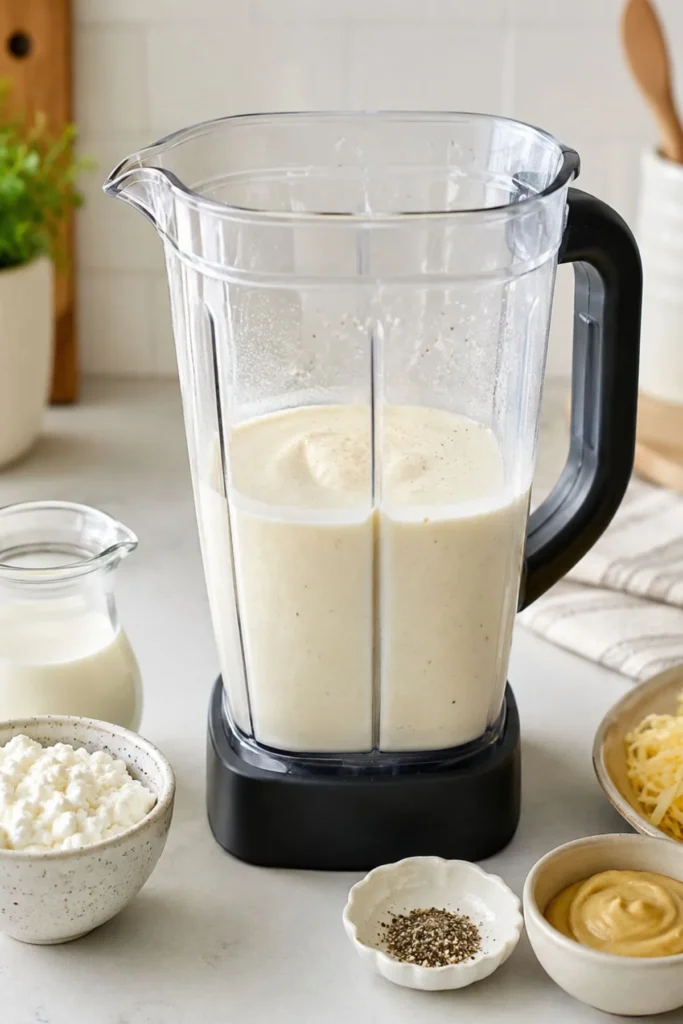
- Blend the sauce base. Add the cottage cheese, milk, Dijon mustard, cornstarch, and a few grinds of black pepper to a blender. Blend until completely smooth.
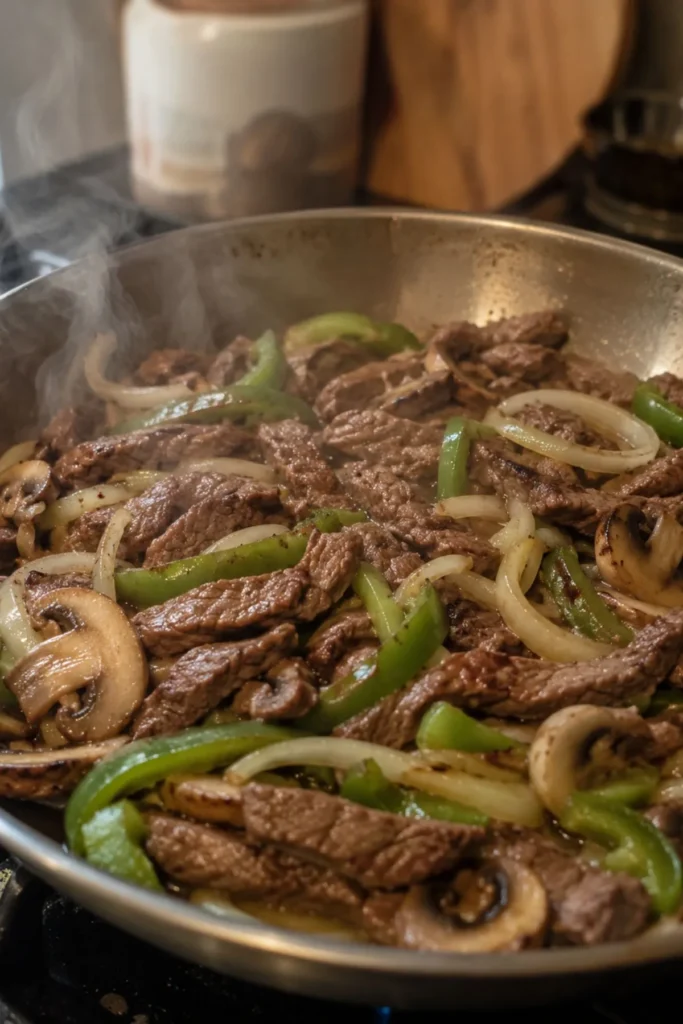
- Sear the beef. Heat a large skillet over medium-high heat with the oil. Add the steak in a mostly even layer and cook quickly until browned but not tough, about 1 to 2 minutes per side depending on how thin it is. Remove to a plate.
- Cook the vegetables. In the same skillet, add the onions, peppers, and mushrooms if using. Cook until softened and lightly golden, about 6 to 8 minutes. Stir in the garlic, Worcestershire sauce, smoked paprika, and a pinch of salt.
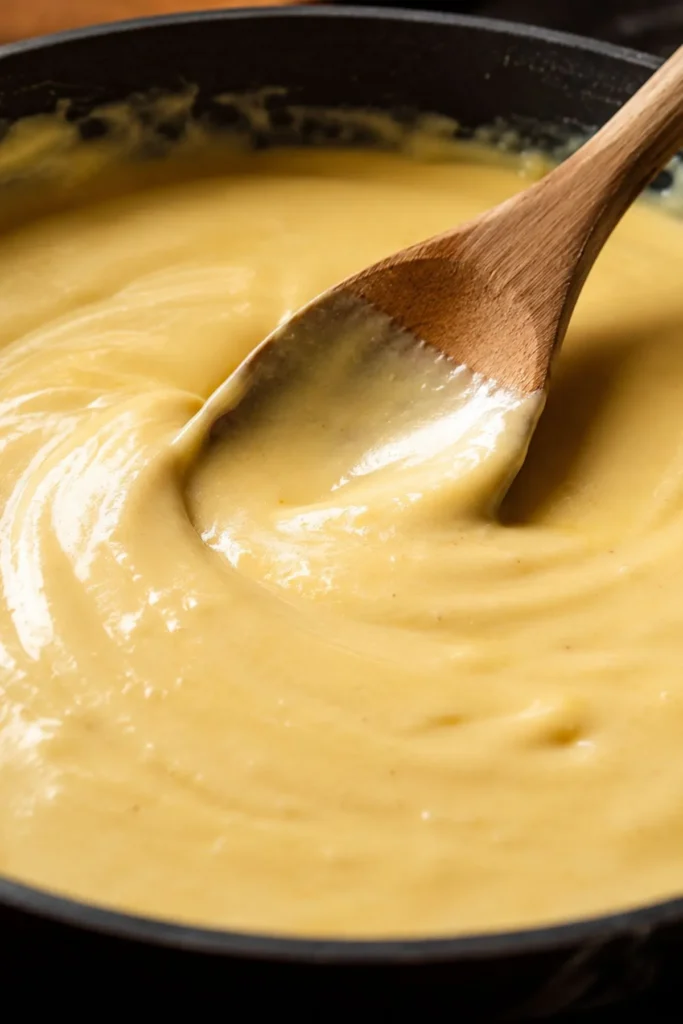
- Build the sauce. Lower the heat to medium-low. Pour in the blended cottage cheese mixture and stir until warm and slightly thickened. Add the cream cheese if using. Stir until smooth.
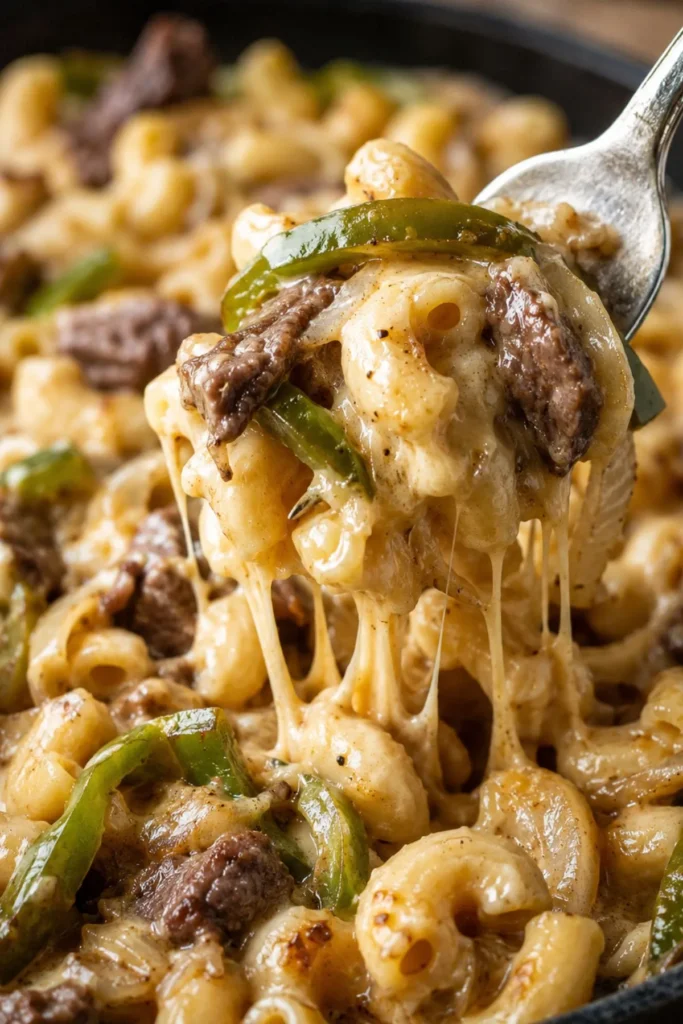
- Melt in the cheese. Add the provolone and cheddar a handful at a time, stirring after each addition so the sauce stays silky instead of clumping.
- Adjust the texture. If the sauce feels too thick, add a splash of reserved pasta water until it turns glossy and coats the spoon.
- Combine everything. Add the pasta and beef back to the skillet. Toss gently until every piece is coated and the steak is warmed through.
- Taste and finish. Adjust salt and pepper, then serve hot. Add extra black pepper or a little more provolone on top if you want a more dramatic cheesesteak finish.
Beginner-Friendly Tip: Once the cheese starts melting, avoid strong heat. A gentle sauce is creamy; an overheated sauce can turn tight or grainy fast.
Serving Ideas
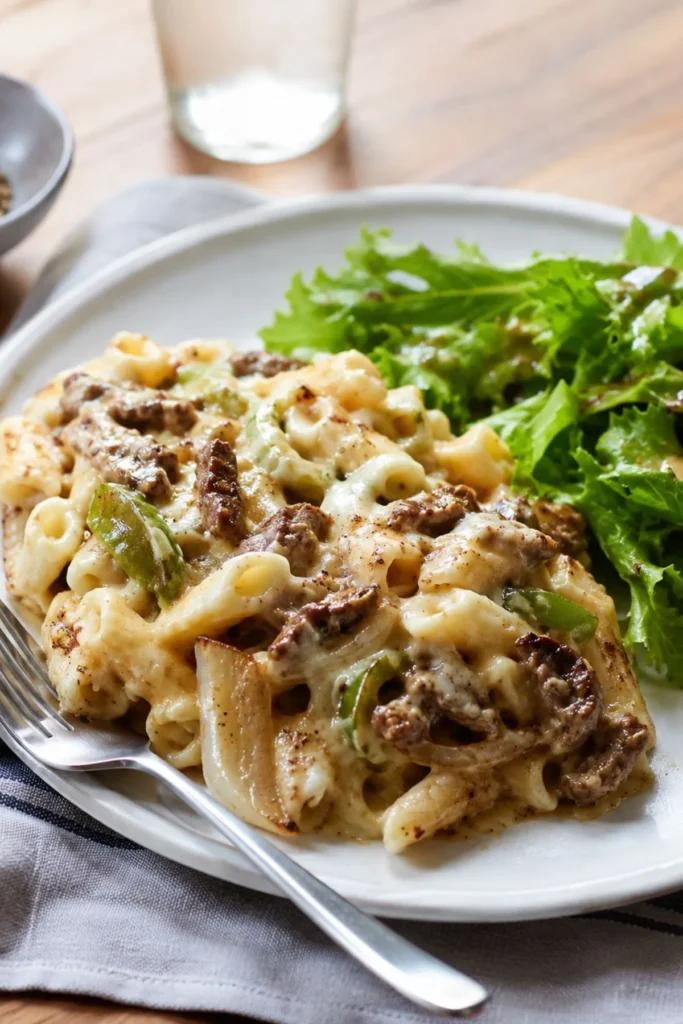
This pasta is rich enough to stand on its own, but it pairs especially well with crisp, simple sides that cut through the creaminess. A sharp green salad with vinaigrette, roasted broccoli, or blistered green beans all work well because they add contrast without competing with the main flavor.
If you want a slightly more steakhouse-inspired dinner, serve it with sautéed mushrooms on top and extra black pepper. If you want something more weeknight-simple, just bowl it up hot and let the pasta do the work. It is the kind of dish that does not need much around it to feel complete.
Flavor Boost: A few pickled peppers on the side or a small extra dash of Worcestershire at the end can sharpen the savory profile without changing the recipe’s core identity.
Meal Prep, Storage, and Reheating
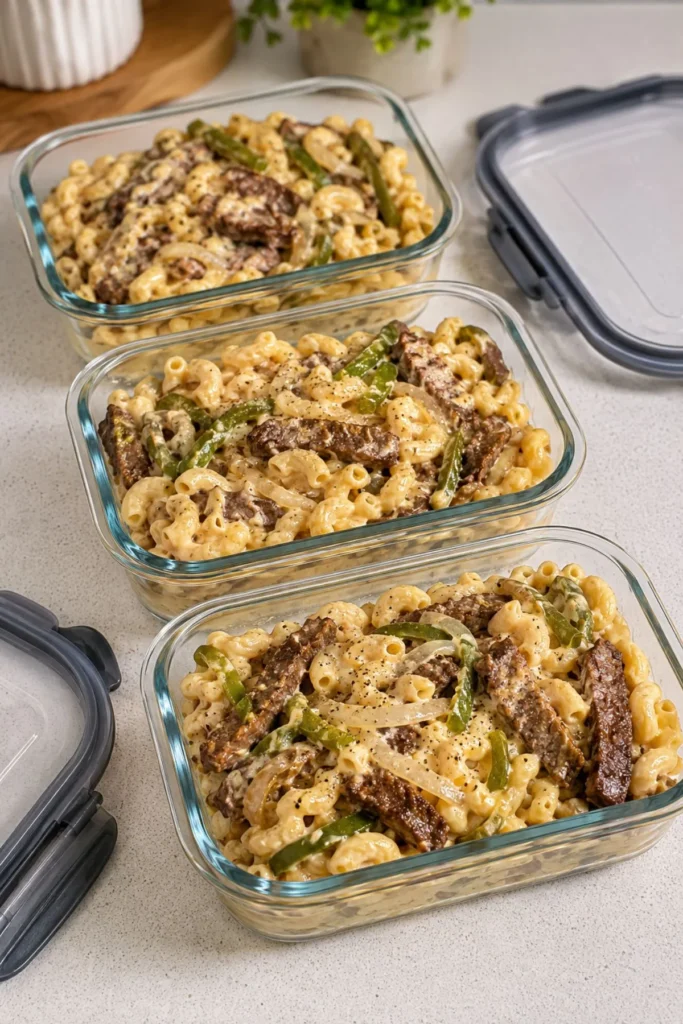
This recipe can work very well for meal prep, but only if you treat the sauce kindly after it is cooked. Pasta continues absorbing moisture as it sits, so leftovers need a little help getting back to their original creamy texture.
Let the pasta cool slightly, then portion it into tightly covered containers. It will keep well in the fridge for about 3 to 4 days. When reheating, add a tablespoon or two of milk before microwaving or warming gently on the stove. That small step helps loosen the sauce and brings back the silky texture much better than reheating it dry.
Meal-Prep Note: If the entire batch is meant for leftovers, cook the pasta just a shade firmer than you think you need. That gives you a much better texture on day two.
Variations
There are a few smart ways to shift the recipe depending on what you want most from it. Add more mushrooms if you want a deeper, steakhouse-style savory flavor. Use both green and red peppers if you want a sweeter vegetable profile. Stir in spinach at the end if you want a little more bulk without changing the core taste.
You can also push the dish in a richer or lighter direction. More provolone and a short broil on top gives it stronger comfort-food energy. Pulling back slightly on the cheese and letting the blended sauce do more of the work gives you a lighter-feeling bowl that still stays creamy and satisfying.
Better-Than-Takeout Tip: More onion and mushrooms usually bring more savory payoff than simply piling on extra cheese.
Common Mistakes
The first common mistake is overcooking the steak. Thin-sliced beef cooks incredibly fast, and once it turns chewy, the whole dish loses some of its appeal. Brown it quickly, then let it finish warming in the final toss.
The second is overheating the sauce. Cheese sauces want patience, not aggression. Too much heat can make the mixture feel grainy or separated. The third mistake is under-seasoning. Creamy pasta needs enough pepper, salt, and savory depth to stay lively. Without those, it can taste flat even if the texture is right.
Common Mistake: Using standard pasta and very little beef may still produce a tasty dinner, but it will not deliver the same high-protein, steak-forward payoff the title promises.
Save-Worthy Recipe Summary Block
Recipe at a Glance
- Best for: easy weeknight dinner, meal prep, protein pasta comfort food
- Main protein sources: lean steak, protein pasta, cottage cheese sauce
- Estimated protein per serving: about 38 to 42 grams, depending on ingredients used
- Texture goal: creamy, glossy, cheesy, not grainy
- Flavor profile: savory beef, soft onions and peppers, provolone-style richness
- Best side: crisp salad, roasted broccoli, or green beans
- Reheat tip: add milk before reheating
- Easiest shortcut: use pre-thin-sliced steak and cook the vegetables while the pasta boils
5 Mistakes That Ruin the Texture
- Boiling the sauce after the cheese goes in
- Overcooking the steak early
- Cooking the pasta too soft
- Reheating leftovers dry
- Using too little seasoning in a rich sauce
FAQ
Recipe Notes and Supporting References
- Shredding your own cheese usually gives you the smoothest melt.
- If your steak is slightly thick, chill it briefly before slicing so you can get thinner strips.
- For a stronger cheesesteak profile, lean into onion, black pepper, and provolone before simply adding more cheddar.
- For leftovers and reheating safety, use current USDA and FDA food-safety guidance as your baseline.
- Estimated protein can vary based on pasta brand, cheese amounts, and the exact cut of steak used.