Thai Basil Beef Rolls (Fresh, Flavorful, High Protein)
These thai basil beef rolls hit a very useful middle ground: fresh enough to feel light, flavorful enough to feel dinner-worthy, and protein-forward enough to keep you full. You get warm, savory beef with garlic, ginger, lime, and Thai basil, wrapped in soft rice paper with lettuce, cucumber, carrot, and herbs for a roll that feels crisp, bright, and genuinely satisfying.
That is what makes thai basil beef rolls a strong option when you want something fresh, filling, and easy to repeat.
That overall structure lines up well with how fresh rice-paper rolls are commonly built right now: lots of raw herbs and vegetables for freshness and crunch, paired with a cooked protein and wrapped in softened rice paper. Serious Eats specifically notes that leafy greens, cucumber, and carrot are core fresh-roll building blocks, while current “Thai basil beef rolls” recipes also lean on rice paper, basil, cucumber, and herb-heavy fillings.
What is thai basil beef rolls?
Thai basil beef rolls are fresh rice-paper rolls filled with seasoned beef, Thai basil, crisp vegetables, and herbs, then served with a bright dipping sauce. They’re best understood as a fresh-roll or summer-roll style meal: light in texture, big on herbs, and built for contrast between warm savory filling and cool crunchy vegetables.
In simple words, thai basil beef rolls are a fresh rice-paper meal with warm seasoned beef, herbs, vegetables, and a bright dipping sauce.
They also make sense for readers looking for a better-than-takeout lunch, a lighter high-protein dinner, or a fresh meal-prep option that does not feel repetitive. Instead of chasing “healthy” with blandness, this recipe leans into balance: savory beef, aromatic basil, crisp lettuce and cucumber, a little sweetness, and enough acidity to keep every bite lively.
Why You’ll Love It
- It gives you the fresh-roll texture people want from rice-paper meals, but with a more filling beef center.
- The balance of warm beef and cool vegetables keeps the rolls interesting, not heavy.
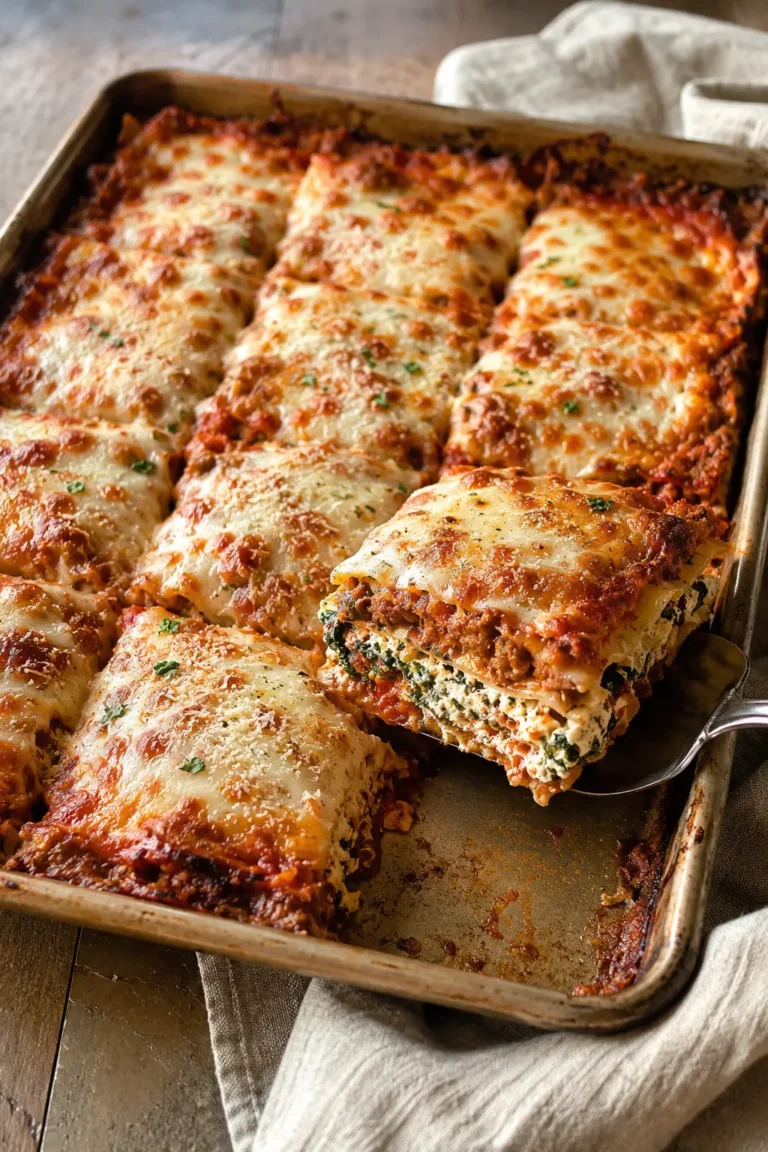
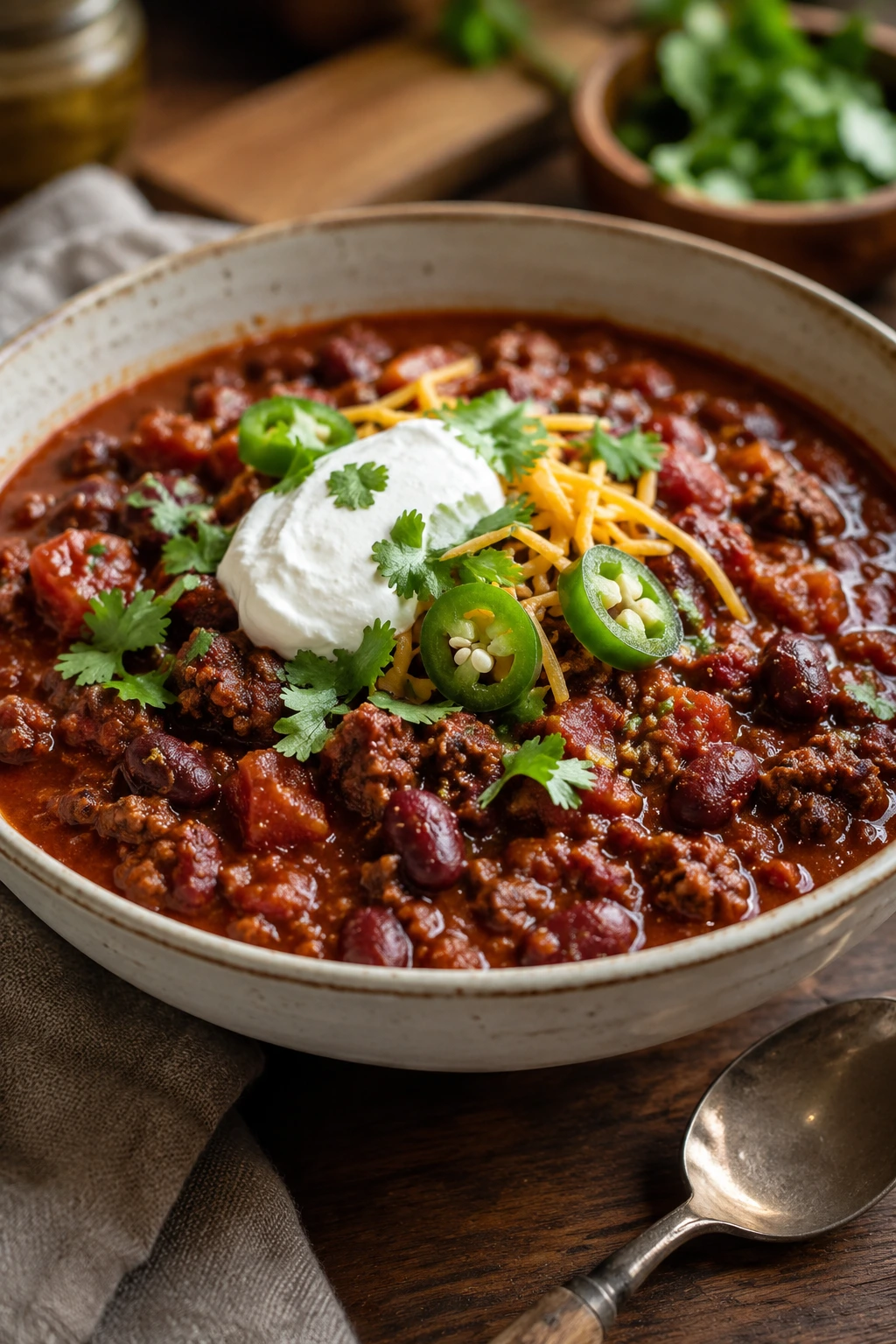
- For another hearty beef dinner, try my classic chilli con carne when you want a warmer, family-style high-protein meal.
- Thai basil adds a more aromatic, peppery note than standard basil.
- It works well for high-protein lunch or light dinner.
- The filling can be prepped ahead, so assembly is much easier later.
- The ingredients are flexible enough to let you adjust heat, herbs, and crunch.
- The dipping sauce makes the whole thing feel brighter and more complete.
- These thai basil beef rolls feel light but still have enough protein to work as lunch or dinner.
Why Thai Basil Beef Rolls Work
Fresh rice-paper rolls are at their best when the filling does not all lean in the same direction. Serious Eats points out that herb- and vegetable-heavy rolls rely on lettuce for structure and on crunchy vegetables like carrot and cucumber for contrast. That’s exactly why this recipe works: the beef is savory and warm, but the surrounding herbs and vegetables keep every bite fresh.
For another hearty beef dinner, try my classic chilli con carne when you want a warmer, family-style high-protein meal.
The other key is restraint. Instead of stuffing the rolls with noodles, extra sauces, and too many toppings, this version lets the Thai basil beef stay the center of gravity. You still get freshness, but the protein does not disappear.
What Makes Them High Protein
Lean ground beef is doing most of the heavy lifting here, which makes this recipe more naturally protein-forward than a mostly-vegetable rice-paper roll. Current high-protein versions of this dish also tend to use 93/7 or 95/5 lean beef specifically to keep the rolls lighter while still making them satisfying.
Rice paper and vegetables alone would give you a lighter appetizer feel. The beef changes that. It turns the rolls into an actual meal, especially if you keep the filling generous and skip heavier fillers like large amounts of rice noodles.
Ingredients
For the beef filling
- 1 tablespoon neutral oil
- 1 pound lean ground beef, preferably 93/7
- 3 cloves garlic, finely minced
- 1 tablespoon fresh ginger, grated
- 1 small shallot, finely chopped
- 2 tablespoons low-sodium soy sauce or tamari
- 1 tablespoon oyster sauce
- 2 teaspoons fish sauce
- 2 teaspoons lime juice
- 1 teaspoon brown sugar or honey
- 1/4 teaspoon crushed red pepper or 1 small Thai chili, finely minced
- 1 packed cup Thai basil leaves, roughly chopped
- 2 green onions, thinly sliced
For the rolls
- 10 rice paper wrappers
- 10 small butter lettuce leaves
- 1 cup cucumber, cut into thin batons
- 1 cup carrot, cut into fine matchsticks
- 1/2 cup mint leaves
- 1/2 cup cilantro leaves
- extra Thai basil leaves, optional
For the dipping sauce
- 2 tablespoons lime juice
- 1 tablespoon fish sauce
- 1 tablespoon soy sauce
- 1 tablespoon water
- 2 teaspoons honey
- 1 small garlic clove, grated
- 1 teaspoon chili garlic sauce or sambal, optional
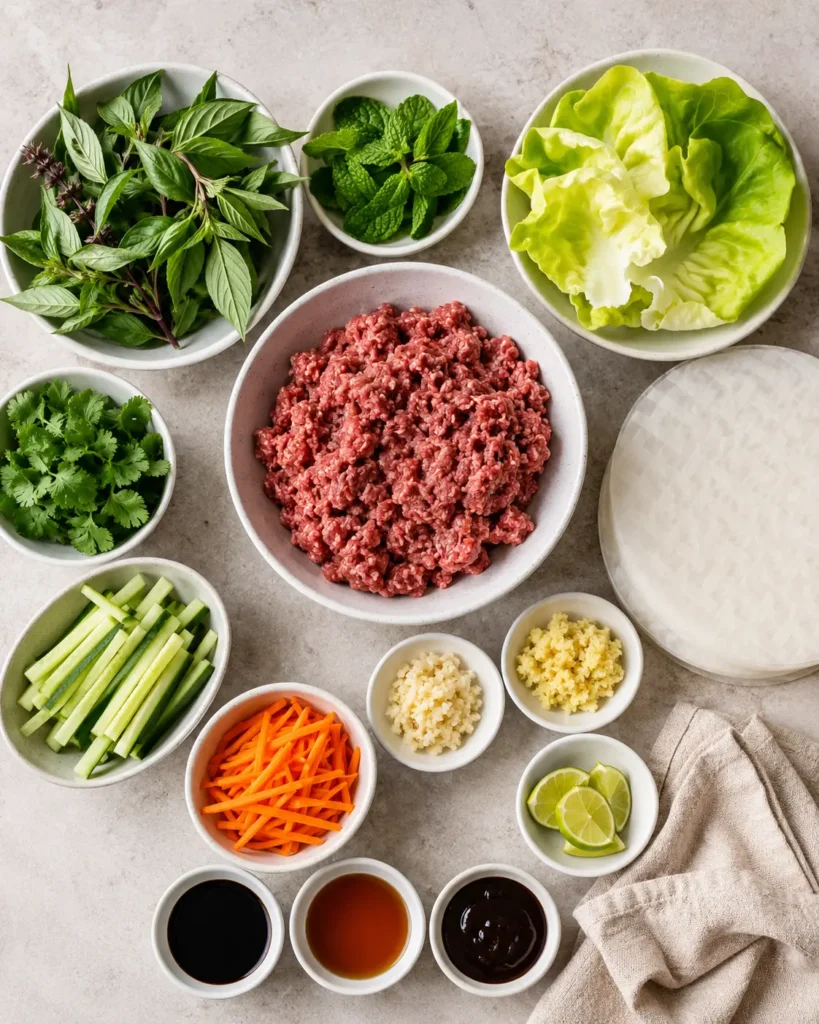
Ingredient Notes and Smart Swaps
Thai basil matters here because it brings a sharper, more aromatic profile than sweet basil. Current recipes using this flavor direction consistently call it out as worth seeking out, though regular basil can work in a pinch if that is what you have.
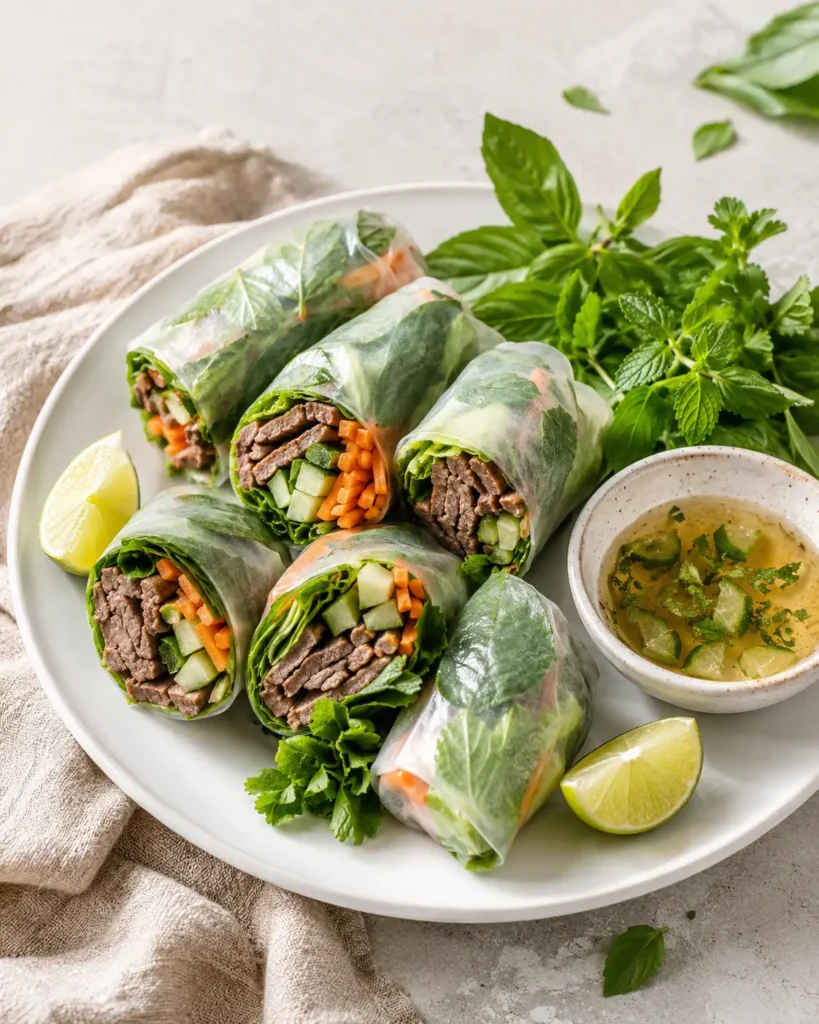
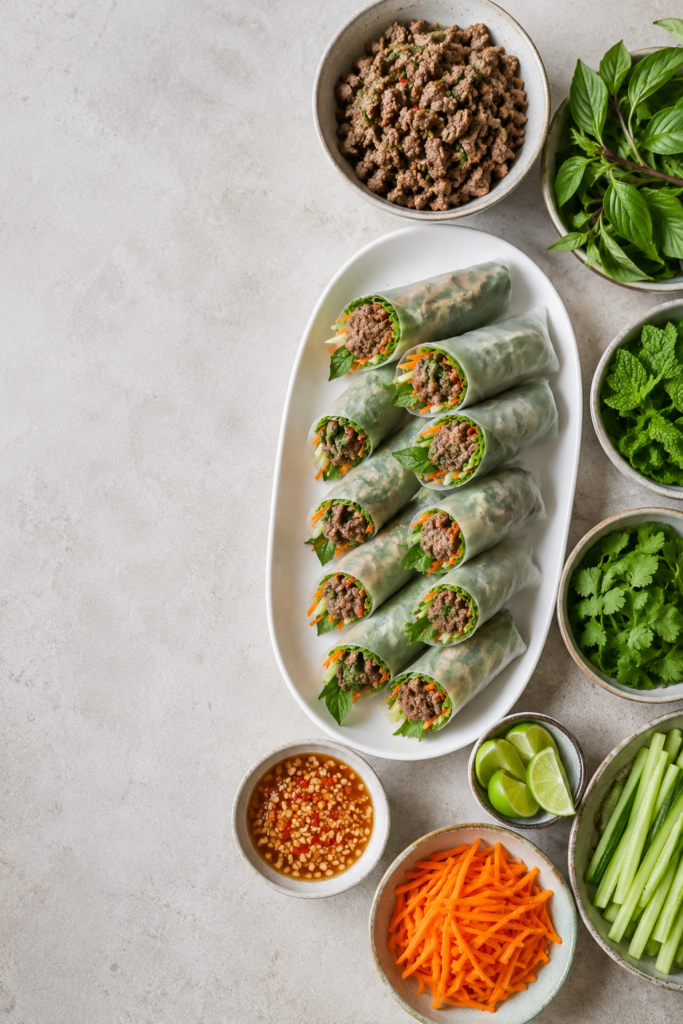
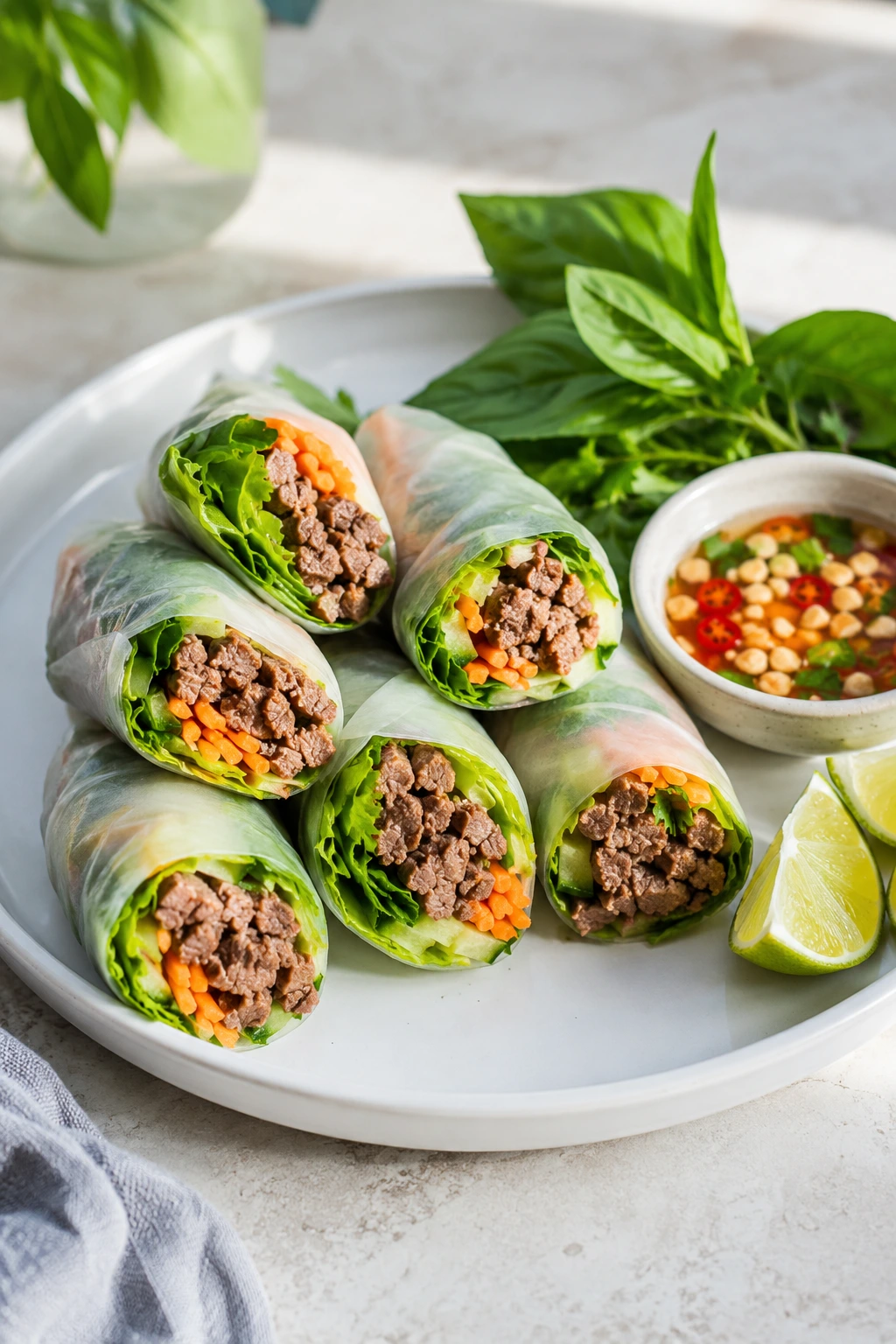
The best thai basil beef rolls start with a flavorful beef filling, crisp vegetables, soft rice paper, and a dipping sauce that brings everything together.
Butter lettuce is more useful than it looks. It gives the rice paper a sturdy inner layer and helps separate the hot beef from the delicate wrapper. That lines up with current fresh-roll guidance, which recommends leafy greens as a crisp base and carrots and cucumbers for crunch.
If you want a leaner profile, ground turkey can work, but beef gives the most satisfying contrast against the herbs. If you want a slightly richer roll, add a small amount of rice vermicelli, but keep it modest so the beef still leads.
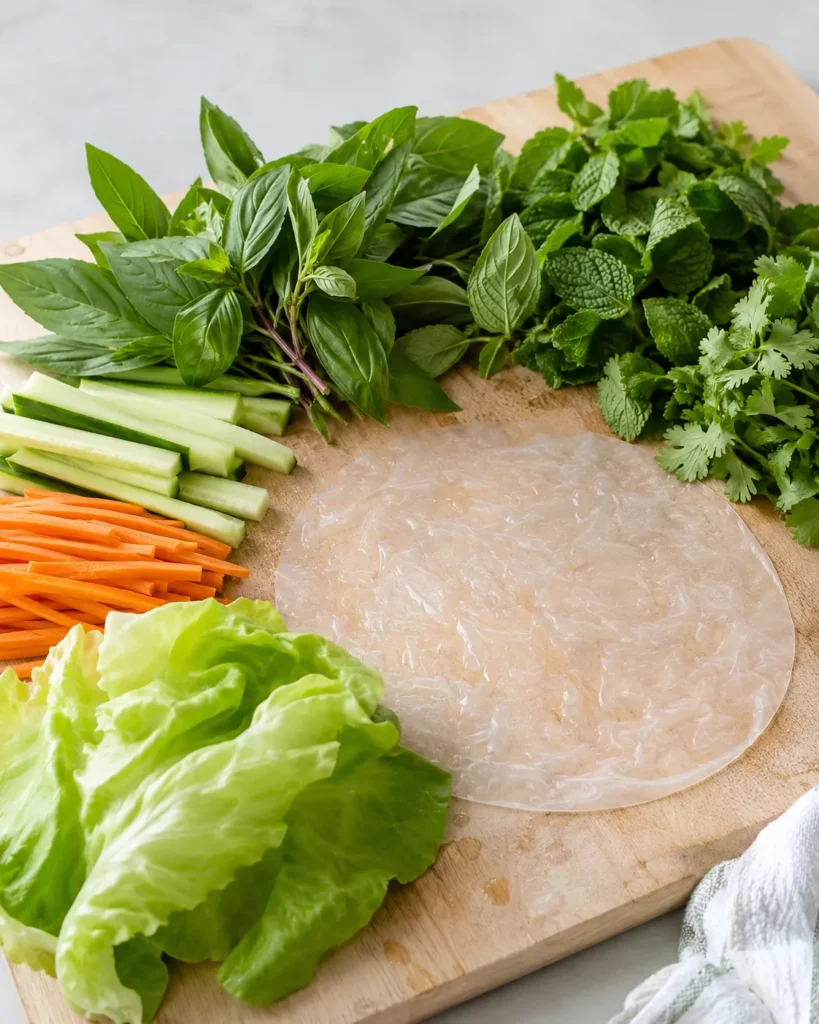
How to Make Thai Basil Beef Rolls
For food safety, cook ground beef until it reaches the safe minimum internal temperature for ground meat before rolling.Making thai basil beef rolls is mostly about preparing the filling first, then rolling everything tightly while the rice paper is soft and flexible.
1. Cook the beef
Heat the oil in a skillet over medium-high heat. Add the shallot, garlic, and ginger and cook for about 30 seconds, just until fragrant. Add the ground beef and cook, breaking it up, until browned.
2. Season the filling
Stir in the soy sauce, oyster sauce, fish sauce, lime juice, brown sugar, and chili. Cook for 1 to 2 minutes so the sauce lightly coats the beef instead of pooling in the pan.
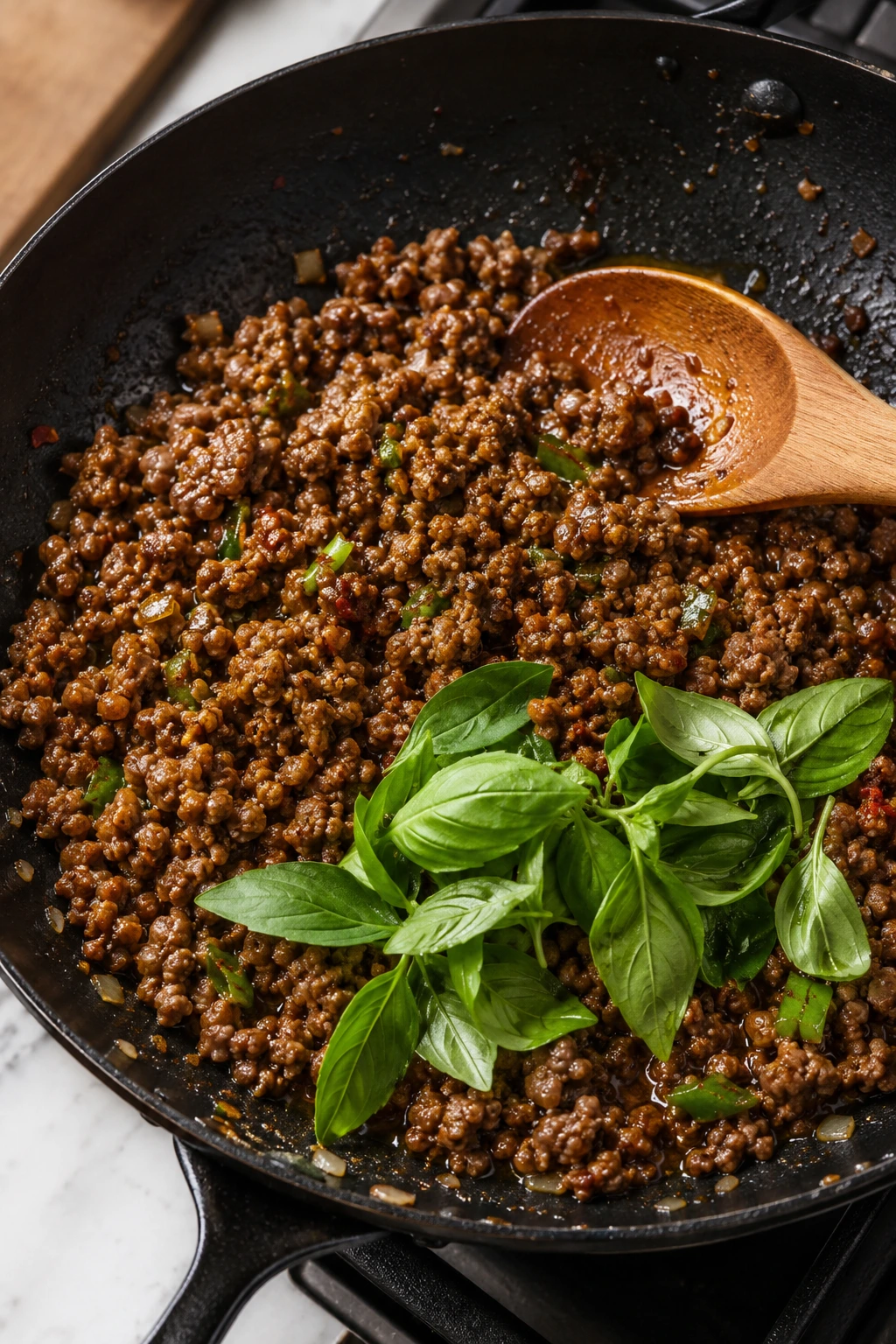
3. Finish with basil
Turn off the heat and stir in the chopped Thai basil and green onion. Let the mixture cool for 10 to 15 minutes. Warm is fine; steaming hot is not.
4. Make the dipping sauce
Whisk together the lime juice, fish sauce, soy sauce, water, honey, garlic, and chili sauce until balanced and glossy.
5. Prep your rolling station
Set out a shallow dish of warm water, the rice papers, lettuce, herbs, and vegetables. Have the beef and a clean cutting board or damp towel ready.
6. Soften the rice paper
Dip one wrapper in warm water for a few seconds, just until pliable. Lay it down on your work surface.
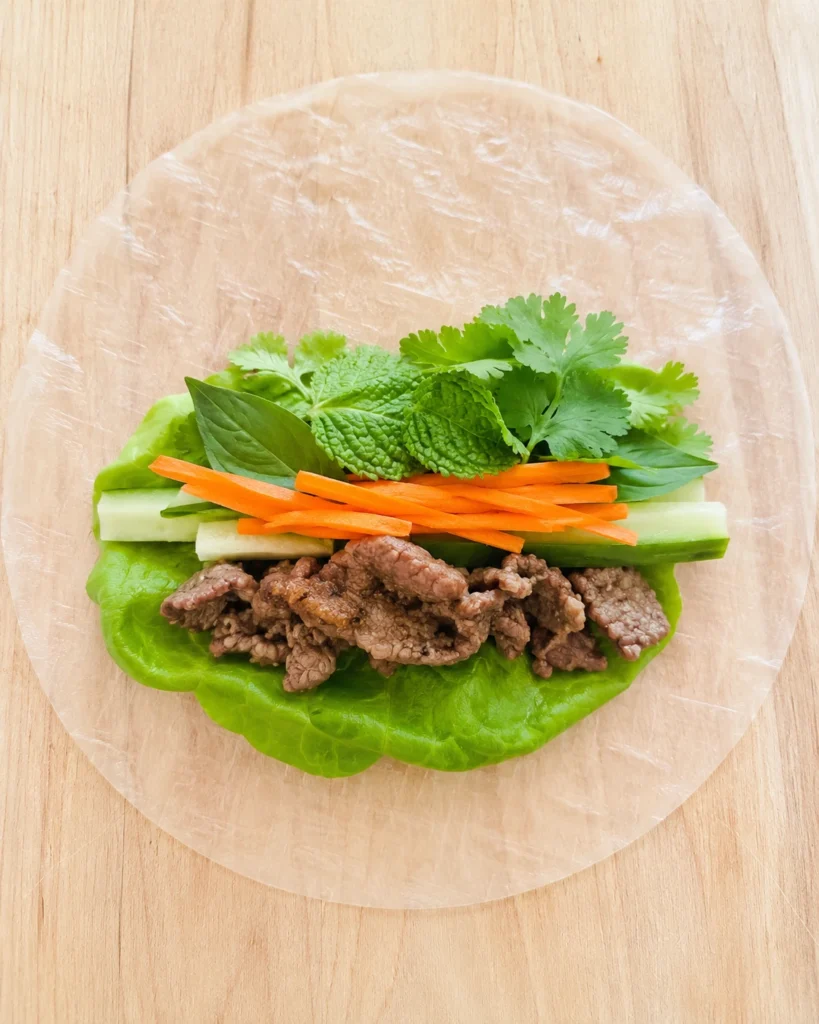
7. Fill and roll
Place a lettuce leaf on the lower third of the wrapper. Add some beef, cucumber, carrot, mint, cilantro, and a few Thai basil leaves. Fold the sides inward, then roll tightly like a burrito.
8. Repeat and serve
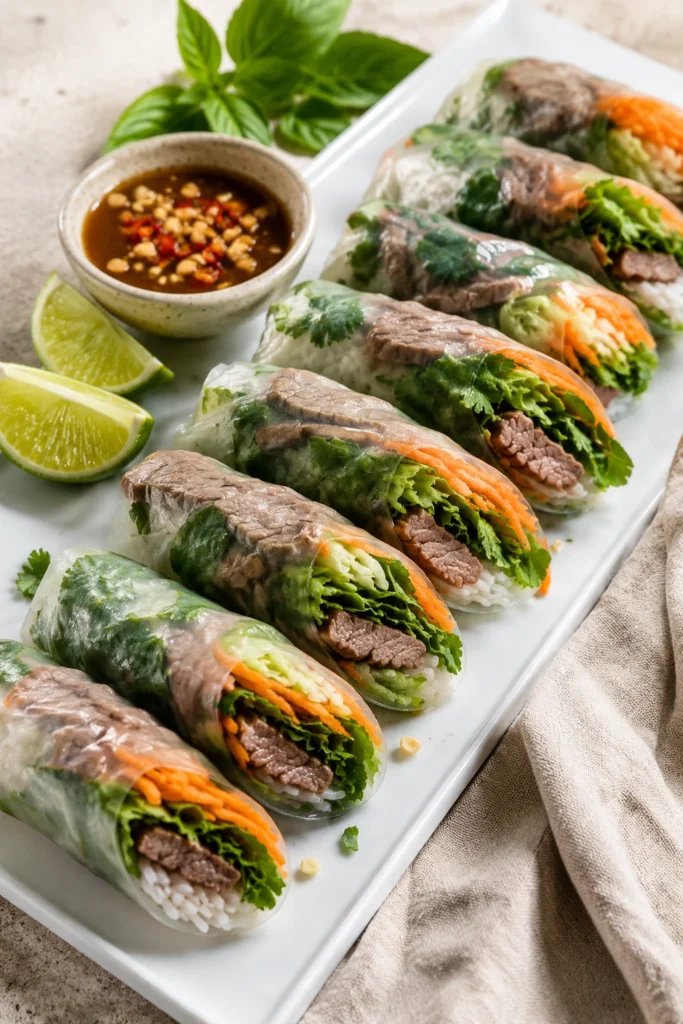
Repeat with the remaining wrappers. Serve the rolls whole or halved with the dipping sauce.
Texture and Flavor Notes
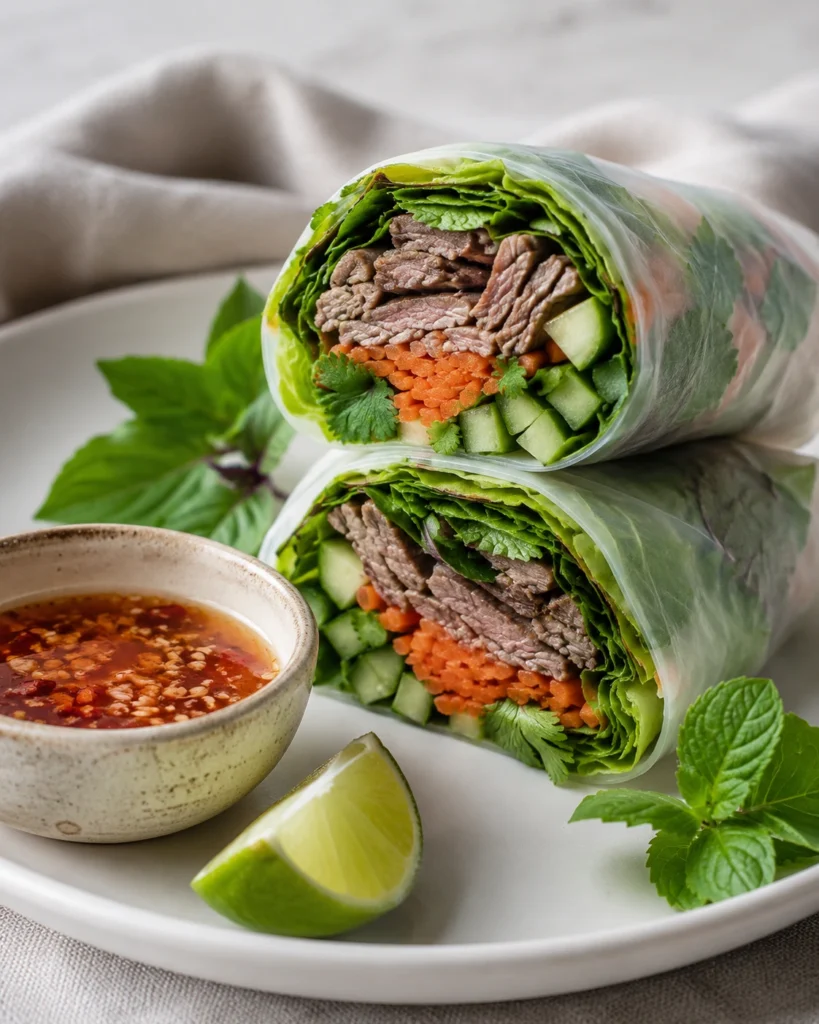
The best bite here should feel layered: chewy rice paper, cool lettuce, crisp cucumber, sweet-sharp carrot, aromatic herbs, and warm savory beef. Thai basil gives a peppery, slightly anise-like lift that keeps the beef from reading too heavy, while lime in the dipping sauce brightens the whole roll.
That balance is what makes these more repeatable than a denser wrap. You get the satisfaction of beef, but the overall impression stays fresh.
Serving Suggestions
Serve these as a light dinner with extra dipping sauce and a crunchy side salad, or as a high-protein lunch with fruit or edamame on the side. If you want a fuller meal, pair them with a simple cucumber salad or a small rice bowl.
They also work well cut in half for a platter. That makes the filling visible, which is useful both for serving and for visual appeal if you are shooting the recipe for Pinterest.
Meal Prep, Storage, and Reheating
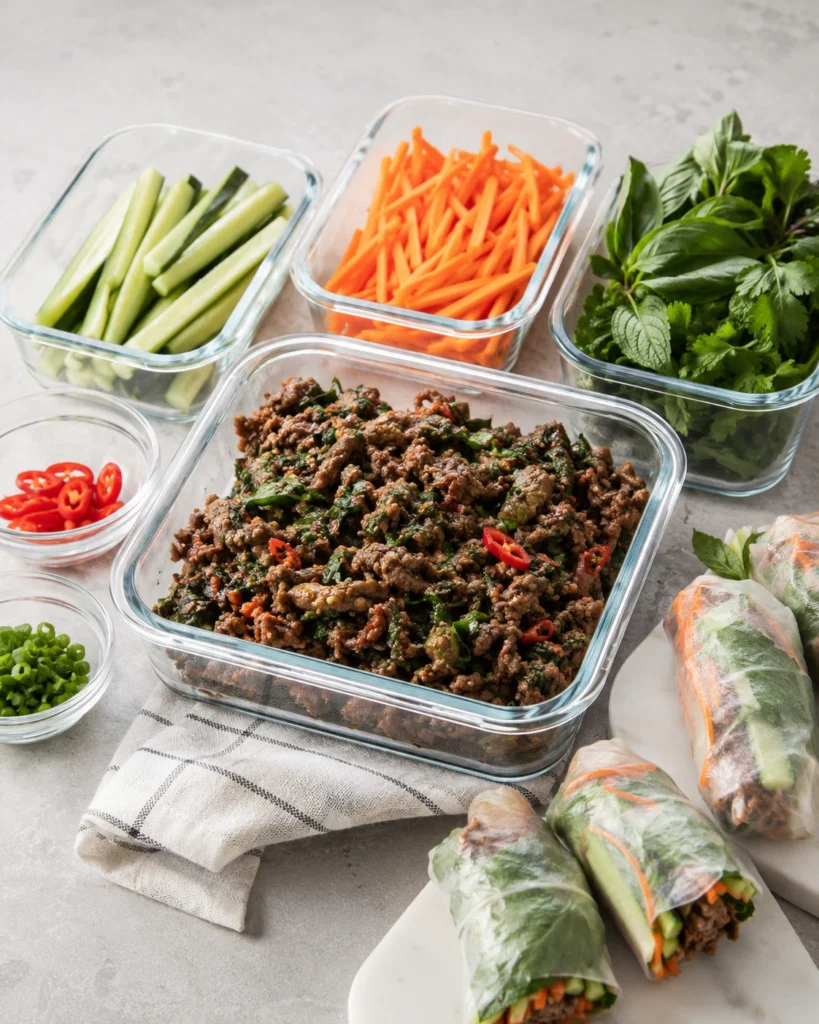
For the best texture, meal-prep the beef filling and the vegetables separately, then roll close to serving time. Rice paper rolls are at their nicest shortly after assembly, while the cooked beef itself stores much better than the finished rolls.
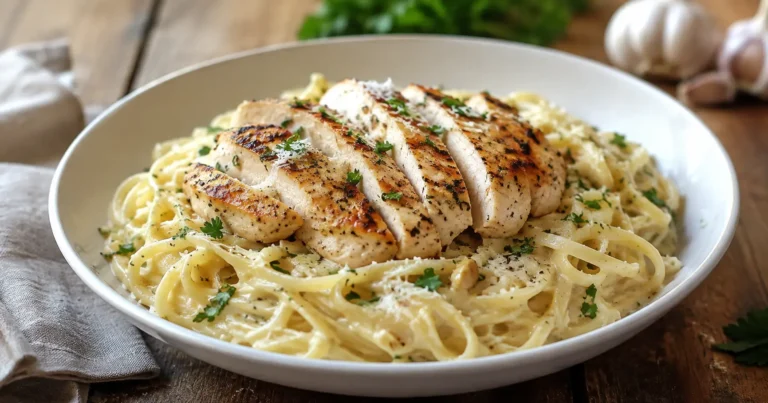
For another meal-prep friendly dinner, my high protein Mediterranean chicken is a lighter high-protein option with bright flavor.For the best texture, thai basil beef rolls are better fresh, but the filling and vegetables can be prepped ahead separately.
From a food-safety standpoint, USDA guidance is clear: cooked ground beef should be refrigerated promptly and is best used within about 3 to 4 days. Perishable food should also not sit out longer than 2 hours, or 1 hour in hotter conditions.
If you do have leftover assembled rolls, wrap them individually and refrigerate them, but expect the wrapper to firm up and the vegetables to lose some snap. The filling reheats better than the finished roll.
Variations
Spicier version
Add more Thai chili or a spoonful of chili crisp to the beef. Keep the herbs generous so the heat does not flatten the rest of the flavor.
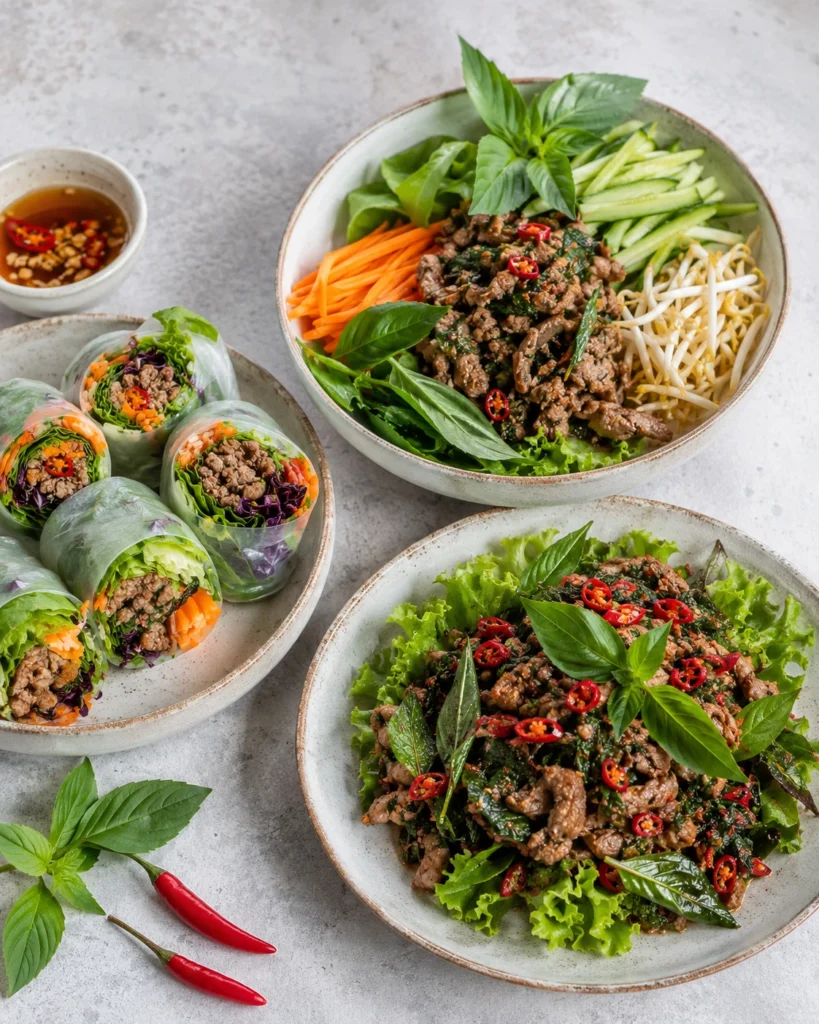
Lower-carb bowl version
Skip the rice paper and serve the beef, herbs, lettuce, cucumber, and carrot as a bowl with dipping sauce on top.
Steak version
Use thinly sliced steak instead of ground beef for a slightly more traditional-feeling fresh-roll texture, though it takes a bit more prep.
Peanut-lime version
Serve with a light peanut-lime sauce instead of the fish sauce dip for a slightly richer finish.
Extra-protein version
Add a small smear of Greek-yogurt-based chili-lime sauce or more beef per wrapper. Just do not overfill or the rolls become hard to wrap.
Common Mistakes to Avoid
Over-soaking the rice paper
The wrappers keep softening after you dip them. If they start too wet, they tear more easily and feel gummy instead of pleasantly chewy.
Using filling that is too hot
Hot filling weakens the wrapper and can wilt the herbs too aggressively. Warm is okay. Steaming is not.
Overfilling the rolls
This is the fastest way to split them. Keep the filling centered and modest, then let the herbs and vegetables create volume.
Skipping the lettuce
Lettuce is not just there for color. It adds structure and helps keep wet ingredients from sitting directly against the wrapper.
Making the sauce too salty
Fish sauce and soy sauce are already strong. The lime, water, and sweetener are there to balance them, not just dilute them.
Recipe at a Glance
Best For: fresh high-protein lunch or light dinner
Texture Goal: chewy wrapper, warm savory beef, crisp herbs and vegetables
Main Protein Source: lean ground beef
Flavor Profile: basil, lime, ginger, garlic, savory-salty-sweet balance
Best Upgrade: extra Thai basil and a brighter dipping sauce
Meal-Prep Friendly: yes, especially as components
Portable: good if rolled close to serving
Most Important Tip: keep the beef flavorful but not wet
Thai Basil Beef Rolls
Ingredients
Equipment
Method
- Heat the oil in a large skillet over medium heat.
- Add the ground beef and cook until browned, breaking it apart with a spoon.
- Stir in the garlic, soy sauce, lime juice, fish sauce if using, honey, and chili flakes.
- Cook for another 1 to 2 minutes, then remove from the heat.
- Stir in the Thai basil while the beef is still warm so it softens slightly.
- Mix the dipping sauce ingredients in a small bowl and adjust with water if needed.
- Fill a shallow dish with warm water and soften one rice paper wrapper at a time.
- Place lettuce, cucumber, carrot, herbs, and beef filling in the center of the wrapper.
- Fold in the sides and roll tightly like a fresh spring roll.
- Repeat with the remaining wrappers and filling.
- Serve the rolls with dipping sauce and lime wedges.
Notes
These rolls are best eaten fresh, but they can be stored in an airtight container in the refrigerator for up to 1 day. Serving:
Serve chilled or at room temperature with dipping sauce on the side. Meal Prep Tip:
Keep the beef filling, vegetables, herbs, and rice paper separate until ready to roll for the best texture. Recipe Notes:
Do not over-soak the rice paper. It should feel flexible but not too soft, because it will continue to soften as you add the filling. Protein Note:
Protein will vary depending on the beef, rice paper wrappers, and serving size used.
u003cstrongu003eCan I make thai basil beef rolls ahead of time?u003c/strongu003e
Yes, but the best version is component-prepped rather than fully assembled. Make the beef ahead, wash and cut the vegetables, then roll closer to eating time for better texture.
u003cstrongu003eAre thai basil beef rolls served hot or cold?u003c/strongu003e
They’re best served with warm or room-temperature beef inside a cool, fresh roll. That contrast is part of what makes them work.
u003cstrongu003eCan I use regular basil instead of Thai basil?u003c/strongu003e
Yes. Thai basil is more aromatic and peppery, so it is better if you can get it, but regular basil still works in a pinch. Current recipes for this flavor profile make the same substitution when needed.
u003cstrongu003eDo I need noodles in the rolls?u003c/strongu003e
No. Some fresh-roll styles include rice vermicelli, but you do not need it here. Leaving it out keeps the rolls more protein-forward and easier to roll tightly.
u003cstrongu003eHow long does the cooked beef last?u003c/strongu003e
Cooked beef is best refrigerated promptly and used within about 3 to 4 days, according to USDA guidance.
u003cstrongu003eWhat vegetables work best in these rolls?u003c/strongu003e
Cucumber, carrot, and lettuce are especially useful because they stay crisp and keep the roll fresh. That also matches current rice-paper-roll guidance from Serious Eats.
Recipe Notes
Current rice-paper roll guidance emphasizes that fresh herbs and crisp vegetables are not a garnish afterthought; they are a major part of the roll’s structure and flavor. That is why this recipe keeps lettuce, cucumber, carrot, and herbs prominent instead of treating them as tiny accents.
Current results for “Thai basil beef rolls” also show two live patterns: a fresh rice-paper version with lean beef and herbs, and a quicker wrap-style version with tortillas and cucumbers. This recipe deliberately leans into the fresher rice-paper format because it fits your keyword and title better.
For storage, treat the cooked beef like any other cooked ground meat: refrigerate promptly, use within a few days, and keep perishable ingredients out of room-temperature holding for too long.
Fresh Thai Basil Beef Rolls Worth Repeating
These thai basil beef rolls work because they do not force you to choose between fresh and filling. You get the crunch and herbiness of a good rice-paper roll, but with enough beef to make the meal feel complete. For a lunch or light dinner that looks vibrant, tastes layered, and still delivers strong protein, this is a very worthwhile one to keep in rotation.